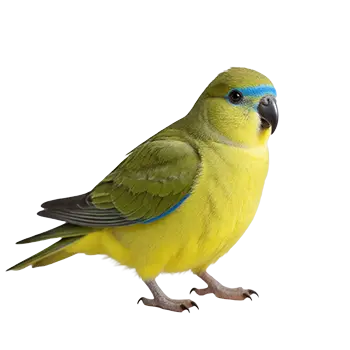

The First 24 Hours

Rock Parrot chicks hatch after an incubation period of approximately 18 to 21 days, entering the world as small, virtually helpless creatures weighing roughly 3 to 4 grams. Like all members of the Neophema genus, they are altricial at birth, meaning they emerge blind, nearly naked, and entirely dependent on external warmth and parental feeding. The sparse natal down covering the chick offers almost no insulation, making the thermal environment of the nest or brooder critically important from the very first moments of life.

In a parent-raised setting, the hen typically begins feeding the chick within a few hours of hatching. She delivers crop milk and partially digested seed matter directly into the chick's tiny beak, providing not only essential calories but also beneficial gut flora that will colonize the chick's developing digestive tract. If you are hand-raising the chick, the first feeding should be delayed until the yolk sac has been fully absorbed, which generally takes between six and ten hours after hatching. Attempting to feed before the yolk sac is absorbed can overwhelm the chick's rudimentary digestive system and lead to serious complications.

The brooder must be prepared and stabilized well before the anticipated hatch date. Temperatures should be maintained between 96 and 99 degrees Fahrenheit, with relative humidity held in the range of 55 to 65 percent. Rock Parrot chicks are notably small compared to many commonly bred parrot species, and their diminutive size makes them especially vulnerable to even brief temperature drops. A digital thermometer and hygrometer placed inside the brooder provide the continuous monitoring necessary to catch fluctuations before they become dangerous.

During the first day, observe the chick frequently without excessive handling. A healthy Rock Parrot hatchling will display a feeding response when the area around its beak is gently touched, will have pinkish skin without discoloration, and will rest quietly between feedings. Any signs of labored breathing, persistent chilling despite adequate brooder temperatures, or failure to exhibit a feeding response should be treated as urgent concerns requiring immediate consultation with an avian veterinarian experienced in small psittacines.

Feeding & Nutrition

Proper nutrition during the neonatal period lays the groundwork for every aspect of a Rock Parrot's future health, from skeletal integrity and feather quality to immune competence and overall vitality. Because Rock Parrots are small-bodied grass parrots, the margin for error in feeding is notably tighter than with larger parrot species. Overfeeding can distend the crop dangerously, while underfeeding leads to rapid weight loss that a chick this size cannot sustain for long.

For hand-fed chicks, use a commercially prepared hand-feeding formula designed for small parrots or parakeets. The formula should be mixed fresh for each feeding session and brought to a temperature between 104 and 108 degrees Fahrenheit. Always verify the temperature with a reliable thermometer, as formula that is even slightly too hot can cause crop burns, while formula that has cooled below the acceptable range may lead to crop stasis, a condition in which the crop fails to empty properly and the contents begin to ferment.

During the first week of life, feedings should occur every two hours from early morning through late evening. Overnight feedings may be necessary if the chick is underweight or failing to gain at the expected rate of roughly 10 to 15 percent of body weight per day. By the second week, as the crop grows and the chick's digestive efficiency improves, feeding intervals can generally be extended to every three hours. Maintaining a detailed feeding log that records the time, volume consumed, and the chick's weight before each feeding is invaluable for spotting trends and catching problems early.

The feeding instrument for a Rock Parrot chick must be appropriately sized. A small syringe, typically one to three milliliters, with a soft rubber tip works well for controlled delivery. Feed slowly and let the chick's own swallowing reflex set the pace. Rock Parrot chicks have relatively small tracheal openings, and the risk of aspiration is significant if formula is delivered too quickly or in excessive volumes. If the chick stops its natural feeding pumping motion at any point, stop immediately and allow it to rest before resuming.

Parent-raised chicks benefit from the natural feeding rhythm and nutritional optimization that the hen provides, but they still require monitoring. Weigh each chick daily at the same time, using a precision gram scale accurate to at least 0.1 grams. A chick that fails to gain weight for two consecutive days, or that shows weight loss at any point during the first two weeks, should be examined promptly. Supplemental hand-feeding may be necessary if the parents are not keeping up with the demands of a full clutch, which in Rock Parrots typically numbers four to five chicks.

Developmental Milestones

Rock Parrot chicks progress through a series of developmental stages that, while broadly similar to other Neophema species, carry their own characteristic timing and nuances. Tracking these milestones gives caregivers a reliable framework for assessing whether a chick is developing normally or whether veterinary intervention may be warranted. Because Rock Parrots are less commonly bred in captivity than some of their Neophema cousins, familiarity with their specific developmental arc is especially important.

During the first five to seven days, the chick's activity is limited almost entirely to feeding responses and sleep. The eyes remain sealed, and the chick's movements consist of little more than repositioning within the brooder or nest cup. Natal down remains sparse, and the chick's skin appears translucent enough to reveal the crop contents and underlying vasculature. This transparency is normal and actually helpful, as it allows caregivers to visually assess crop fill without palpation.

By the end of the second week, the eyes begin to slit open, and the chick starts to respond to visual stimuli in addition to tactile cues. Pin feathers emerge along the wing margins and dorsal tract, appearing as small, waxy shafts protruding through the skin. The chick's coordination improves noticeably during this period, and it will begin to right itself if placed on its side, demonstrating strengthening neck and leg muscles.

Between weeks three and four, feather development accelerates substantially. The characteristic olive-green and blue coloration of the Rock Parrot begins to appear as the sheaths of the contour feathers split and the barbs unfurl. The chick's vocalizations diversify beyond simple begging calls, and it starts to exhibit exploratory behaviors such as grasping at objects and shifting its weight from foot to foot. By the end of the fourth week, the chick is visibly recognizable as a Rock Parrot, though its plumage remains duller and less defined than that of an adult bird.

Temperature & Environment

Environmental management for newborn Rock Parrots demands close attention because their small body mass gives them an exceptionally high surface-area-to-volume ratio. This physical reality means they lose heat far more rapidly than larger parrot chicks, and even brief thermal stress can trigger a cascade of metabolic problems including slowed digestion, immune suppression, and failure to thrive. The brooder is the chick's lifeline during the weeks before it can thermoregulate independently.

For the first week, maintain brooder temperatures between 96 and 99 degrees Fahrenheit. Heating should be provided from below or from the side rather than from above, as overhead heat sources can create uneven hot spots and make it difficult for the chick to move away from excessive warmth. A thermostat-controlled heat pad beneath one section of the brooder floor creates a gentle thermal gradient, allowing the chick to instinctively position itself at the most comfortable temperature. Reduce the temperature by approximately one to two degrees Fahrenheit every three to four days as the chick feathers out, reaching roughly 80 to 85 degrees by the end of the fourth week.

Humidity control is equally critical and frequently underestimated. Rock Parrots originate from the coastal regions of southern Australia, where moderate humidity is the norm. A brooder humidity level between 55 and 65 percent supports healthy skin hydration and proper feather sheath development. Humidity that drops too low can cause feather sheaths to become dry and brittle, leading to malformed feathers that may not unfurl cleanly. Humidity that climbs too high, particularly above 70 percent, creates conditions favorable to bacterial and fungal proliferation on the chick's skin and in the crop.

Brooder hygiene directly impacts chick survival rates. The substrate should be changed at minimum twice daily, and more frequently if soiling is heavy. Avoid substrates that shed fine particles or fibers, as newborn chicks may ingest these materials, causing crop impaction. Plain, unscented paper towels layered two to three sheets thick provide a safe, absorbent, and easily replaceable surface. The brooder walls and floor should be disinfected daily with an avian-safe disinfectant, rinsed thoroughly, and allowed to dry before the chick is returned. Ventilation must be adequate to prevent the buildup of ammonia from droppings without creating drafts that chill the chick.

Early Socialization

Rock Parrots are naturally more reserved than many commonly kept parrot species. In the wild they inhabit rocky coastal landscapes and tend toward cautious, ground-oriented behavior rather than the bold gregariousness seen in some larger psittacines. This innate temperament makes early socialization particularly important for captive-bred chicks, because without positive human interaction during the critical developmental window, a Rock Parrot can grow into a nervous, difficult-to-handle adult that never fully acclimates to domestic life.

For hand-raised chicks, socialization begins organically with every feeding session. The chick quickly learns to associate human presence with warmth, food, and security. Speak to the chick in a calm, consistent voice during feedings and brief handling periods. Rock Parrots respond well to repetition and routine, so maintaining a predictable schedule helps build the chick's sense of safety. Avoid introducing multiple handlers during the first two weeks; instead, let the primary caregiver establish a secure bond before gradually expanding the chick's circle of human contacts.

Once the chick's eyes have opened and it begins to demonstrate visual tracking, introduce mild environmental stimuli to broaden its experiential range. Placing the brooder in a room with normal household activity, at a safe distance from direct commotion, allows the chick to become accustomed to everyday sounds like conversation, kitchen noises, and gentle music. These ambient exposures build resilience against the startle responses that can become deeply ingrained in undersocialized Neophema species.

Parent-raised chicks present a different socialization challenge. While they receive essential avian social modeling from the adult birds, they need supplementary human contact to develop the comfort with handling that companion bird ownership requires. Beginning around 10 to 14 days of age, gently remove each chick from the nest box once daily for a brief handling session lasting no more than five to ten minutes. Cup the chick loosely in your hands, speak softly, and return it to the nest promptly. These sessions teach the chick that human contact is a normal, non-threatening part of its world without disrupting the parental bond that remains essential to its emotional and social development.

Health Screening & Veterinary Visits

A relationship with a qualified avian veterinarian should be established before the chicks even hatch. Rock Parrots are not as commonly seen in general veterinary practice as budgerigars or cockatiels, so locating a practitioner with specific experience in Neophema species or at minimum a solid background in small psittacine medicine is worth the effort. The first veterinary examination should take place within the first three to five days of life, particularly for hand-raised chicks or chicks from flocks whose health status has not been recently verified.

The initial examination will typically include a thorough physical assessment covering body condition, skin integrity, beak and naris formation, and limb alignment. A crop swab cultured for bacteria and yeast helps identify any microbial overgrowth that could interfere with digestion and nutrient absorption. Fecal analysis screens for parasitic organisms, and depending on the veterinarian's assessment, blood work may be recommended to test for Psittacine Beak and Feather Disease, Polyomavirus, and Chlamydiosis, all of which can affect Neophema species and are most effectively managed when detected early.

Maintaining comprehensive health records from the day of hatching is essential for effective veterinary care. Document the chick's hatch weight, daily weight trajectory, feeding volumes and intervals, crop emptying times, and the appearance and consistency of droppings. Photograph the chick weekly to create a visual developmental record. This data allows your veterinarian to identify subtle deviations from normal that might not be apparent during a single office visit, and it provides a baseline against which any future health concerns can be measured.

Between scheduled veterinary appointments, daily health monitoring falls entirely to the caregiver. Learn the appearance of healthy Rock Parrot chick droppings, which should consist of a small, semi-solid fecal component, a white urate portion, and a modest amount of clear liquid urine. Deviations in color, consistency, or volume can indicate digestive disturbance, infection, or dehydration. Watch the chick's respiratory pattern for any signs of labored breathing, tail bobbing, open-mouth breathing, or audible clicking or wheezing sounds. Nasal discharge, swelling around the eyes, or a persistently distended or slow-emptying crop are all red flags that warrant immediate veterinary attention rather than a wait-and-see approach.

When to Worry

Caring for newborn Rock Parrots requires the ability to differentiate between normal developmental variation and genuine warning signs that demand swift action. Because these chicks are small and have limited metabolic reserves, a problem that might be manageable in a larger parrot species can become life-threatening in a Rock Parrot chick within a matter of hours. Developing a systematic approach to monitoring helps ensure that no early symptom goes unnoticed.

Weight stagnation or loss is the most reliable early indicator of trouble. A healthy Rock Parrot chick should gain weight steadily each day during the first three weeks of life. A single day without weight gain is not necessarily alarming, but two consecutive days of flat or declining weight should trigger immediate investigation. Weigh the chick at the same time each day, ideally before the first morning feeding, to eliminate variability caused by crop contents. If weight loss is confirmed, assess feeding technique, formula preparation, brooder temperature, and the chick's general demeanor before contacting your avian veterinarian.

Crop function is another critical area to monitor. The crop should empty completely between feedings within a predictable window that you establish through your feeding log. In a healthy chick during the first week, the crop typically empties within two to three hours. If the crop remains distended or doughy well past its normal emptying time, crop stasis may be developing. Crop stasis can result from formula that was too cool, bacterial or fungal infection within the crop, or environmental temperatures that are too low to support normal digestion. Do not attempt to feed into a crop that has not emptied, as adding volume to a stagnant crop dramatically increases the risk of aspiration and further fermentation.

Respiratory distress in a newborn Rock Parrot can escalate rapidly. Signs include open-mouth breathing at rest, visible tail bobbing with each breath, audible wheezing or clicking sounds, and nasal discharge. Any of these symptoms in a chick under four weeks old should be treated as an emergency. Aspiration pneumonia, bacterial respiratory infections, and fungal conditions such as aspergillosis are all serious possibilities. Similarly, any skin discoloration that shifts from the normal pinkish tone to a dark red, purple, or pale yellowish hue indicates circulatory or hepatic compromise and requires urgent veterinary assessment.

Behavioral changes often accompany or precede physical symptoms. A chick that was previously vigorous in its feeding response but becomes listless, refuses to gape, or fails to vocalize when hungry is communicating distress. Persistent shivering despite adequate brooder temperatures, excessive sleeping beyond what is normal for the chick's age, or uncharacteristic agitation and restlessness all merit close scrutiny. Trust your instincts as a caregiver. If something about the chick's presentation feels wrong, it is far better to consult a veterinarian and find nothing amiss than to adopt a wait-and-see posture that allows a treatable condition to progress beyond the point of intervention.

Always consult a qualified professional before making any health-related decisions. This content is provided for informational reference only and should not replace professional guidance specific to your animal.