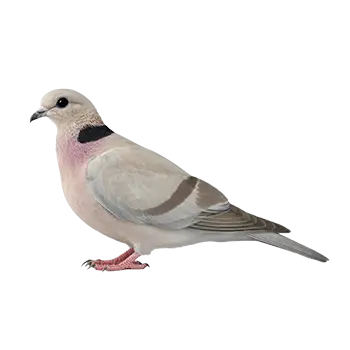

Breeding Readiness & Pair Selection

Ring-Necked Doves reach sexual maturity relatively early compared to many companion bird species, with most individuals capable of breeding by six to eight months of age. However, physical maturity and breeding readiness are not the same thing. Responsible breeders typically wait until both birds are at least ten to twelve months old before allowing them to breed, ensuring that the pair has reached full physical development and that the female's skeletal calcium reserves are adequate to support the demands of egg production without depleting her own body.

Selecting a breeding pair involves evaluating both physical health and temperament. Both birds should be in excellent body condition, with bright, well-groomed plumage, clear eyes, clean nares, and a healthy weight within the normal range for the species. Any bird with a history of chronic illness, recurrent infections, congenital defects, or poor feather quality should not be used for breeding, as many of these conditions have genetic components that can be passed to offspring. Temperament is also relevant. Ring-Necked Doves are generally docile, but individual birds vary in their tolerance of handling, stress resilience, and parental competence, all of which influence breeding success and chick welfare.

Sexing Ring-Necked Doves can be challenging because the species is not strongly sexually dimorphic. Males tend to be slightly larger and more robust than females and display more prominent bow-coo courtship behavior, but these differences are not always definitive. Surgical sexing is available but invasive, and most breeders and veterinarians now recommend DNA sexing through a small blood sample or a plucked feather. Accurate sexing before pairing prevents the frustration and wasted time of attempting to breed two birds of the same sex.

Before introducing a potential pair, ensure that both birds have undergone a thorough veterinary examination including fecal analysis and testing for common avian pathogens. Trichomoniasis is of particular concern in columbid breeding operations because it can be transmitted from parents to chicks during feeding and can devastate nestlings. Chlamydiosis and pigeon paramyxovirus should also be ruled out. Breeding birds with undetected infections risks not only the health of the offspring but the spread of disease through an entire collection.

Courtship & Pair Bonding

Ring-Necked Doves engage in a courtship ritual that is both elegant and functionally important to breeding success. The courtship process strengthens the pair bond, synchronizes reproductive hormones between the male and female, and establishes the cooperative patterns that both birds will rely on during incubation and chick rearing. Caregivers who understand the courtship sequence can assess pair compatibility and identify potential problems before eggs are laid.

The male initiates courtship with his bow-coo display, a behavior in which he puffs out his crop, lowers his head in a deep, sweeping bow, fans his tail feathers, and delivers a repeated three-note cooing call. This display may be directed at the female from across the cage or performed at close range while following her along perches and the cage floor. A receptive female responds with attentive posture, soft vocalizations, and eventually a soliciting position in which she crouches low with her tail slightly raised, signaling her readiness to mate.

Copulation in Ring-Necked Doves is brief and may occur multiple times per day once the pair has bonded and the female is approaching ovulation. The male mounts the female's back, and cloacal contact transfers sperm. The entire act takes only a few seconds. Successful fertilization depends on the timing of copulation relative to the female's ovulatory cycle, and multiple mating attempts increase the likelihood that viable sperm are present when the ovum is released.

Pair bonding in Ring-Necked Doves is characteristically strong and enduring. Once bonded, the pair spends significant time in mutual proximity, engages in allopreening, roosts side by side, and coordinates their movements within the enclosure. A well-bonded pair typically produces fertile clutches more reliably than a newly introduced pair whose bond is still forming. If two birds fail to bond after several weeks of cohabitation, evidenced by persistent avoidance, aggression, or complete absence of courtship behavior, they should be separated and paired with different individuals rather than forced to remain together.

Environmental conditions influence the timing and intensity of courtship. Ring-Necked Doves are somewhat photoperiodic, meaning that increasing day length can stimulate breeding behavior. Providing 12 to 14 hours of light per day, a nutritionally complete diet with adequate calcium and protein supplementation, and a calm, secure environment encourages the onset of courtship in a pair that is otherwise reproductively mature and healthy.

Nesting & Egg Laying

Once a pair of Ring-Necked Doves has bonded and courtship is well established, the next stage is nest construction and egg laying. In the wild, Ring-Necked Doves build loose, flimsy platform nests of twigs in trees and shrubs. In captivity, providing an appropriate nesting site and materials allows the pair to express this instinct in a safe, manageable way.

A shallow nesting platform or open nest bowl placed in a quiet, semi-sheltered location within the cage or aviary serves as the nest site. Commercial dove nesting platforms made of wood or wire mesh are widely available and provide a stable base that the birds can embellish with nesting material. Offer a supply of clean, dry nesting materials such as small twigs, dried grass, straw, and shredded paper. The male typically does most of the material gathering, delivering items to the female who arranges them on the platform. The resulting nest is characteristically sparse by songbird standards, but it is adequate for the species and should not be augmented with excessive material that could smother eggs or trap chicks.

The female Ring-Necked Dove typically lays two eggs per clutch, with the eggs arriving approximately 24 to 48 hours apart. The eggs are small, white, and smooth-shelled. Egg laying usually occurs in the late afternoon or evening. After the first egg is laid, the pair may begin partial incubation, though full, consistent incubation often does not commence until the second egg has arrived. This slight delay helps synchronize the hatching of both eggs, reducing the size disparity between the first and second chick.

Egg binding, a condition in which the female is unable to pass a fully formed egg, is a potentially life-threatening emergency that every dove breeder must be prepared to recognize. Signs include the female straining on the nest floor, a visibly distended abdomen, fluffed feathers, lethargy, and a wide-legged stance. If egg binding is suspected, provide supplemental warmth immediately, place the bird in a warm, humid environment such as a steamy bathroom, and contact your avian veterinarian urgently. Severe cases may require manual egg extraction or surgical intervention. Adequate dietary calcium and vitamin D3 supplementation significantly reduces the risk of egg binding by ensuring strong eggshell formation and proper uterine muscle function.

Female doves that lay eggs chronically without a mate or without the intent to breed present a management challenge. Chronic egg laying depletes calcium reserves, stresses the reproductive tract, and increases the risk of egg binding and reproductive infections. Strategies to discourage chronic laying include reducing daylight hours to 10 or fewer per day, removing nesting materials and nest sites, rearranging the cage environment to disrupt breeding triggers, and in persistent cases, consulting a veterinarian about hormonal intervention.

Incubation

Incubation in Ring-Necked Doves lasts approximately 13 to 14 days and is shared between both parents. The male typically incubates during the middle portion of the day, roughly from mid-morning to late afternoon, while the female takes over for the evening, nighttime, and early morning shifts. This shared responsibility allows both birds to feed, drink, and rest during their off-duty periods, and it reflects the cooperative breeding strategy that makes columbid species such reliable parents.

During incubation, the pair should be disturbed as little as possible. Perform cage maintenance efficiently and quietly, and avoid unnecessary handling of the eggs. While Ring-Necked Doves are generally tolerant of moderate disturbance, excessive interference can cause one or both parents to abandon the nest. If you need to check the eggs for fertility, limit candling to one or two sessions during the incubation period. Fertile eggs will show visible vein development by day five to seven when held against a bright, focused light source in a darkened room.

Environmental stability during incubation is important. Maintain the room temperature within a comfortable range of 65 to 78 degrees Fahrenheit and avoid drafts near the nest site. Sudden temperature drops can cause the incubating bird to leave the nest to seek warmth, exposing the eggs to potentially fatal chilling. Humidity in the room should be moderate, as excessively dry conditions can cause the egg membranes to toughen, making it difficult for the chick to pip through the shell at hatching.

Infertile or non-viable eggs are a possibility even in healthy, well-bonded pairs. If candling at day seven reveals no development, the egg is infertile or the embryo has died very early. If both eggs are infertile, allow the pair to complete a shortened incubation cycle before removing the eggs and evaluating potential causes. Infertility can result from poor mating technique, age-related fertility decline, nutritional deficiencies, or underlying health issues in either bird. Repeated infertile clutches warrant veterinary assessment, particularly of the male's reproductive health and the female's ovulatory function.

Hatch Day & Early Chick Care

As the incubation period nears completion, attentive caregivers may notice subtle signs that hatching is imminent. The incubating parent may shift more frequently on the nest, and faint peeping sounds may be audible from within the eggs as the developed chicks begin vocalizing before emergence. The chick uses its egg tooth, a small calcified projection on the upper beak, to pip through the shell in a gradual process that can take 12 to 24 hours from the first visible crack to full emergence.

Resist the urge to assist a hatching chick unless it is clearly in distress and has made no progress for an extended period. The physical effort of hatching strengthens the chick and helps absorb the remaining yolk sac, which provides critical nutrition during the first hours of life. Premature assistance can rupture blood vessels in the membrane, cause bleeding, or result in a chick that emerges before the yolk sac is fully absorbed, leading to infection risk and nutritional deficit.

Once both chicks have hatched, the parents transition seamlessly from incubation to brooding and feeding. Ring-Necked Doves are attentive parents that begin producing crop milk in advance of the expected hatch date, so the first feedings occur within hours of emergence. The squabs are blind, covered in sparse yellowish down, and entirely dependent on parental care. Both parents share feeding duties, regurgitating crop milk directly into the chicks' gaping beaks.

The breeder's role during this early phase is primarily observational. Check the nest briefly once or twice daily to confirm that both chicks are present, warm, and showing signs of being fed. A well-fed squab has a visibly distended crop and pinkish, hydrated-looking skin. A chick that appears flat-bodied with no crop distension may not be receiving adequate feedings and should be monitored closely over the next several hours. If one chick consistently appears underfed while its sibling thrives, supplemental hand-feeding of the smaller chick may be necessary to prevent starvation.

Keep the nesting area clean but avoid excessive disturbance. Remove any eggshell fragments that the parents have not disposed of, and replace soiled nesting material gently if it becomes heavily contaminated with droppings. The parents will typically tolerate brief, careful nest checks without abandoning the chicks, particularly if the caregiver has maintained a calm, predictable routine throughout the incubation period.

Breeding Health & Complications

Breeding places unique physiological demands on both male and female Ring-Necked Doves, and awareness of potential health complications allows breeders to intervene promptly when problems arise. While Ring-Necked Doves are generally prolific and trouble-free breeders compared to many companion bird species, no breeding operation is immune to health challenges, and vigilance remains the breeder's most important tool.

The female bears the greater physiological burden of reproduction. Egg formation requires significant calcium mobilization from skeletal reserves, protein synthesis for the albumen and membrane layers, and substantial metabolic energy for the ovulatory and oviductal processes. Repeated clutches without adequate recovery time can deplete the female's calcium stores to dangerous levels, leading to metabolic bone disease, pathological fractures, or acute hypocalcemic episodes characterized by tremors, weakness, and seizures. Allow a minimum of four to six weeks between clutches and ensure the female has access to abundant dietary calcium throughout the breeding period.

Salpingitis, an infection of the oviduct, can develop in females that experience egg binding, retained egg material, or chronic egg laying. Symptoms include abdominal swelling, lethargy, decreased appetite, and abnormal droppings. The condition requires veterinary treatment with antibiotics and potentially surgical intervention. In severe or recurrent cases, surgical removal of the reproductive tract may be recommended to prevent life-threatening complications.

Males are less prone to breeding-related health issues but are not immune. Overbreeding can cause weight loss and physical exhaustion in males that are managing multiple hens or producing crop milk for multiple clutches in rapid succession. Monitor the male's weight and condition throughout the breeding season and provide nutritional support including high-quality seed, grit, cuttlebone, and fresh vegetables.

Chick-related complications include dead-in-shell embryos, which can result from improper incubation temperature, humidity extremes, or genetic abnormalities. If multiple embryos fail to hatch across successive clutches despite proper incubation conditions, genetic incompatibility between the pair or subclinical infection in the parents should be investigated. Trichomoniasis transmitted from parent to chick during feeding is another serious concern. Infected chicks develop caseous plaques in the mouth and throat that interfere with feeding and can be fatal if untreated. Preventive testing and treatment of the breeding pair before each breeding cycle significantly reduces this risk.

Responsible Breeding Practices

Breeding Ring-Necked Doves carries an ethical responsibility that extends beyond the mechanics of pairing birds and hatching eggs. Every chick produced needs a safe, permanent home with a caregiver willing to provide appropriate care for the bird's entire lifespan. Before initiating any breeding program, consider whether you have identified suitable homes for the expected offspring, whether you are prepared to keep any chicks you cannot place, and whether your breeding goals serve the well-being of the species and the individual birds involved.

Limit the number of clutches each pair produces per year. Ring-Necked Doves are capable of breeding year-round in captivity if conditions permit, but continuous reproduction takes a severe toll on the female's health and produces more offspring than most breeders can responsibly place. Two to three clutches per year is a reasonable maximum for most pairs. Between clutches, remove nesting materials and nest platforms to discourage immediate re-nesting, shorten the light cycle to 10 hours or less per day to reduce hormonal stimulation, and ensure both birds have time to molt, rest, and rebuild nutritional reserves.

Maintain detailed breeding records for each pair. Document the dates of each clutch, the number of eggs laid and their fertility, incubation duration, hatch success, chick weights and development milestones, and any health complications. These records allow you to identify patterns such as declining fertility, recurring health issues, or poor hatch rates that may indicate a problem with the pair's health, genetics, or husbandry conditions. Over time, breeding records become an invaluable management tool that guides informed decisions about pair selection and breeding frequency.

Avoid inbreeding by maintaining genetic diversity within your breeding flock. Repeated mating of closely related birds increases the risk of genetic abnormalities, reduced immune function, and declining fertility over generations. If your breeding stock is small, introduce unrelated birds from reputable sources periodically to maintain genetic vigor. Keep careful pedigree records to track lineage and prevent inadvertent close matings.

Prepare for the reality that not every chick will be a candidate for a companion home. Some chicks may have minor physical imperfections, behavioral quirks, or color variations that make them less appealing to prospective adopters but do not affect their quality of life. These birds deserve the same standard of care as their more conventionally attractive siblings. If you cannot place a chick, you are responsible for providing it with a permanent, high-quality home within your own flock or through a trusted rescue or sanctuary organization.

Always consult a qualified professional before making any health-related decisions. This content is provided for informational reference only and should not replace professional guidance specific to your animal.