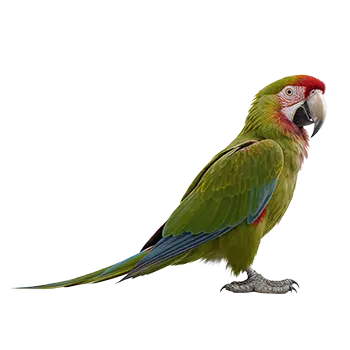

Recognizing Terminal Decline

The transition from manageable senior health challenges to terminal decline in a Red-Fronted Macaw is not always marked by a single dramatic event. More often, it is a gradual accumulation of signs that, taken together, indicate the bird's body systems are failing beyond the capacity of medical intervention to reverse or meaningfully slow. Recognizing this transition is one of the most difficult responsibilities a caregiver faces, because it requires an honest assessment of the bird's trajectory at a time when decades of emotional investment make objectivity extraordinarily hard.

Terminal decline often manifests first as a sustained loss of appetite and body weight that does not respond to the dietary adjustments and appetite stimulants that were effective in earlier stages of aging. The bird may show interest in food briefly but lack the energy or desire to consume meaningful quantities. Muscle wasting becomes pronounced, with the keel bone becoming sharply prominent as the pectoral muscles atrophy. The bird spends most of its time resting, often in a fluffed posture with its head tucked, and its response to environmental stimuli and social interaction diminishes progressively.

Organ failure produces signs that vary depending on which systems are most affected. Renal failure, among the most common terminal pathways in aging parrots, may present as persistent changes in droppings — increased urine volume, discolored or absent urates, and watery fecal material. Hepatic failure can manifest as a distended abdomen, yellowing of the urates, and altered behavior. Respiratory decline is marked by tail bobbing, labored breathing at rest, open-mouth breathing, and a reduced tolerance for any physical exertion. Cardiovascular events such as stroke may cause sudden neurological signs including loss of balance, head tilting, circling, or paralysis of a limb.

The veterinarian's role during this period shifts from curative treatment to honest prognostic assessment. Diagnostic tests may still be valuable, not to identify treatments but to confirm the nature and extent of organ failure so that the caregiver can make informed decisions about the bird's remaining care. A frank conversation with the avian veterinarian about the realistic trajectory of the bird's condition — what can be expected in the coming days or weeks, what signs indicate increasing suffering, and what options exist — provides the caregiver with the information needed to navigate this stage with the bird's welfare as the central priority.

Pain Management & Comfort Care

Effective pain management is the foundation of humane end-of-life care for a Red-Fronted Macaw. Parrots are stoic animals that conceal pain as an evolved survival strategy, making the detection of discomfort in a terminally ill bird both essential and challenging. The assumption in hospice care should be that a bird with advanced organ disease, severe arthritis, or other terminal conditions is experiencing some degree of pain or discomfort, even if overt signs are subtle. Managing that pain allows the bird to maintain whatever quality of life remains during its final period.

Avian pain management has advanced significantly in recent decades, and a qualified avian veterinarian can develop a pharmacological plan tailored to the individual bird's condition and needs. Non-steroidal anti-inflammatory drugs formulated or dosed for avian patients can address inflammatory pain associated with arthritis, organ inflammation, and tissue damage. Opioid analgesics may be appropriate for more severe pain, particularly in cases involving visceral pain from organ failure or neuropathic pain from nerve compression. Gabapentin has shown promise in managing chronic pain in avian patients and may be used as part of a multimodal pain management approach. The veterinarian will consider the bird's hepatic and renal function when selecting medications, as compromised organ systems may alter drug metabolism and increase the risk of adverse effects.

Non-pharmacological comfort measures complement medication and address dimensions of distress that drugs alone cannot resolve. Warmth is one of the simplest and most effective comfort measures for a terminally ill bird. A ceramic heat emitter positioned to provide a warm zone that the bird can move toward or away from allows the bird to self-regulate its temperature without the light disruption of a traditional heat lamp. The ambient temperature in the bird's immediate environment should be maintained at 80 to 85 degrees Fahrenheit, as a sick bird's thermoregulatory capacity is diminished and chilling increases metabolic stress.

Minimizing handling stress is an important consideration that sometimes conflicts with the caregiver's desire to hold and comfort the bird. While physical closeness is deeply meaningful to both bird and caregiver, a terminally ill macaw may find the physical effort of being held, repositioned, or carried more distressing than comforting. Follow the bird's cues. If it leans into your hand, settles against your body, and relaxes when held, physical contact is clearly welcome. If it tenses, struggles, or breathes more rapidly when handled, it is communicating that it prefers to rest undisturbed. Being present in the room, speaking softly, and maintaining visual contact may provide the social comfort the bird needs without the physical demands of direct handling.

Nutritional Support in the Final Stage

Nutritional care during end-of-life is guided by the principle of comfort rather than optimization. The goal is no longer to maintain ideal body condition or to correct nutritional deficiencies but to provide the bird with whatever food it is willing and able to consume, in a manner that minimizes stress and maximizes whatever enjoyment eating still provides. Forcing food on a bird that has lost its appetite or that physically cannot eat comfortably is not compassionate care — it is an extension of suffering in a different form.

Offer the bird its favorite foods, even if those foods would not be considered ideal in a nutritional context. A macaw that has spent its life enjoying almonds, grapes, or warm corn should be given these foods freely during its final stage if it still shows interest in them. Warm, soft foods are often more appealing and easier to consume than cold, hard items. Cooked sweet potato, softened pellets mixed with fruit puree, warm oatmeal, and mashed banana are often accepted by birds that have lost interest in their standard diet. Present food in small, fresh portions at the bird's preferred resting location, removing and replacing uneaten food frequently to maintain freshness and appeal.

Hydration is a critical concern in the terminal bird, as dehydration accelerates discomfort, concentrates waste products in the blood, and can produce nausea and restlessness that compound the bird's distress. If the bird is drinking on its own, ensure that water is accessible without requiring significant movement. If voluntary water intake has declined, offer water-rich foods such as melon, cucumber, and citrus fruits. In some cases, the veterinarian may recommend subcutaneous fluid administration to maintain hydration, a relatively simple procedure that can be performed at home with veterinary instruction and provides meaningful comfort by reducing the uremic symptoms associated with renal decline.

There comes a point for many terminally ill birds when food and water are no longer accepted despite all efforts to make them appealing and accessible. This cessation of eating and drinking is a significant prognostic indicator and often signals that the bird's body is shutting down. While the caregiver's instinct may be to attempt assisted feeding through syringe or tube, this intervention must be weighed against the stress it imposes on a bird that is already suffering. In most cases, forced feeding during the terminal phase prolongs the dying process without improving the bird's experience and should be discussed candidly with the avian veterinarian as part of the ongoing quality of life assessment.

Environmental Adjustments for Comfort

The physical environment of a terminally ill Red-Fronted Macaw should be simplified and adapted to minimize discomfort, prevent injury, and provide the security and familiarity that support emotional well-being during the bird's final period. The modifications made during the senior stage — lower perches, flat platforms, accessible food and water — are extended further during end-of-life care, with the overriding principle being that the bird should not have to expend energy or endure discomfort to access basic necessities.

A hospital cage or a smaller, modified enclosure may be more appropriate than the bird's standard cage during the terminal phase. A smaller space reduces the distance the bird must travel to reach food, water, and a comfortable resting spot, and minimizes the risk of falls from height. Line the bottom of the enclosure with soft, padded material — a folded towel or fleece pad — to cushion the bird if it loses its grip on a perch or chooses to rest on the floor. If the bird can no longer grip a perch securely, remove elevated perches entirely and provide a flat, padded resting area at cage-floor level, slightly elevated at one end to allow the bird to choose its preferred position.

Light and noise management contribute significantly to the terminally ill bird's comfort. Reduce ambient noise levels and avoid sudden sounds that startle or stress the bird. Soft, familiar background sounds such as quiet music or a gently running television can provide auditory comfort without overstimulation. Lighting should be kept dim and natural, avoiding harsh overhead lights or sudden transitions between light and dark. Maintain a regular photoperiod of twelve hours of darkness to support the bird's circadian rhythm and sleep quality, as disrupted sleep compounds the distress of illness.

Keep the bird's environment in the area of the home where it has lived and where the household activity it has observed for years continues around it. Isolating a terminally ill macaw in a back room or an unfamiliar space, however well-intentioned the motivation to provide quiet, can increase the bird's anxiety and sense of abandonment. Red-Fronted Macaws are flock animals that derive security from the presence of their social group, and maintaining the bird's place within the household's daily rhythm provides a continuity that is deeply comforting. If the bird's enclosure must be moved for medical reasons, keep it in a location where it can still see and hear its family.

Emotional Well-Being & Companionship

The emotional dimension of end-of-life care is as important as the physical dimension for a species as socially bonded and cognitively complex as the Red-Fronted Macaw. A macaw that has shared its caregiver's home for two or three decades has developed a relationship of profound mutual attachment, and the bird's emotional needs during its final period deserve the same thoughtful attention as its pain management and nutritional support. The bird does not understand that it is dying, but it can feel discomfort, anxiety, loneliness, and the absence of familiar routines and companions.

Maintain as much of the bird's normal routine as its condition allows. If the bird is accustomed to being uncovered at a certain hour, hearing morning greetings, sharing mealtimes with the family, and receiving a particular form of attention at specific times of day, continue these routines as closely as possible. Predictability provides emotional security for a bird whose physical experience is increasingly unpredictable and uncomfortable. Disruptions to routine — however minor they may seem to the caregiver — can produce anxiety in a bird that has relied on the constancy of its environment for decades.

Speak to the bird frequently, in the calm, familiar tones it has heard throughout its life. Red-Fronted Macaws are vocal, social birds that use sound as a primary means of maintaining contact with flock members. Your voice is one of the most powerful sources of comfort available to the bird, and its reassuring effect does not diminish as the bird's physical condition declines. If the bird has favorite words, phrases, or sounds that it has learned or responded to over the years, incorporate them into your interactions. The familiarity of these auditory cues anchors the bird in the known and the safe.

If the household includes other birds, their relationship to the terminally ill macaw must be managed with sensitivity. A bonded companion bird may become distressed by the decline of its partner, exhibiting anxiety, increased vocalization, feather-destructive behavior, or loss of appetite. Allow the companion bird visual and auditory access to the terminally ill bird if both seem to benefit from the proximity, but monitor interactions closely and be prepared to separate them if the healthy bird's behavior becomes agitated or if the ill bird appears stressed by the companion's attention. After the death of the macaw, the surviving companion will need its own period of adjustment, with increased social attention and environmental enrichment to support it through the loss.

Making the Euthanasia Decision

The decision to euthanize a companion Red-Fronted Macaw is among the most emotionally devastating choices a caregiver will ever face, and the weight of that decision is compounded by the depth and duration of the bond that typically exists between a macaw and its long-term caregiver. It is also, when made at the right time and for the right reasons, the final and most profound act of care that a caregiver can offer — a deliberate choice to end suffering when continuing life serves no purpose other than to delay the caregiver's loss.

The timing of euthanasia should be guided by the bird's quality of life rather than by a specific diagnosis or a predetermined timeline. The quality of life assessment discussed in the senior care section of this guide provides a framework for this evaluation, and the core question remains the same: does this bird experience more comfort than distress, more engagement than withdrawal, more moments of recognizable well-being than moments of observable suffering? When the answer to that question has shifted definitively toward suffering, and when medical intervention has reached its limits or would impose burdens that exceed its benefits, euthanasia becomes the compassionate choice.

Discussing the decision with your avian veterinarian is essential. The veterinarian can provide a clinical perspective on the bird's prognosis, the likely trajectory of its condition, and the degree of suffering it is likely experiencing — information that helps the caregiver make a decision grounded in the bird's reality rather than solely in the caregiver's emotional experience. Most avian veterinarians will not make the decision for the caregiver, but they will provide the honest guidance that enables the caregiver to make it with confidence that the bird's welfare has been the central consideration.

Avian euthanasia, when performed by a skilled avian veterinarian, is a humane and peaceful process. The bird is typically sedated first, either through inhalant anesthesia or an injectable sedative, so that it loses consciousness without distress. Once the bird is deeply anesthetized and unaware, a lethal injection is administered, stopping the heart within seconds. The caregiver may choose to be present during the procedure, holding the bird or remaining nearby, or may prefer to say goodbye beforehand. Neither choice is more or less valid than the other, and the caregiver should make the decision that feels right without judgment or pressure. What matters is that the bird's final moments are free of fear and pain.

Grief & Aftercare

The grief that follows the death of a Red-Fronted Macaw after decades of companionship is real, legitimate, and often profoundly disorienting. The bond between a parrot and its caregiver is unlike most other human-animal relationships in its duration and intensity. A macaw that has shared its caregiver's home for 20 or 30 years has been present through marriages, divorces, career changes, relocations, the growth of children, and the full sweep of a human life. The absence of that presence leaves a void that is felt not only emotionally but in the physical rhythms of daily life — the morning greetings, the evening routines, the background vocalization that filled the home.

Grief for a companion animal follows no prescribed timeline and should not be measured against external expectations. Some caregivers experience acute grief that diminishes gradually over weeks or months. Others find that the loss settles into a sustained, low-level ache that resurfaces unexpectedly around anniversaries, seasonal changes, or encounters with other birds. Both patterns are normal, as is any other trajectory that the grief takes. The caregiver should allow themselves to grieve without apology and without comparing their experience to that of others who may not understand the depth of a multi-decade bond with a parrot.

Practical aftercare decisions should be made in advance whenever possible, as addressing them during the acute phase of grief adds unnecessary burden. Options for the bird's remains include private cremation with return of ashes, communal cremation, burial in a pet cemetery or on private property where local regulations permit, and in some cases, donation of the body to a veterinary teaching institution for educational purposes. Some caregivers find comfort in creating a memorial — a planted tree, a framed photograph, a donation to a Red-Fronted Macaw conservation organization — that transforms their loss into a lasting contribution. The form the memorial takes matters less than the act of honoring the relationship.

Support resources exist for people grieving the loss of a companion animal, and caregivers should not hesitate to seek them out. Pet loss support groups, both in-person and online, connect bereaved owners with others who understand the specific nature of animal loss. Some veterinary schools and counseling organizations offer pet loss hotlines staffed by trained volunteers. If grief becomes overwhelming or interferes with the caregiver's ability to function, professional counseling is an appropriate and valuable resource. The depth of grief a person feels after losing a companion parrot is a measure of the depth of the relationship they shared, and there is no threshold below which that grief is too small to deserve support or above which it is too large to be legitimate.

Always consult a qualified professional before making any health-related decisions. This content is provided for informational reference only and should not replace professional guidance specific to your animal.