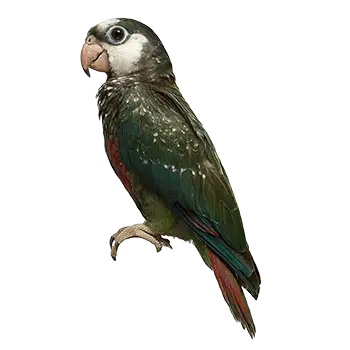

Growth & Physical Development

The juvenile stage for a White-capped Pionus generally spans from the completion of weaning at roughly eight to twelve weeks through the first full molt, which typically occurs between nine and fourteen months of age. During this period, the young bird undergoes significant physical transformation as it fills out, gains muscle tone, and transitions from the softer, slightly duller plumage of a fledgling into the vibrant green feathering and distinctive white forehead patch that characterize the adult.

Weight stabilization is one of the key markers of the juvenile phase. After the rapid growth of the neonatal period, the bird's weight will level off and may even dip slightly during the stress of weaning. A healthy juvenile White-capped Pionus typically weighs between 190 and 230 grams, though individual variation is normal. Continuing to weigh the bird regularly, at least weekly during this stage, helps ensure it is maintaining a healthy body condition as it adjusts to solid foods.

The beak and feet continue to harden and mature during this stage. Juvenile Pionus parrots often have a slightly paler or less defined beak coloration than adults, and the characteristic pinkish-red undertail coverts may not reach their full intensity until after the first or second molt. Wing and tail feathers reach their full length during this period, and the bird develops the strength and coordination needed for confident flight.

Bone development is largely complete by the end of the juvenile stage, but the skeletal system continues to strengthen and mineralize. Providing appropriate nutrition with adequate calcium and vitamin D3 is essential to support this ongoing process and prevent metabolic bone disease, which can cause lasting deformities if it develops during this critical window.

Nutrition & Diet Transition

The transition from hand-feeding formula to a solid diet is one of the most important milestones in a juvenile White-capped Pionus's life, and it should be handled with patience rather than rushed. Weaning is a gradual process during which the young bird learns to eat independently while formula feedings are slowly reduced in frequency. Most White-capped Pionus chicks begin showing interest in solid foods between six and ten weeks of age, picking at soft foods, mouthing pellets, and experimenting with textures.

A high-quality pelleted diet formulated for parrots should form the foundation of the juvenile diet, supplemented with a wide variety of fresh vegetables, leafy greens, and a moderate amount of fruit. Introducing diverse foods during the weaning window is especially valuable, as birds tend to develop strong food preferences early in life. Offering items such as cooked sweet potato, steamed broccoli, chopped leafy greens, and small pieces of apple or berries encourages adventurous eating habits that will benefit the bird throughout its life.

Seeds and nuts should be offered sparingly during the juvenile stage. While they provide energy and fat, an over-reliance on seeds can lead to nutritional imbalances and obesity later in life. Treat seeds as training rewards or enrichment items rather than dietary staples. Avoid feeding avocado, chocolate, caffeine, alcohol, and any foods high in salt or sugar, as these are toxic or harmful to parrots.

Monitor the crop and droppings closely during the weaning transition. A bird that is losing weight, producing fewer droppings, or showing signs of lethargy may not be consuming enough solid food yet and may need supplemental formula feedings for a longer period. Forced weaning, where formula is abruptly withdrawn to push the bird onto solids, is stressful and can lead to long-term behavioral and health problems. Let the bird set the pace.

Behavioral Changes

The juvenile period brings a wave of behavioral development as the White-capped Pionus begins to establish its personality and social preferences. This species is known for being one of the calmer and quieter members of the parrot family, and these traits often begin to emerge during adolescence. However, juvenile Pionus parrots can still exhibit testing behaviors, mood fluctuations, and occasional nippiness as they navigate this developmental stage.

One common behavioral shift during the juvenile phase is the development of a preference for one person or a small number of familiar individuals. While White-capped Pionus parrots are generally less prone to extreme one-person bonding than some other parrot species, they can become cautious or shy around unfamiliar people if socialization is not maintained. Continuing to expose the young bird to a variety of people and experiences during this stage helps prevent excessive fearfulness.

Flight plays a significant role in behavioral development. A fledged juvenile Pionus that is allowed supervised flight develops greater confidence, better coordination, and a stronger sense of spatial awareness than a bird whose wings are clipped before it has learned to fly. Many avian behaviorists recommend allowing young parrots to learn to fly competently before considering any wing management options, as the physical and psychological benefits of flight during this developmental window are substantial.

Juvenile Pionus parrots may also begin to exhibit species-typical behaviors such as the distinctive wheezing or panting sound that Pionus parrots make when stressed or excited. This is a normal physiological response and should not be confused with respiratory illness, though any respiratory sound accompanied by other symptoms such as discharge, lethargy, or appetite loss warrants veterinary evaluation.

Training Priorities

The juvenile stage represents the ideal window for establishing foundational training with a White-capped Pionus. This species responds exceptionally well to positive reinforcement methods, and their naturally gentle disposition makes them rewarding pupils when approached with consistency and patience. Training during this period strengthens the bond between bird and caregiver while building communication skills that last a lifetime.

Step-up and step-down commands should be the first training priorities. These basic behaviors establish trust and provide a reliable way to move the bird safely between locations. Use a calm, consistent verbal cue paired with gentle hand pressure against the lower chest, and reward compliance immediately with a small treat or verbal praise. Keep training sessions short, no more than five to ten minutes at a time, and always end on a positive note to maintain the bird's enthusiasm.

Recall training, teaching the bird to fly to you on command, is another valuable skill that can be introduced during the juvenile phase, particularly while the bird is still learning to fly and is naturally inclined to seek out its caregiver. Target training, where the bird learns to touch the end of a small stick with its beak, is also useful as a building block for more advanced behaviors and for redirecting the bird's attention during unwanted behaviors.

Consistency across all household members is essential. Everyone who interacts with the bird should use the same verbal cues, the same hand positions, and the same reward system. Mixed signals from different people can confuse a young Pionus and slow the training process. Avoid punishment-based approaches entirely, as they erode trust and can cause lasting behavioral damage in a species that is naturally sensitive and responsive to its social environment.

Exercise & Enrichment

A juvenile White-capped Pionus is an active, curious bird that requires regular opportunities for physical exercise and mental stimulation to develop properly. Flight, climbing, and foraging are natural behaviors that should be encouraged through a thoughtfully designed living environment and daily out-of-cage time. A bird that is confined without adequate enrichment is far more likely to develop behavioral problems such as feather plucking, excessive screaming, or repetitive stereotypic movements.

The cage for a juvenile Pionus should be spacious enough to allow wing stretching and short flights between perches. Horizontal bar spacing of approximately half an inch to five-eighths of an inch is appropriate for a bird of this size. Provide multiple perches of varying diameters and textures, including natural wood branches, rope perches, and flat platform perches, to promote healthy foot development and prevent pressure sores.

Foraging enrichment is particularly important during the juvenile stage, as it teaches the bird to work for its food in a manner that mimics natural behavior. Simple foraging opportunities can include wrapping treats in paper, hiding food inside untreated cardboard boxes, or using commercially available foraging toys designed for medium-sized parrots. Rotate toys and enrichment items regularly to maintain the bird's interest and provide ongoing mental challenges.

Daily supervised out-of-cage time is essential for both physical exercise and social interaction. Allow the bird to explore a bird-safe area of the home, interact with family members, and engage with play stands or hanging toys. Ensure the environment is free from hazards including open water, hot surfaces, toxic plants, ceiling fans, and uncovered windows or mirrors that the bird could fly into.

Wing Management Considerations

The question of whether to clip a juvenile White-capped Pionus's wing feathers is one that generates significant discussion among aviculturists and companion bird owners. There are valid perspectives on both sides, and the decision should be made thoughtfully based on the individual bird's living situation, the owner's experience level, and the safety of the home environment.

Advocates for allowing full flight point to the physical and psychological benefits. Flight builds strong chest muscles, cardiovascular fitness, and coordination. It also provides the bird with a sense of control over its environment, which contributes to confidence and emotional stability. Many avian veterinarians and behaviorists recommend that juvenile parrots be allowed to fledge fully and develop competent flight skills before any wing management is considered, as birds that are clipped before learning to fly may never develop full confidence in their physical abilities.

Those who favor wing trimming cite safety concerns, particularly in homes with open floor plans, large windows, exterior doors that are frequently opened, or other pets such as cats and dogs. A carefully performed wing trim by an experienced avian veterinarian or groomer can reduce the bird's flight ability while still allowing it to glide safely to the ground rather than crash. An overly aggressive clip that removes too many feathers can cause the bird to fall like a stone, risking injury to the keel bone or chest.

If wing trimming is chosen, it should never be done at home by an inexperienced person, and the bird should be monitored afterward for signs of frustration or behavioral regression. Regardless of the decision, a bird-safe indoor environment should always be maintained, as even clipped birds can sometimes achieve enough lift to reach dangerous areas or escape through an open door.

Socialization & Exposure

Continued socialization during the juvenile phase is essential for raising a well-adjusted White-capped Pionus that is comfortable in a variety of situations. The socialization efforts begun during the neonatal period should be expanded to include a broader range of experiences, environments, and interactions. This species tends toward natural shyness, and a juvenile that is not regularly exposed to new stimuli may become a fearful, anxious adult that is difficult to handle outside of its immediate comfort zone.

Introduce the young Pionus to different rooms in the house, varied lighting conditions, and a range of everyday sounds including household appliances, music, television, and doorbell rings. Carry the bird through the home on your hand or shoulder, allowing it to observe the environment from a position of security. Outdoor exposure in a secure travel carrier or harness can also be beneficial, provided the weather is mild and the bird is not exposed to direct sunlight for extended periods or to wild birds that may carry diseases.

Social interactions with multiple family members and trusted visitors help prevent the development of excessive single-person bonding. Encourage different people to offer treats, perform step-up requests, and engage in gentle handling sessions with the juvenile bird. If the bird shows signs of nervousness around new people, allow it to observe from a distance first and approach at its own pace rather than forcing direct contact.

Exposure to a variety of objects, textures, and novel items also builds resilience and curiosity. Offer new toys, introduce different food presentations, and occasionally rearrange the cage layout to encourage adaptability. A juvenile Pionus that learns to approach new experiences with curiosity rather than fear will be a far more enjoyable and manageable companion throughout its potentially decades-long life.

Always consult a qualified professional before making any health-related decisions. This content is provided for informational reference only and should not replace professional guidance specific to your animal.