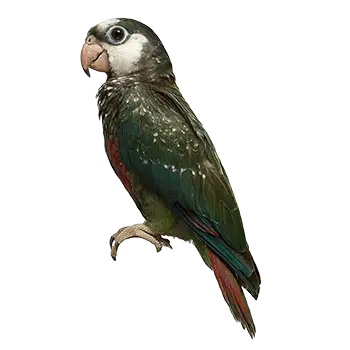

Recognizing that a White-capped Pionus is approaching the end of its life requires careful observation and an honest assessment of the bird's overall condition and trajectory. Because parrots are prey animals that instinctively mask signs of vulnerability, the indicators of terminal decline may be subtle at first, becoming more apparent only as the bird's reserves are exhausted. Understanding what to look for allows you to respond with appropriate care and compassion rather than being caught unprepared.
Physical signs that may indicate a bird is entering its final phase include progressive and irreversible weight loss despite adequate food availability, a prominent keel bone that becomes increasingly palpable through the chest feathers, and a general loss of muscle mass that gives the bird a thinner, more fragile appearance. Feather condition often deteriorates, with plumage becoming dull, ragged, or poorly maintained as the bird lacks the energy for normal preening. Droppings may change in color, consistency, or volume, reflecting declining organ function.
Behavioral changes are equally important indicators. A bird that was once active and engaged may become increasingly withdrawn, spending most of its time resting on the cage floor or a low perch rather than climbing and exploring. Appetite may decline significantly, with the bird showing little interest in favorite foods or eating only small amounts. Reduced vocalization, a lack of response to familiar stimuli, and a general sense of disengagement from the environment are also common in a bird that is nearing the end of its life.
It is essential to work closely with your avian veterinarian throughout this process to determine whether the symptoms you are observing are due to a treatable condition or represent the natural progression toward end of life. Some conditions that mimic terminal decline, such as certain infections or nutritional crises, may be reversible with appropriate treatment, while others, such as advanced organ failure or widespread neoplasia, may be managed but not cured.