
The First 24 Hours

Meyer's Parrot chicks hatch after an incubation period of approximately 26 to 28 days. The newly emerged chick is altricial, meaning it is born blind, nearly featherless, and completely dependent on its parents or a human caretaker. During these first critical hours, the chick will rest frequently and may appear weak or lethargic, which is entirely normal. The remnants of the yolk sac continue to provide nourishment for a short period after hatching, so immediate feeding is not always necessary within the first few hours.

If the chick is being parent-raised, it is important to observe from a respectful distance to confirm that the hen is brooding and keeping the hatchling warm. Parent birds will typically begin feeding the chick within several hours of hatching. Excessive interference at this stage can cause the parents to become stressed or, in rare cases, reject the chick. A calm, undisturbed environment is essential for a successful transition from egg to nest life.

For breeders hand-raising from hatch, the first feeding should be offered once the chick has fully absorbed the yolk sac, usually around 8 to 12 hours after emergence. The brooder must be set up in advance and maintained at the correct temperature. Weigh the chick immediately using a gram scale and record this baseline weight, as daily weight tracking is one of the most reliable indicators of health and adequate nutrition in the days ahead.

Watch for any signs of distress such as labored breathing, an unabsorbed or bleeding yolk sac, or an inability to hold its head upright when stimulated. These signs warrant immediate consultation with an avian veterinarian. The first day sets the foundation for everything that follows, and attentive monitoring without excessive handling gives the chick its best start.

Feeding & Nutrition

If the chick is being hand-fed, a commercially prepared hand-feeding formula designed specifically for parrots is the safest and most nutritionally complete option. The formula must be mixed fresh for each feeding and heated to the appropriate temperature, typically between 104 and 108 degrees Fahrenheit. Feeding formula that is too hot can cause severe crop burns, while formula that is too cool may be rejected by the chick or lead to slow crop emptying and bacterial growth.

During the first week, feedings are frequent, generally every two to three hours around the clock. As the chick grows and its crop capacity increases, the interval between feedings gradually lengthens. By the second week, overnight feedings can usually be reduced, and by the third week most chicks can go comfortably through the night without a feeding. Always allow the crop to empty completely or nearly completely before offering the next meal to prevent sour crop, a condition where old formula ferments and causes infection.

The volume of each feeding increases steadily as the chick develops. Monitoring daily weight gain is essential. A healthy Meyer's Parrot chick should gain weight consistently during the first several weeks, with brief plateaus around the time of significant feather development. A sustained weight loss over two or more consecutive feedings or days is a warning sign that should prompt a veterinary consultation.

Parent-raised chicks receive crop milk and regurgitated food from the hen and, later, from both parents. Breeders supporting parent-raised clutches should ensure the adult birds have access to a nutritionally rich diet that includes high-quality pellets, fresh vegetables, sprouted seeds, and calcium supplementation. The quality of the parents' diet directly determines the nutritional value of what the chick receives.

Developmental Milestones

Meyer's Parrot chicks develop at a pace typical of small Poicephalus species. Eyes begin to open between 10 and 14 days of age, initially as narrow slits before fully opening over the course of several days. Pin feathers start to emerge during the second and third weeks, beginning along the wings and back before spreading across the body. These early feather sheaths give the chick a spiky, almost hedgehog-like appearance before the feathers unfurl.

By three to four weeks of age, the chick becomes noticeably more active and alert. It will begin to track movement with its eyes and respond to sounds in its environment. Coordination improves steadily, and the chick will start to grip the surface beneath it with its feet. This is a natural precursor to perching behavior and an important sign of healthy neurological development.

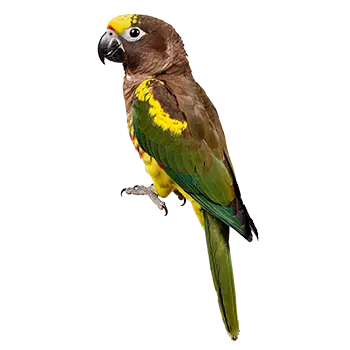
Between five and seven weeks, feather coverage becomes substantial and the characteristic coloring of the Meyer's Parrot begins to emerge, including the yellow or turquoise markings on the head and the brown and green plumage across the body. The chick will begin to flap its wings vigorously inside the brooder or nest box, building the muscle strength needed for eventual flight. Exploratory behavior increases, and the chick may begin to show interest in solid foods even if it is still receiving hand-feedings.

Full weaning for Meyer's Parrots typically occurs between 10 and 14 weeks of age, though some individuals may take longer. Rushing the weaning process can lead to behavioral and nutritional problems. Each chick should be allowed to wean at its own pace, with formula feedings gradually reduced as the bird demonstrates consistent consumption of solid foods and maintains a stable body weight.

Temperature & Environment

Newly hatched Meyer's Parrot chicks cannot regulate their own body temperature and are entirely dependent on external heat sources. For hand-raised chicks, a quality brooder is essential. During the first week of life, the brooder temperature should be maintained between 96 and 98 degrees Fahrenheit. As the chick grows and begins to develop down and pin feathers, the temperature can be gradually reduced by a few degrees each week.

Humidity is equally important and often overlooked. The brooder should maintain a humidity level of approximately 50 to 60 percent to prevent dehydration and to support healthy skin and feather development. Dry environments can cause the chick's skin to become flaky and can impede the proper unfurling of new feathers. A shallow dish of water placed inside the brooder or a damp sponge can help maintain humidity in simpler setups, though dedicated brooders often have built-in humidity controls.

The brooder substrate should be soft, absorbent, and easy to change. Paper towels or clean cloth towels work well, as they allow the caretaker to monitor droppings while providing a surface that supports proper leg positioning. Slippery surfaces such as newspaper should be avoided, as they can contribute to splayed legs in young chicks. Change the substrate frequently to maintain a clean and sanitary environment.

For parent-raised chicks, the nest box provides the necessary warmth and protection. Ensure the nest box is appropriately sized, lined with clean shavings, and positioned in an area of the enclosure that is free from drafts and temperature extremes. The room temperature in the breeding area should remain stable, ideally between 72 and 80 degrees Fahrenheit, to support the parents in maintaining the chicks at the proper temperature.

Early Socialization

Meyer's Parrots are known for their calm and gentle disposition as adults, but this temperament is heavily influenced by the quality of socialization they receive as chicks. For hand-raised babies, gentle handling sessions should begin once the chick's eyes are open and it is alert enough to respond to its surroundings, typically around two to three weeks of age. These sessions should be brief, warm, and positive, focusing on gentle touch and soft vocalizations.

Exposing the chick to a variety of sounds, sights, and textures during the early weeks helps build confidence and reduces the likelihood of fear-based behaviors later in life. Soft music, quiet household sounds, and calm conversation near the brooder all contribute to a well-adjusted bird. Avoid sudden loud noises or chaotic environments, as these can create lasting anxiety in a developing parrot.

For parent-raised chicks that are intended as companion birds, a practice known as co-parenting can be beneficial. This involves the breeder handling the chicks for short periods each day while the parents continue to provide the primary care and feeding. This approach allows the chick to benefit from the nutritional and social advantages of parent-rearing while still becoming accustomed to human contact.

As the chick approaches weaning age and becomes more mobile, opportunities for socialization expand. Allow the young bird to explore safe, supervised environments outside of its enclosure. Introduce age-appropriate toys and foraging materials to stimulate curiosity and problem-solving skills. These early experiences lay the groundwork for a confident, well-socialized companion parrot.

Health Screening & Vet Visits

An initial veterinary examination by an avian-experienced veterinarian is recommended within the first few days of life, particularly for hand-raised chicks or chicks from first-time parents. This visit establishes a health baseline and allows the vet to check for congenital abnormalities, yolk sac issues, and signs of infection. A gram stain of the crop contents and droppings can identify bacterial or fungal imbalances early, before they become serious problems.

Common health concerns in neonatal Meyer's Parrots include crop infections such as candidiasis, bacterial infections, and aspiration pneumonia caused by improper hand-feeding technique. Crop stasis, where the crop fails to empty at a normal rate, can also indicate an underlying illness or environmental issue such as incorrect formula temperature or brooder temperature. Any change in the color, consistency, or frequency of droppings should be noted and reported to the veterinarian.

Testing for common avian diseases such as Psittacine Beak and Feather Disease, Polyomavirus, and Chlamydiosis is typically recommended before the bird is placed in a new home or introduced to other birds. These tests can often be performed from blood samples or swabs taken during routine veterinary visits. Knowing the disease status of each chick protects both the individual bird and any existing flock.

Maintain a detailed health log for each chick that includes daily weights, feeding times and volumes, crop emptying times, and any observations about behavior or droppings. This log is invaluable for tracking trends over time and provides the veterinarian with critical information during check-ups. Early detection of problems through consistent record-keeping can make the difference between a minor intervention and a serious health crisis.

When to Worry

Despite the best care, complications can arise during the neonatal period. Knowing which signs are normal and which require immediate attention is one of the most important skills a caretaker can develop. A chick that suddenly refuses to eat, shows a dramatic drop in weight over a 24-hour period, or becomes unusually lethargic needs prompt veterinary evaluation. These symptoms can indicate infection, crop problems, or systemic illness that can deteriorate rapidly in a small bird.

Crop-related issues are among the most common emergencies in hand-raised parrot chicks. A crop that remains full or distended long after a feeding, a crop that feels doughy or produces a sour odor, or visible redness and swelling around the crop area are all urgent warning signs. Crop burns from overheated formula may not be immediately apparent but can cause tissue damage that leads to fistula formation days later.

Respiratory distress, indicated by open-mouth breathing, tail bobbing, clicking sounds during respiration, or discharge from the nares, requires emergency veterinary care. Young chicks are highly susceptible to aspiration pneumonia if formula enters the trachea during feeding, and respiratory infections can progress from mild to life-threatening in a matter of hours.

Musculoskeletal abnormalities such as splayed legs or curled toes should be addressed as soon as they are noticed, ideally within the first week of life. These conditions are often caused by improper substrate in the brooder or nutritional deficiencies and can usually be corrected with simple splinting and environmental changes if caught early. Delayed treatment makes correction increasingly difficult and may result in permanent deformity.

Always consult a qualified professional before making any health-related decisions. This content is provided for informational reference only and should not replace professional guidance specific to your animal.