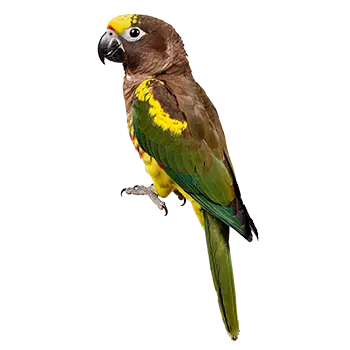

Meyer's Parrots reach sexual maturity at approximately two to three years of age, though responsible breeders generally recommend waiting until birds are at least three years old before allowing them to breed. Physical maturity alone does not indicate readiness; the pair must also be in excellent overall health, at a stable and appropriate weight, and free from infectious diseases. Pre-breeding health screenings by an avian veterinarian should include blood work, disease testing for conditions such as Psittacine Beak and Feather Disease and Polyomavirus, and a general physical examination.
Meyer's Parrots are monomorphic, meaning males and females are visually identical in plumage. Accurate sexing is therefore essential before any breeding attempt and is reliably accomplished through DNA testing from a blood sample or feather. Surgical sexing is also an option but carries more risk and is less commonly used today. Pairing two birds of the same sex is a surprisingly common mistake among inexperienced breeders who rely on behavioral cues alone.
Pair compatibility is not guaranteed simply because a male and female are placed together. Meyer's Parrots can be selective about their mates, and forced pairings can result in aggression, stress, and refusal to breed. Introduce prospective pairs gradually, housing them in adjacent cages where they can see and hear each other before being placed in the same enclosure. Signs of compatibility include mutual preening, feeding each other, roosting close together, and spending time near the nest box entrance.
The breeding environment should be calm, private, and free from excessive disturbance. Breeding pairs often become more territorial and may not tolerate the same level of interaction with their owners that they accepted before pairing. Respect the pair's need for privacy, particularly once they begin showing nesting behavior, and minimize handling to reduce stress that could interfere with successful reproduction.