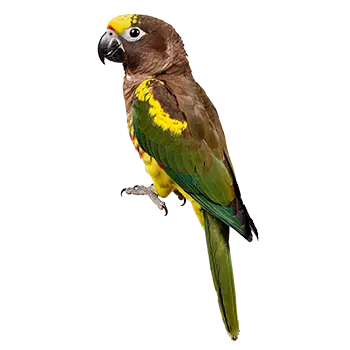

The juvenile stage of a Meyer's Parrot begins once the bird is fully weaned, typically around 10 to 14 weeks of age, and extends until it reaches sexual maturity at roughly two to three years. During this period, the young parrot undergoes significant physical changes. The bird's adult plumage develops gradually, with juvenile feathers being replaced through a series of molts that refine the coloring and patterning characteristic of the species. The browns, greens, and yellow or turquoise crown markings become more vivid and defined with each successive molt.
Weight should stabilize after weaning and remain relatively consistent throughout the juvenile period, generally settling between 100 and 135 grams depending on the individual. Regular weigh-ins, performed weekly on a gram scale, help ensure that the bird is maintaining a healthy weight and not experiencing unexplained losses that could indicate illness or dietary problems. A young Meyer's Parrot that consistently falls below or above the expected range should be evaluated by an avian veterinarian.
The beak and nails continue to grow and harden during this stage. Providing appropriate chewing materials such as untreated wood, mineral blocks, and foraging toys helps the bird maintain its beak naturally. Nail length should be monitored, and perches of varying diameters and textures help promote natural wear. The feet and legs are still developing strength, so a variety of perch sizes supports healthy foot musculature and joint development.
Flight feathers reach their full length during the juvenile period, and this is when the young bird develops its flight skills. Whether or not the wings are clipped is a personal decision for the owner, but allowing the bird to learn to fly and land safely during this developmental window builds coordination, confidence, and cardiovascular fitness that benefit the bird throughout its life.