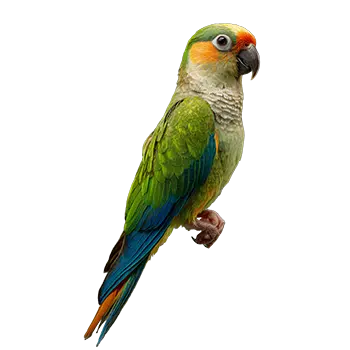

The Weaning Transition

Weaning is one of the most consequential periods in a juvenile Half-Moon Conure's development, and how it is managed has lasting effects on the bird's physical health, emotional stability, and relationship with food throughout its life. The process typically begins between eight and ten weeks of age and may take several weeks to complete, varying from bird to bird based on individual readiness. Attempting to rush weaning according to an arbitrary calendar rather than the chick's behavioral cues is one of the most common and damaging mistakes a caregiver can make.

The earliest signs of weaning readiness appear when the chick begins showing sustained interest in solid foods rather than simply mouthing and discarding them. A juvenile Half-Moon Conure that picks up pellets, pieces of soft fruit, or cooked grains and actively manipulates them in its beak is demonstrating the oral motor skills and cognitive curiosity that precede true self-feeding. At this point, ensure that a shallow dish of age-appropriate foods is available in the brooder or cage at all times, offering a variety of textures and flavors to encourage exploration.

During the transition, hand-feeding formula remains the primary source of nutrition even as solid food intake gradually increases. Reduce the number of daily formula feedings slowly, typically dropping one feeding at a time and monitoring the chick's weight carefully after each reduction. A small amount of weight loss during weaning is normal as the chick's metabolism adjusts, but sustained weight loss exceeding five to seven percent of body weight signals that the chick is not consuming enough solid food to compensate and that the dropped feeding should be reinstated.

Abundance weaning, in which the chick has continuous access to a wide variety of appealing foods and is allowed to set its own pace, produces the best outcomes for Half-Moon Conures. This species is naturally inquisitive and will transition to self-feeding with minimal stress when given the freedom to explore food on its own terms. Forced weaning, where formula is abruptly withheld to compel solid food consumption, causes physiological stress, weight loss, and can create food-related anxiety that manifests later as picky eating, food guarding, or refusal behaviors that are extremely difficult to reverse.

The target diet for a fully weaned juvenile Half-Moon Conure should consist of a high-quality pelleted diet as the nutritional base, supplemented with a daily rotation of fresh vegetables, leafy greens, and moderate amounts of fruit. Seeds should be offered sparingly as enrichment rather than as a dietary staple, since a seed-heavy diet leads to fatty liver disease and nutritional deficiencies that become apparent only after years of cumulative damage. Establishing healthy eating habits during weaning is far easier than correcting an entrenched preference for seeds in an adult bird.

Fledging & First Flight

The fledging period marks a transformative milestone for juvenile Half-Moon Conures, representing their transition from ground-bound dependence to the aerial mobility that defines parrot life. In the wild, Eupsittula canicularis fledges from tree cavity nests and quickly develops the flight skills needed to travel with the flock. In captivity, fledging requires careful preparation by the caregiver to ensure the bird's safety while still allowing the physical and neurological development that flight provides.

Most Half-Moon Conure chicks begin their first tentative flights between eight and twelve weeks of age, though the exact timing depends on the individual bird's physical development and confidence level. The process typically starts with vigorous wing-flapping exercises while perched or standing on a flat surface, progresses to short downward glides from an elevated perch, and eventually develops into controlled horizontal flight. The pectoral muscles, keel bone, and cardiovascular system all require the exercise that these early flight attempts provide, and birds that are denied the opportunity to fledge properly often develop lifelong fitness deficits.

Before the chick takes its first flight, prepare the environment to minimize hazards. Close all windows and doors, cover mirrors and large glass surfaces that the bird might fly into, remove ceiling fans from operation, ensure no open water containers are accessible, and block any gaps behind furniture or appliances where a panicked bird could become trapped. The first flights are invariably clumsy, and crash landings are a normal part of the learning process. Having a padded landing zone such as a carpeted or towel-covered floor area reduces the risk of injury during these early attempts.

The question of wing clipping is one that every Half-Moon Conure owner must thoughtfully consider during this period. Proponents argue that clipping prevents injury from collisions and escapes through open doors, while opponents point to the physical and psychological benefits of flight and the increased risk of chest injuries from falls in clipped birds. If clipping is chosen, it should only be performed after the bird has fully fledged and demonstrated competent flight, never before. A bird that is clipped before fledging never develops the spatial awareness, coordination, and confidence that the fledging process builds, and these deficits can contribute to fearfulness and behavioral problems throughout life.

Behavioral Development & Boundaries

The juvenile period in Half-Moon Conures is characterized by a dramatic expansion of behavioral complexity. As the bird's cognitive abilities mature and its physical confidence grows through fledging, caregivers encounter a young conure that is curious, energetic, increasingly vocal, and eager to test the boundaries of its environment and its relationships. Understanding what drives juvenile behavior helps caregivers respond constructively rather than reactively, setting the stage for a well-adjusted adult companion.

Nipping is one of the most common behavioral challenges during the juvenile phase. Young Half-Moon Conures explore the world with their beaks, and what begins as investigative mouthing can quickly escalate into hard bites if the bird learns that biting produces interesting reactions. The most effective response to a nip is a calm, neutral one. Avoid jerking your hand away, shouting, or putting the bird down abruptly, as all of these reactions reward the biting behavior with drama. Instead, hold steady, say a quiet and firm negative cue, and redirect the bird's attention to an appropriate chew toy. Consistency across all household members is essential, because mixed signals from different people confuse the bird and delay learning.

Vocal development accelerates during the juvenile months. Half-Moon Conures are not renowned talkers, but they possess a wide repertoire of natural calls, contact vocalizations, and alarm sounds that become more varied and more emphatic during adolescence. Some individuals do learn a handful of words or phrases, particularly if they are exposed to consistent, repetitive speech during this sensitive developmental window. Regardless of talking ability, the bird's flock contact calls, which are the loud vocalizations it uses to locate its people when they are out of sight, are a normal and healthy behavior that should not be punished. Instead, respond briefly to contact calls to reassure the bird, and provide adequate social interaction so that excessive calling does not develop from loneliness.

Fear periods are a natural part of juvenile development in many parrot species, and Half-Moon Conures are no exception. A bird that was confident and outgoing one week may suddenly become wary of a familiar toy, refuse to step up, or startle at household sounds it previously ignored. These periods are neurologically driven and typically resolve on their own within days to weeks. The caregiver's role during a fear period is to remain patient, avoid forcing the bird into frightening situations, and continue offering gentle, positive interactions that help the bird rebuild its confidence. Pushing through a fear period with forceful handling can create lasting phobias.

Independence-seeking behavior emerges as the juvenile Half-Moon Conure approaches adolescence. The bird may begin exploring areas of the home it previously showed no interest in, asserting preferences about where it wants to be, and resisting recall or step-up commands it once followed readily. This is a normal and healthy expression of the bird's developing autonomy, not a sign of disobedience or a deteriorating bond. Respond by maintaining consistent expectations while allowing appropriate freedom, and resist the temptation to restrict the bird's environment out of frustration. A bird that is given structured independence during this phase grows into a more confident and cooperative adult.

Nutrition for Growing Conures

The nutritional requirements of a juvenile Half-Moon Conure differ from those of a fully mature adult, reflecting the ongoing demands of skeletal growth, feather development, muscle building, and the intense metabolic expenditure of an increasingly active young bird. Getting the diet right during this period supports not only physical health but also cognitive development and emotional stability, as nutritional deficiencies during the juvenile months can manifest as behavioral problems that are often misattributed to temperament.

A high-quality formulated pellet should form the foundation of the juvenile diet, accounting for roughly 60 to 70 percent of total food intake. Pellets designed for small to medium parrots provide a balanced nutritional profile that is nearly impossible to replicate with a seed-based diet. During the juvenile growth phase, slightly higher protein content supports muscle development, so select a pellet formulation that lists protein sources prominently and provides at least 14 to 16 percent crude protein. Avoid pellets with artificial colorants and excessive sugar content, as these additives offer no nutritional benefit and can contribute to hyperactive behavior in a species already predisposed to high energy levels.

Fresh vegetables and leafy greens should constitute approximately 20 to 30 percent of the daily diet. Dark leafy greens such as kale, dandelion greens, and Swiss chard provide calcium, vitamin A precursors, and other micronutrients critical for bone and feather development. Orange and yellow vegetables including sweet potato, butternut squash, and carrots offer beta-carotene and additional vitamins. Offer vegetables in various forms, raw and lightly steamed, chopped and whole, to encourage the bird to engage with different textures and develop the foraging skills it will use throughout its life.

Fruits should be offered in moderation, making up no more than five to ten percent of the diet. While Half-Moon Conures enjoy fruits enthusiastically, most fruits are high in simple sugars and low in the nutrients the bird needs most. Treat fruit as a reward and enrichment item rather than a dietary staple. Berries, papaya, mango, and apple slices are all well-received options. Avocado must be strictly avoided, as it contains persin, a compound that is highly toxic to parrots and can be rapidly fatal even in small quantities.

Calcium supplementation deserves particular attention during the juvenile period. Growing bones and developing feathers place significant demands on the bird's calcium reserves, and a deficiency during this stage can result in metabolic bone disease, weak feather structure, and increased susceptibility to fractures. A cuttlebone or mineral block should be available in the cage at all times, and calcium-rich vegetables should appear frequently in the fresh food rotation. If your avian veterinarian identifies a calcium concern during routine blood work, a powdered calcium supplement sprinkled on food may be recommended.

Training Foundations

The juvenile period represents the optimal window for establishing the training framework that will shape a Half-Moon Conure's behavior for decades. These conures are intelligent and responsive birds that thrive on structured interaction, and the habits formed during adolescence become deeply ingrained patterns in adulthood. Investing time in positive reinforcement training during these months pays dividends that compound over the bird's entire lifespan.

Step-up is the foundational command that every Half-Moon Conure should learn first, as it facilitates safe handling, cage reentry, and emergency retrieval. Present your hand or a perch at the bird's lower chest level and give a clear, consistent verbal cue. When the bird steps onto the offered surface, immediately deliver a small food reward and verbal praise. Repeat this sequence multiple times daily in short, focused sessions of five to ten minutes. Most juvenile Half-Moon Conures learn a reliable step-up within one to two weeks of consistent practice, though some individuals require more time, and patience is always more productive than frustration.

Target training, in which the bird learns to touch its beak to the tip of a stick or a designated object on cue, is an exceptionally versatile skill that opens the door to teaching more complex behaviors. The target stick becomes a tool you can use to guide the bird to new perches, into carriers, onto scales for weighing, and through recall exercises without physical manipulation. Begin by holding the target near the bird and rewarding any movement toward it, then gradually require the bird to make deliberate contact before earning the reward. Half-Moon Conures generally grasp this concept quickly and find the game engaging.

Recall training, teaching the bird to fly or walk to you on command, is particularly important for flighted birds and should be introduced once the juvenile has developed competent flight skills. Start with very short distances in a controlled indoor environment, calling the bird from one perch to your hand with the target stick as a guide. Gradually increase the distance as the bird's confidence and accuracy improve. Reliable recall is one of the most important safety skills a flighted parrot can possess, and it also deepens the bond between bird and caregiver through active cooperation.

Socialization training during the juvenile period should extend beyond the immediate household. Expose the young Half-Moon Conure to a variety of people, environments, sounds, and visual stimuli in a controlled and positive manner. Short car rides in a secure carrier, visits to bird-friendly locations, and supervised interactions with calm, bird-experienced visitors all contribute to a well-rounded bird that handles novelty with curiosity rather than fear. The juvenile brain is wired for learning, and experiences during this period shape the bird's baseline comfort level with the world far more than equivalent experiences later in life.

Housing & Environment

As the juvenile Half-Moon Conure grows out of the brooder and into its first cage, the housing environment becomes a primary factor in the bird's physical development, psychological wellbeing, and behavioral trajectory. A cage that is too small, poorly equipped, or inadequately stimulating produces a frustrated, under-exercised bird that is far more likely to develop stereotypic behaviors such as feather destructive behavior, excessive screaming, and repetitive pacing. Getting the housing right from the start prevents problems that are much harder to solve once they become established habits.

The minimum cage size for a single juvenile Half-Moon Conure should be 24 inches long by 24 inches wide by 30 inches tall, with bar spacing no wider than five-eighths of an inch to prevent the bird from wedging its head between bars. However, bigger is always better when space permits. A flight cage or small aviary that allows the bird to fly short distances inside the enclosure provides exercise opportunities that a smaller cage cannot match. The cage should be constructed of powder-coated steel or stainless steel, as zinc and lead found in some cheaper cage materials are toxic to parrots and can cause heavy metal poisoning through habitual bar chewing.

Perch variety is essential for developing healthy feet and preventing pressure sores that can lead to bumblefoot, a painful and potentially serious bacterial infection of the foot pad. Provide at least three to four perches of different diameters, materials, and textures. Natural wood branches with varying thickness encourage the foot to grip in different positions, rope perches provide a softer resting surface, and a flat platform perch offers a place for the bird to rest its feet entirely. Avoid sandpaper perch covers, which abrade the skin rather than trimming nails and create irritation that predisposes the foot to infection.

Enrichment within the cage must be varied and regularly rotated to maintain the juvenile's interest. Half-Moon Conures are active, playful birds that need outlets for their energy and curiosity. Foraging toys that require the bird to manipulate objects to access hidden food, shreddable items made of safe wood, paper, or palm leaves, and puzzle toys that challenge problem-solving abilities all serve the juvenile's developmental needs. Rotate toys every few days rather than filling the cage with everything at once, as novelty is a powerful motivator for this species and a toy that has been absent for a week becomes interesting again when reintroduced.

Cage placement within the home affects the bird's sense of security and social inclusion. Position the cage in a room where the family spends substantial time, at a height that places the bird roughly at the caregiver's chest or eye level. Avoid placing the cage in direct sunlight, near kitchen fumes, in drafty locations, or in rooms that experience extreme temperature fluctuations. The bird should have at least one side of the cage against a wall or in a corner so that it has a visual refuge, as being fully exposed on all sides can create anxiety in a young parrot still developing its sense of environmental safety.

Health Monitoring & Veterinary Milestones

Ongoing health surveillance during the juvenile period builds on the neonatal screening that the Half-Moon Conure received in its earliest weeks and establishes the preventive care routine that will protect the bird throughout its life. The juvenile months are a time of rapid growth and immune system maturation, and regular veterinary checkups during this period catch problems early while also providing baseline data that makes future health assessments more meaningful.

A comprehensive wellness examination should be scheduled shortly after the bird is weaned and settled into its permanent home. This visit typically includes a thorough physical examination, a complete blood count and basic chemistry panel to establish reference ranges for the individual bird, and crop and fecal cultures to confirm that the gastrointestinal tract is colonized with healthy flora. If disease screening was not performed during the neonatal period, testing for Psittacine Beak and Feather Disease, Polyomavirus, and Chlamydia psittaci should be completed at this time.

The juvenile molt, during which the bird replaces its first set of feathers with adult plumage, typically occurs somewhere between four and eight months of age in Half-Moon Conures. This is a nutritionally demanding process, and the bird's appetite may increase noticeably. Ensure adequate calcium and protein intake during the molt, and monitor for signs of abnormal feather growth such as stress bars, pinched feathers, or retained sheaths that could indicate nutritional deficiency or underlying illness. A healthy molt produces smooth, well-colored feathers with intact barbs, and the distinctive orange frontal band of the species becomes more vivid as adult plumage comes in.

Weight monitoring remains a critical tool during the juvenile months. Weigh the bird on a gram-accurate scale at the same time each week and record the results. A juvenile Half-Moon Conure that has completed weaning should gradually gain weight until it reaches its adult range of approximately 70 to 85 grams. Sudden weight loss, unexplained weight gain, or wide fluctuations between weigh-ins all warrant veterinary evaluation. Because conures carry relatively little body mass, even a small change in grams represents a significant percentage of body weight and should not be dismissed.

Behavioral health deserves the same attention as physical health during this stage. A juvenile that becomes progressively withdrawn, stops vocalizing, develops repetitive movements, or begins plucking or barbering its feathers is signaling psychological distress that has real physiological consequences. Feather destructive behavior that begins in the juvenile period can become a deeply entrenched compulsion if the underlying cause, whether environmental, social, medical, or nutritional, is not identified and addressed promptly. Discuss any behavioral concerns with your avian veterinarian, who can help differentiate between medical and environmental causes and recommend an appropriate intervention plan.

Always consult a qualified professional before making any health-related decisions. This content is provided for informational reference only and should not replace professional guidance specific to your animal.