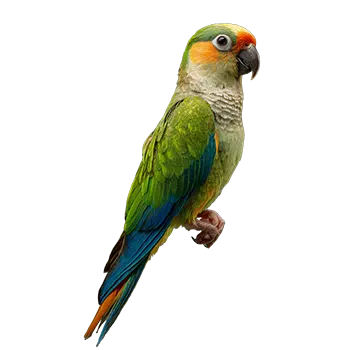

Half-Moon Conure chicks hatch after an incubation period of approximately 23 to 26 days, arriving into the world as tiny, nearly helpless creatures. Also known as the Orange-fronted Conure or by its scientific name Eupsittula canicularis, this Central American species produces hatchlings that weigh roughly 5 to 7 grams and are covered in sparse, pale down. The chick's eyes are sealed shut, its limbs lack coordination, and it depends entirely on external warmth and prompt feeding to survive the critical first day of life.
In a breeder setting where parent birds are raising the clutch, the hen will typically begin feeding the chick within the first few hours after it emerges from the shell. The initial feedings consist of crop milk and softened, regurgitated food that deliver essential nutrients and introduce beneficial gut flora to the chick's sterile digestive tract. If the hatch occurs in an incubator and the chick will be hand-raised, caregivers should wait until the yolk sac is fully absorbed before offering the first feeding. This absorption process generally takes between six and ten hours, and attempting to feed before it is complete can overwhelm the immature digestive system.
The brooder must be prepared and stabilized well before the anticipated hatch date. Newborn Half-Moon Conures require ambient temperatures between 95 and 98 degrees Fahrenheit during their first day. Humidity should be maintained at roughly 60 percent to prevent the delicate skin from drying and to support respiratory comfort. The interior surface should be lined with soft, non-fibrous material such as clean paper towels, since loose substrates like wood shavings pose an ingestion hazard to a chick that instinctively mouths everything it contacts.
During this initial period, close observation is far more valuable than intervention. A healthy hatchling will exhibit a feeding response when the area around its beak is gently touched, its skin should appear pink and well-hydrated, and its breathing should be silent and regular. Any signs of cyanosis, audible respiratory effort, or complete lack of feeding response indicate a medical emergency. Have the contact information for an avian veterinarian with neonatal experience ready before hatching begins, because the margin for error during the first twenty-four hours is extremely narrow.