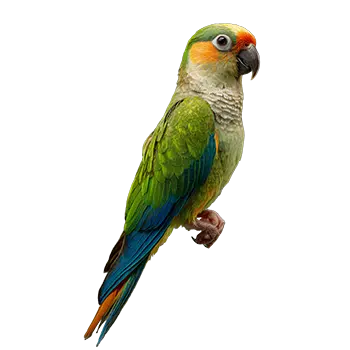

Successful breeding of Half-Moon Conures begins long before the first egg is laid, rooted in the careful selection of healthy, genetically compatible pairs and the confirmation that both birds are physically and behaviorally ready for the demands of reproduction. Eupsittula canicularis reaches sexual maturity between approximately one and two years of age, but physical maturity alone does not constitute breeding readiness. A bird intended for breeding should be in peak physical condition, free of chronic health issues, and demonstrating the behavioral maturity needed to successfully incubate and raise chicks.
Sex determination is a necessary first step, as Half-Moon Conures are monomorphic, meaning males and females are visually identical in plumage and size. Surgical sexing has largely been replaced by DNA sexing, which requires only a small blood sample or a few freshly plucked feathers and provides definitive results. Attempting to pair birds without confirmed sex determination wastes time and can result in same-sex pairs that bond strongly but obviously cannot produce fertile eggs, or in the frustration of repeated unsuccessful breeding attempts.
Genetic diversity should be a consideration for any responsible breeder. Breeding closely related birds increases the likelihood of recessive genetic defects, reduced immune competence, and overall diminished vigor in the offspring. Maintain accurate pedigree records for all breeding stock, and introduce unrelated bloodlines whenever possible. If working with a small captive population, coordinate with other breeders to exchange birds or semen to broaden the genetic base.
Pre-breeding health screening is essential for both the cock and the hen. A comprehensive veterinary examination should include a complete physical assessment, blood work to evaluate organ function and nutritional status, and disease testing for Psittacine Beak and Feather Disease, Polyomavirus, and Chlamydia psittaci. Breeding birds that carry these diseases risk transmitting them vertically to their offspring or horizontally to their mate. The hen's calcium levels deserve particular attention, as egg production places enormous demands on calcium reserves, and a hen that enters breeding with suboptimal calcium status is at significantly elevated risk of egg binding and metabolic bone disease.
Behavioral compatibility between the intended pair is not guaranteed simply because two birds are of opposite sexes. Introduce potential mates gradually, housing them in adjacent cages where they can see and hear each other before allowing physical contact. Signs of mutual interest include feeding each other through the cage bars, synchronized vocalizations, and proximity-seeking behavior. Persistent aggression, fear responses, or complete disinterest after several weeks of adjacent housing suggest the pairing is unlikely to be productive, and attempting to force an incompatible pair together risks serious injuries.