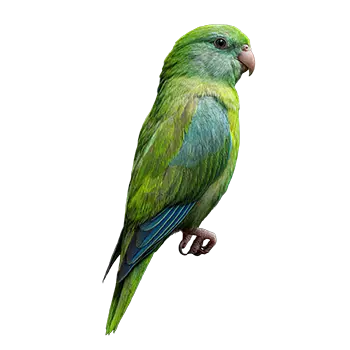

Nutrition for the Adult Parrotlet

An adult Green-Rumped Parrotlet's diet should be carefully balanced to sustain the bird through its prime years while preventing the obesity and nutritional deficiencies that are among the most common health problems in captive parrotlets. Unlike the growth-focused diet of a juvenile, an adult bird's nutritional plan emphasizes maintenance, immune support, and the prevention of chronic conditions that develop slowly and may not become apparent for years.

A high-quality pelleted diet should constitute approximately fifty to sixty percent of the adult parrotlet's daily food intake. Pellets ensure the bird receives a complete nutritional profile regardless of its food preferences, which in parrotlets can be remarkably selective. If the bird was not transitioned to pellets during the juvenile stage, the conversion process requires patience and persistence, as adult parrotlets can be resistant to dietary changes. Gradually mix increasing proportions of pellets into the seed mix over a period of weeks, monitoring weight and consumption closely to ensure the bird is eating adequately throughout the transition.

Fresh vegetables should make up approximately thirty percent of daily intake. Rotate offerings regularly to provide a broad spectrum of vitamins and minerals. Dark leafy greens including kale, collard greens, mustard greens, and dandelion leaves are calcium-rich staples that should appear in the diet daily. Other excellent choices include chopped broccoli, finely diced bell peppers of all colors, grated carrot, cooked butternut squash, and snap peas. Fruits can be offered sparingly, a few times per week, in small portions due to their sugar content. Papaya, berries, kiwi, and pomegranate are among the most nutrient-dense fruit options.

Seeds should be restricted to no more than ten to fifteen percent of the total diet. Parrotlets are highly motivated by seeds, which makes them excellent training rewards, but ad libitum seed access almost invariably leads to a bird that selectively eats seeds and ignores everything else. A measured tablespoon of a high-quality small-parrot seed mix per day, offered as part of foraging enrichment or training sessions, provides the healthy fats and variety the bird craves without displacing more nutritious foods. Avoid sunflower-heavy mixes, which are excessively high in fat for a bird this size.

Fresh, clean water must be available at all times. Change the water at least twice daily, as parrotlets frequently dunk food in their water dish, leading to rapid bacterial growth. Some keepers prefer water bottles over open dishes for this reason, but if a bottle is used, check the spout daily to confirm it is dispensing properly and clean it thoroughly several times per week to prevent biofilm buildup.

Behavioral Enrichment & Mental Stimulation

Green-Rumped Parrotlets are intelligent, active birds that require consistent mental stimulation to remain psychologically healthy during their adult years. A bored parrotlet is a parrotlet at risk for developing behavioral problems, including feather-destructive behavior, excessive vocalization, aggression, and stereotypic movements. Enrichment is not a luxury or an add-on but a fundamental component of responsible parrotlet care that directly impacts the bird's quality of life.

Foraging enrichment should be a daily feature of the adult parrotlet's routine. In the wild, Green-Rumped Parrotlets spend a substantial portion of their day searching for food across their range in northern South America. Replicating this natural behavior in captivity involves presenting food in ways that require the bird to work for it rather than simply eating from an open dish. Wrap small portions of the daily pellet or seed ration in unbleached paper, stuff them into foraging toys, hide them among clean leaves or crumpled paper in a foraging tray, or thread them onto skewers interspersed with vegetable chunks. Rotate foraging methods regularly to maintain the bird's interest.

Physical enrichment includes a variety of toys that cater to the parrotlet's natural behaviors. Chewing toys made from untreated softwood, palm leaf, yucca, and vegetable-tanned leather satisfy the urge to gnaw and help maintain beak condition. Puzzle toys that require manipulation to release a reward engage the bird's problem-solving abilities. Swings and boing perches encourage active movement and exercise balance. Avoid toys with small parts that could be ingested, jingle bells with open slits that could trap toes, or any toy containing zinc, lead, or other toxic materials.

Social enrichment is equally critical for this highly social species. An adult parrotlet that is the sole bird in the household relies entirely on its human family for social interaction, and the daily time commitment should not be underestimated. Plan for a minimum of two to three hours of direct, interactive time outside the cage each day. This time can include training sessions, supervised exploration of a bird-safe room, shoulder time, and structured play. If the bird's primary caregiver is away from home for extended periods, consider whether a companion bird might be appropriate, though introducing a second parrotlet to an established bird's territory requires careful management.

Exercise & Physical Health

Maintaining physical fitness is essential for an adult Green-Rumped Parrotlet's long-term health and longevity. Captive parrotlets that do not receive adequate exercise are prone to obesity, cardiovascular weakness, muscle atrophy, and the secondary health problems these conditions produce. Despite their small size, parrotlets are energetic birds with significant daily activity requirements that must be met through a combination of flight, climbing, and active play.

Flight is the most complete form of exercise available to a parrotlet, engaging the cardiovascular system, strengthening the pectoral muscles, improving respiratory efficiency, and stimulating neurological function. If the bird is fully flighted, provide daily supervised flight time in a safe, enclosed room with windows covered or marked to prevent collisions. A minimum of thirty to sixty minutes of free flight daily is recommended for a healthy adult. If the bird's wings are clipped, which is a management decision that should be made in consultation with your avian veterinarian based on household safety considerations, compensatory exercise becomes even more important. Encourage the clipped bird to flap vigorously by gently bouncing your hand or by holding the bird and walking briskly, prompting it to flap for balance.

Climbing is a natural parrotlet behavior that exercises the legs, feet, and core muscles. Outfit the cage with climbing structures such as ladders, rope nets, and branches of varying angles. Outside the cage, a tabletop play gym with multiple levels and perches encourages the bird to move actively during out-of-cage time. Rotate the gym's layout periodically to present new physical challenges and prevent the bird from becoming sedentary in a familiar environment.

Weight management is a persistent concern in captive parrotlets. An adult Green-Rumped Parrotlet should weigh between 23 and 28 grams, with the ideal weight varying by individual based on frame size and sex. Weigh the bird weekly on a gram-scale and record the results. A trend of gradual weight gain, even just one or two grams over several months, should prompt a review of the diet and exercise routine. Obesity in parrotlets contributes to hepatic lipidosis, a potentially fatal fatty liver condition, as well as joint stress, reduced mobility, and cardiovascular disease. Catching weight gain early and adjusting the diet and activity level accordingly is far easier than reversing established obesity.

Hormonal Behavior & Management

Adult Green-Rumped Parrotlets experience seasonal hormonal fluctuations that can significantly alter their behavior, particularly during the spring and summer months when lengthening daylight triggers reproductive instincts. Understanding and managing hormonal behavior is one of the most important skills an adult parrotlet owner can develop, as mismanaged hormonal birds can become aggressive, territorial, and stressed, and chronic hormonal stimulation poses real health risks, especially for females.

Common signs of hormonal behavior in parrotlets include increased territoriality over the cage, a favorite perch, or a bonded person, regurgitation directed at toys, mirrors, or the caregiver's hand, paper shredding and nesting behavior, increased biting or lunging, and in females, egg laying. Males may become more vocal and display wing-spreading or strutting behaviors. While these behaviors are biologically normal, allowing them to escalate unchecked creates a cycle of frustration for both the bird and the caregiver.

Environmental management is the primary tool for reducing hormonal stimulation. Ensure the bird receives no more than ten to twelve hours of light per day during hormonal periods by covering the cage at a consistent time each evening. Remove any objects that the bird treats as a nest, including huts, tents, boxes, and deep food dishes that the bird can sit inside. Avoid stroking the bird along its back, under its wings, or around the vent area, as these types of touch are sexually stimulating for parrots. Limit access to dark, enclosed spaces where the bird might attempt to nest. Restrict high-fat foods, particularly seeds and nuts, which can fuel reproductive hormone production.

For females, chronic egg laying without a mate is a serious health concern that can lead to calcium depletion, egg binding, and reproductive tract infections. If a female parrotlet is laying eggs persistently despite environmental modifications, consult your avian veterinarian about medical intervention. Hormone-modulating treatments such as leuprolide acetate injections or deslorelin implants can help interrupt the reproductive cycle in birds that do not respond to environmental management alone. Do not remove eggs immediately after they are laid, as this often stimulates additional laying. Instead, allow the hen to sit on the eggs until she loses interest, which typically occurs after two to three weeks.

Routine Health Maintenance

Preventive health care during the adult years is the foundation of a long, healthy life for a Green-Rumped Parrotlet. Establishing a consistent routine of at-home monitoring and scheduled veterinary visits allows health concerns to be identified and addressed early, often before they produce visible symptoms that even an attentive owner would notice.

Annual wellness examinations with a qualified avian veterinarian are the standard of care for adult parrotlets. A comprehensive wellness visit typically includes a physical examination covering body condition, beak and nail assessment, feather quality evaluation, and auscultation of the heart and air sacs. Routine diagnostics usually include a choana and vent gram stain to evaluate bacterial and yeast flora, a fecal parasite screen, and baseline blood work encompassing a complete blood count and plasma biochemistry panel. These annual results create a longitudinal health record that allows your veterinarian to spot subtle trends before they become clinical problems.

At-home health monitoring should be a daily habit. Observe the bird's appetite, activity level, vocalization patterns, and droppings quality each day. Healthy droppings consist of a well-formed green to brownish fecal component, a white to off-white urate portion, and a small amount of clear liquid urine. Any persistent change in droppings, including color shifts, increased liquid content, absence of the fecal component, or a foul odor, should be noted and reported to your veterinarian if it persists beyond a day. Weekly weighing on a gram-scale and monthly beak, nail, and feather condition checks round out the at-home monitoring routine.

Grooming needs for adult parrotlets are generally modest but should not be neglected. Nails may require periodic trimming if perch variety alone does not keep them worn to a safe length. An overgrown nail can catch on fabric or cage components, leading to a torn nail and bleeding. Beak trimming is rarely necessary in a healthy bird with adequate chewing opportunities, but a beak that appears overgrown, asymmetrical, or flaky warrants veterinary evaluation as these can be signs of liver disease, nutritional deficiency, or mite infestation. Bathing should be offered several times per week through a shallow dish of water, a gentle misting with a spray bottle, or access to wet greens, as regular bathing supports feather condition and skin health.

Social Dynamics & Companion Considerations

Green-Rumped Parrotlets are intensely social birds that form strong bonds, whether with a mate, a companion bird, or a human caregiver. Understanding the social dynamics of this species during adulthood is critical for maintaining harmonious relationships within the household and for making informed decisions about whether to keep a single bird or a pair.

A single adult parrotlet bonded to its human caregiver can be a deeply affectionate and interactive companion. These birds often develop a strong preference for one person, greeting that individual with enthusiastic vocalizations, seeking physical contact, and displaying visible distress when separated. This intense bond is one of the species' most appealing traits, but it also carries responsibilities. A single parrotlet relies entirely on its human for social fulfillment, and a bird whose social needs are unmet will develop behavioral problems including excessive screaming, feather-destructive behavior, and aggression toward other household members whom it perceives as competitors for its bonded person's attention.

Keeping a pair of Green-Rumped Parrotlets provides each bird with a constant companion and significantly reduces the demands on the caregiver's time for direct social interaction. However, pair dynamics require careful management. A bonded pair will often become less interested in human interaction, which is a natural consequence of having a conspecific companion. If maintaining a hands-on relationship with each bird is important, daily individual handling sessions are necessary to preserve tameness. Additionally, not all parrotlet pairings are compatible. Introducing a new bird to an established parrotlet's territory must be done gradually, with initial housing in separate cages placed side by side for several weeks before any supervised contact is attempted.

Same-sex pairs can coexist peacefully in many cases, but parrotlets are also capable of sudden, intense aggression toward cage mates, including siblings, if territorial disputes arise. Always provide a cage large enough to allow both birds personal space, include duplicate food and water stations to prevent resource guarding, and monitor the pair for any escalation in aggressive interactions such as chasing, beak fencing beyond normal play, feather pulling, or one bird preventing the other from eating. Any signs of genuine aggression require immediate separation and a reassessment of whether the pairing is viable.

Interaction with other pet species in the household requires careful management. Parrotlets are small and fearless, which can be a dangerous combination around cats, dogs, or larger parrot species. Even a gentle dog or cat poses a lethal threat to a parrotlet through a single accidental bite or scratch, and the bacteria present in mammalian saliva can cause fatal septicemia in birds even from a superficial wound. Never allow unsupervised interaction between a parrotlet and any other pet species, and ensure the cage is positioned where other animals cannot reach it.

Common Adult Health Concerns

While Green-Rumped Parrotlets are generally hardy birds when properly cared for, several health conditions occur with notable frequency in adult captive parrotlets. Awareness of these conditions, their early warning signs, and their management empowers caregivers to seek timely veterinary intervention and optimize outcomes.

Hepatic lipidosis, or fatty liver disease, is one of the most prevalent health problems in captive parrotlets and is directly linked to high-fat, seed-heavy diets and insufficient exercise. The condition develops gradually as excess dietary fat is deposited in the liver, progressively impairing its function. Early signs include weight gain that appears disproportionately centered over the keel and abdomen, overgrown or flaky beak, feather color changes particularly a yellowish cast in green-feathered species, and in advanced cases, difficulty breathing due to an enlarged liver pressing against the air sacs. Treatment involves dietary correction, weight management, and supportive care prescribed by your veterinarian, but prevention through a balanced, low-fat diet and regular exercise is far preferable to treatment.

Psittacosis, caused by the bacterium Chlamydia psittaci, is an important concern for all parrot species and is zoonotic, meaning it can be transmitted from birds to humans. Adult parrotlets can carry the organism asymptomatically or develop clinical signs that include nasal discharge, conjunctivitis, lethargy, fluffed feathers, lime-green droppings, and respiratory distress. Any bird showing these symptoms should be tested promptly, and if positive, treated with an extended course of doxycycline as prescribed by your avian veterinarian. Household contacts should be informed and referred to their physician.

Reproductive disorders are common in adult female parrotlets, particularly those experiencing chronic hormonal stimulation. Egg binding, in which a formed egg becomes lodged in the reproductive tract and cannot be passed, is a life-threatening emergency that requires immediate veterinary intervention. Signs include straining, tail bobbing, sitting on the cage floor, a wide-legged stance, and lethargy. Chronic egg laying, even when eggs are passed successfully, depletes calcium reserves and increases the risk of metabolic bone disease and oviductal prolapse. Work closely with your avian veterinarian to manage hormonal behavior and address reproductive health proactively.

External parasites, including feather mites and Knemidokoptes mites that cause scaly face and leg disease, occasionally affect parrotlets, particularly those housed outdoors or acquired from multi-bird environments with poor hygiene. Symptoms of scaly mite infestation include crusty, thickened tissue around the beak, cere, eyelids, and feet, and the condition responds well to treatment with ivermectin when diagnosed early. Annual veterinary examinations should include assessment for ectoparasites, and any bird displaying skin changes around the face, beak, or feet should be examined promptly.

Always consult a qualified professional before making any health-related decisions. This content is provided for informational reference only and should not replace professional guidance specific to your animal.