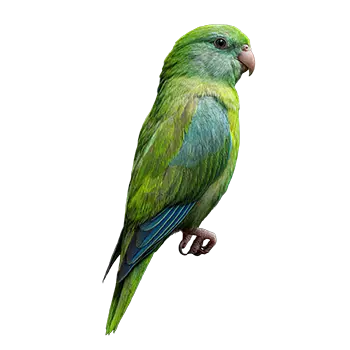

Weaning is one of the most consequential transitions in a young Green-Rumped Parrotlet's life, marking the shift from dependence on hand-feeding formula or parental regurgitation to independent consumption of solid foods. In parrotlets, weaning typically begins around five to six weeks of age and may take two to three weeks to complete fully, though individual birds vary. Rushing this process can lead to malnutrition, weight loss, and behavioral regression, while delaying it unnecessarily can create an unhealthy dependence on formula that complicates the bird's long-term relationship with food.
The weaning process should be abundance-weaned rather than force-weaned. Abundance weaning means offering a wide variety of soft, easily consumed foods alongside continued formula feedings, allowing the chick to gradually increase its solid food intake at its own pace while formula feedings are slowly reduced in frequency. Begin by placing small dishes of warm, softened pellets, finely chopped vegetables, and cooked grains in the brooder or weaning cage where the chick can investigate them. Parrotlets are naturally curious foragers, and most chicks will begin mouthing and tasting these offerings within days of their introduction.
As the chick demonstrates increasing interest in and consumption of solid foods, reduce formula feedings from three times daily to twice, then once, monitoring weight carefully throughout. A modest weight dip of five to eight percent from peak pre-weaning weight is normal during the transition and reflects the shift from calorie-dense formula to lower-density whole foods. However, any weight loss exceeding ten percent or any bird that appears lethargic, hunched, or disinterested in food should be returned to more frequent formula feedings and evaluated by an avian veterinarian.
Parent-weaned chicks undergo a similar process managed by the hen and cock bird. The parents gradually become less responsive to begging and encourage the chicks to forage independently by eating in their presence and leaving food items within reach. Monitor parent-weaned chicks daily to ensure all members of the clutch are successfully transitioning. The smallest or most submissive chick in a large clutch may struggle to access food if competition from siblings is intense, and supplemental feeding or separation may be necessary.