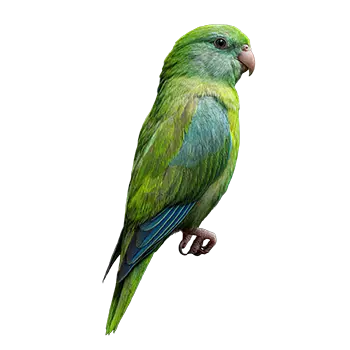
Proper nutrition forms the cornerstone of Green-Rumped Parrotlet health, longevity, and quality of life. Understanding both their natural dietary patterns and modern nutritional science enables owners to provide optimal nutrition supporting these tiny birds throughout their potentially three-decade lifespans. The shift from outdated all-seed diets to balanced modern feeding practices represents one of the most important advances in parrotlet care.
In their native South American habitats, wild Green-Rumped Parrotlets are primarily granivorous, meaning their diet centers on grass seeds and grains. They forage in flocks across savannas and open woodlands, landing on grass seed heads and bending the stems down to access ripening seeds. Ground foraging for fallen seeds also occurs frequently. Beyond grass seeds, wild birds supplement their diet with berries, small fruits, flower buds, blossoms providing nectar, and occasionally protein-rich insects during breeding season when nutritional demands increase.
Historically, captive parrotlets were maintained exclusively on seed mixtures consisting primarily of millet, canary seed, oats, hemp, and sunflower seeds. While birds can survive for years on such diets, purely seed-based nutrition gradually produces deficiencies and imbalances that shorten lifespan and reduce quality of life. Seed-only diets are excessively high in fat (particularly problematic in inactive caged birds), critically deficient in vitamin A and calcium, and provide poor amino acid profiles. Birds maintained on seeds alone commonly develop obesity, fatty liver disease, reproductive problems, poor feather quality, and weakened immune systems increasing susceptibility to infections.
Modern avian nutrition emphasizes high-quality formulated pellets as the dietary foundation. Pellets manufactured specifically for small parrots provide balanced nutrition including appropriate protein levels (12-14% for maintenance, higher for breeding or growing birds), essential vitamins and minerals in correct proportions, and controlled fat content preventing obesity. Premium brands use natural ingredients without artificial colors or excessive chemical preservatives. Pellets should comprise approximately 60-70% of total daily intake.
Transitioning seed-addicted Green-Rumped Parrotlets to pellets requires patience and persistence. Many birds initially resist unfamiliar foods, creating potential food refusal that can be dangerous given their small size and high metabolism. Gradual conversion over several weeks mixing pellets with decreasing amounts of familiar seeds helps achieve acceptance. Place pellets in the primary food dish while offering limited seeds separately, slowly reducing seed portions. Some birds accept pellets more readily when they observe other birds eating them or when pellets are softened with fruit juice initially. Never withdraw all familiar foods suddenly, as parrotlets can develop life-threatening hypoglycemia within hours if they refuse to eat.
Fresh vegetables should constitute 20-30% of daily intake, providing natural vitamins, minerals, phytonutrients, and moisture. Excellent vegetable choices include dark leafy greens (kale, dandelion, mustard greens, Swiss chard), carrots, sweet potato, broccoli, bell peppers of all colors, snap peas, green beans, and winter squash. Thoroughly wash all produce to remove pesticide residues, or choose organic when possible. Offer vegetables in varied presentations—chopped fine for tiny beaks, grated, or in small whole pieces—to maintain interest. Replace uneaten fresh foods within 2-4 hours to prevent bacterial growth that could cause illness.
Fruits should be offered sparingly as occasional treats rather than dietary staples due to high natural sugar content that can contribute to obesity and selective eating. Appropriate fruits include apple (seeds removed due to toxicity), pear, berries, melon, mango, papaya, pomegranate, and kiwi. Limit fruit to 5-10% of total diet. Many parrotlets prefer fruit over healthier foods, so excessive fruit availability may cause birds to fill up on sugary items while ignoring nutritious vegetables and pellets.
Critically important toxic foods to strictly avoid include avocado (all parts are highly toxic to birds), chocolate and caffeine (both cause cardiac problems and death), alcohol (even minute amounts are dangerous), salt (causes kidney damage and dehydration), onions and garlic (cause blood cell damage), and apple seeds (contain cyanide compounds). Never share food from human mouths, as human saliva contains bacteria harmful to birds.
Seeds, despite their historical dominance in parrotlet diets, should now be relegated to treat status comprising only 10-15% of intake maximum. When offered, provide smaller seeds like millet, canary seed, and oats rather than fatty sunflower and safflower seeds. Sprouted seeds offer enhanced nutritional value as germination increases vitamin content, improves digestibility, and reduces fat concentration. Spray millet serves as an excellent training treat and foraging enrichment, though it should be rationed to prevent overconsumption.
Supplementation requirements depend on base diet quality and individual circumstances. Birds eating high-quality pellets with varied fresh foods typically need minimal supplements. However, breeding birds, growing juveniles, ill or recovering birds, and those on less optimal diets may benefit from supplementation under veterinary guidance. Calcium sources including cuttlebone and mineral blocks should be constantly available, especially critical for egg-laying females who experience significant calcium depletion. Providing multiple calcium sources ensures birds can self-regulate intake according to individual needs.
Vitamin supplements can be added to water or food under professional advice, though over-supplementation creates toxicity risks particularly for fat-soluble vitamins A, D, E, and K. Avoid general vitamin-mineral supplements without veterinary consultation, as imbalanced supplementation can cause more problems than it solves. Birds on high-quality pelleted diets typically receive adequate vitamin and mineral intake through their base food.
Water requirements are substantial despite the birds' small size. Provide fresh, clean water daily in sturdy, tip-resistant bowls positioned away from perches to prevent fecal contamination. Change water twice daily in hot weather or if contaminated by food or droppings. Some owners offer water bottles in addition to bowls, but bottles require diligent cleaning as bacteria readily colonize the drinking tube and internal reservoir. Filtered or bottled water is preferable to heavily chlorinated tap water, though most municipal water supplies are safe for bird consumption.
Foraging opportunities enhance both nutrition and mental stimulation by requiring birds to work for food as they would naturally. Hide food items in paper rolls, stuff vegetables into foraging toys, scatter seeds in clean bedding for ground foraging, wrap treats in paper for unwrapping, or use commercially available foraging puzzles. These activities increase activity levels, prevent boredom, slow eating to prevent obesity, and provide species-appropriate mental challenges. Green-Rumped Parrotlets are enthusiastic, intelligent foragers who benefit tremendously from these enrichment feeding methods.
Feeding schedule and portion control prevents obesity, a common problem in captive parrotlets with unlimited food access and insufficient exercise compared to wild counterparts who fly miles daily foraging. Rather than free-feeding unlimited quantities, measure daily portions based on the bird's weight and activity level. A typical adult Green-Rumped Parrotlet requires approximately 1-1.5 tablespoons of pellets plus fresh foods daily. Monitor body condition weekly by feeling the keel bone (breastbone); it should be prominent but not razor-sharp, with slight breast muscle on either side. Overweight birds show decreased keel prominence with excess fat obscuring the bone, while underweight birds show a sharp, protruding keel. Adjust portions accordingly and ensure adequate exercise opportunities to maintain healthy weight throughout the bird's life.