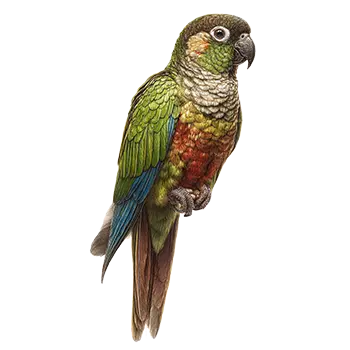

Defining the Adult Stage

A Green-Cheeked Conure reaches full physical maturity at approximately one year of age, marking the transition from adolescence into the adult stage that will span the majority of the bird's life. With a typical lifespan of 20 to 30 years in captivity when properly cared for, the adult period represents the longest and most stable chapter of the conure's existence. Understanding the characteristics and needs of this stage allows caregivers to provide the consistent, enriching environment that supports a long, healthy, and fulfilling life.

By the time a Green-Cheeked Conure is fully adult, it has completed its juvenile molt and is wearing its definitive adult plumage. The rich green body feathers, dark crown, distinctive green cheek patches, maroon tail, and scalloped chest pattern are fully developed. The bird has reached its adult weight, generally falling between 60 and 80 grams, and its beak, feet, and eyes have taken on their mature coloration. Physically, the adult conure is a compact, muscular bird with considerable agility and stamina.

Behaviorally, the adult Green-Cheeked Conure has settled into a recognizable personality. The playful curiosity and occasional moodiness of adolescence give way to a more predictable temperament, though these conures retain their spirited, clownish nature throughout life. The bird's social preferences have solidified, and its bond with its primary caregiver is typically deep and demonstrative. Adult Green-Cheeked Conures are known for their affectionate behavior, including cuddling against their owner's neck, burrowing under clothing or blankets, and soliciting head scratches with endearing head-dipping gestures.

The adult stage is not a period of stasis, however. Seasonal hormonal cycles, environmental changes, shifts in household dynamics, and the natural aging process all introduce evolving challenges. Caregivers who assume that an established adult bird requires less attention or management than a juvenile often find themselves dealing with behavioral and health problems that could have been prevented with proactive care.

Optimal Adult Diet

Maintaining a balanced, varied diet throughout the adult years is one of the most impactful things a caregiver can do for a Green-Cheeked Conure's long-term health. Nutritional deficiencies and obesity are among the leading causes of illness in captive conures, and both are almost entirely preventable through informed dietary management. The dietary foundation established during the juvenile period should be refined and maintained throughout adulthood, with adjustments made as the bird ages or as health conditions arise.

A high-quality pelleted diet should continue to form 60 to 70 percent of the adult conure's daily intake. Pellets formulated for small to medium parrots deliver balanced nutrition that seed-based diets cannot replicate, providing appropriate levels of protein, fat, vitamins, and minerals in every serving. Rotate between two or three trusted pellet brands periodically to provide variety and reduce the risk of brand-specific nutritional gaps. If the bird resists pellets, try different sizes, shapes, colors, and flavors, and use foraging opportunities to encourage pellet consumption.

Fresh produce should comprise 20 to 30 percent of the daily diet, offered in the morning when the bird is hungriest and most receptive to variety. Prioritize nutrient-dense vegetables such as broccoli, sweet potato, dark leafy greens, bell peppers, and cooked squash. Rotate seasonal fruits including papaya, mango, blueberries, kiwi, and pomegranate. Green-Cheeked Conures benefit from beta-carotene-rich foods, which support feather pigmentation and immune function. Remove uneaten fresh food within three to four hours to prevent spoilage, especially in warm environments.

Seeds and nuts should remain a minor component, limited to roughly five percent of the total diet. Use them strategically as training rewards, foraging incentives, or relationship-building treats rather than as a dietary staple. A Green-Cheeked Conure that fills up on sunflower seeds or millet will lack the appetite for the nutritionally complete foods it needs. Monitor the bird's weight monthly on a gram-accurate scale, as weight gain is often the first detectable sign that the diet has drifted toward excess fat.

Clean, fresh water must be available at all times. Change water at least twice daily, as conures frequently dunk food and debris into their water dishes, creating a bacterial breeding ground. Some owners prefer water bottles over open dishes to maintain cleanliness, but ensure the bird knows how to use the bottle and verify daily that it is dispensing properly. Dehydration in conures can develop quickly and may not be obvious until the bird is clinically compromised.

Exercise, Play & Enrichment

Green-Cheeked Conures are active, intelligent birds that require substantial daily exercise and mental stimulation to remain physically healthy and psychologically balanced. An under-stimulated adult conure will channel its energy into destructive behaviors, excessive vocalization, feather picking, or other stereotypic activities that can become deeply ingrained habits. Designing an enrichment program that evolves with the bird's interests and abilities is one of the most rewarding aspects of conure guardianship.

Out-of-cage time is essential. An adult Green-Cheeked Conure should spend a minimum of two to three hours outside the cage each day, interacting with its human flock and exploring a bird-safe area. Supervised flight or climbing around a playstand, interaction with toys and foraging stations, and direct one-on-one time with the caregiver all contribute to the bird's physical and emotional needs. If the bird is flighted, free flight within a safe room provides excellent cardiovascular exercise and coordination practice. If the bird is clipped, a large playstand with ladders, swings, and climbing nets offers alternative exercise opportunities.

Foraging enrichment should be a daily feature of the adult conure's routine. In the wild, Green-Cheeked Conures spend hours each day searching for food, and replicating this natural behavior in captivity reduces boredom and provides essential cognitive exercise. Wrap pellets or treats in paper, hide food inside foraging boxes or puzzle feeders, weave leafy greens through cage bars, and skewer vegetables on stainless steel kabobs. Start with easy foraging challenges and gradually increase difficulty as the bird develops its problem-solving skills.

Toy rotation prevents habituation and maintains the bird's engagement with its environment. Keep a stock of toys and rotate three or four into the cage at a time, swapping them every few days. Green-Cheeked Conures particularly enjoy toys that can be shredded, such as balsa wood blocks, palm fiber bundles, and vine balls. They also appreciate toys with moving parts, bells, and items that produce satisfying noise when manipulated. Avoid toys with small removable parts, toxic metals, or loose threads that could entangle toes.

Social enrichment is equally vital. Green-Cheeked Conures are flock animals that need regular, meaningful interaction with their human companions. Schedule dedicated one-on-one time each day for training, play, cuddling, or simply sharing space while you work or read. The quality of interaction matters more than the quantity, and a bird that receives focused, positive attention for even thirty minutes daily will be emotionally healthier than one that is near its owner all day but ignored.

Managing Hormonal Behavior

Seasonal hormonal surges are a normal part of adult Green-Cheeked Conure biology, but they can produce dramatic behavioral changes that catch caregivers off guard. Understanding the triggers, signs, and management strategies for hormonal behavior helps maintain harmony in the household and prevents the development of chronic reproductive health problems.

In temperate climates, hormonal behavior in Green-Cheeked Conures typically peaks during the spring months, triggered by increasing daylight hours, warmer temperatures, and dietary abundance. However, in the artificially stable environment of a home, hormonal triggers can persist year-round if not actively managed. Extended light exposure from household lighting, calorie-rich diets heavy in seeds and soft foods, access to perceived nest cavities, and inappropriate petting patterns can all stimulate hormonal activity outside the natural breeding season.

The signs of hormonal behavior vary between individuals and sexes but commonly include increased territoriality around the cage, regurgitation onto favored people or objects, paper shredding and nesting behavior, mounting or solicitation postures, increased biting or aggression toward non-favored household members, and excessive egg laying in females. An adult female Green-Cheeked Conure that begins laying eggs should be monitored carefully, as chronic egg laying depletes calcium reserves and can lead to egg binding, a potentially fatal condition.

Environmental management is the first line of defense against problematic hormonal behavior. Maintain a consistent light schedule of 10 to 12 hours of light followed by 12 to 14 hours of uninterrupted darkness. Cover the cage with an opaque cover at a regular time each evening and do not disturb the bird until morning. Remove any objects that the bird treats as a nest, including huts, tents, boxes, deep food bowls, and enclosed spaces. Restrict petting to the head and neck only, as stroking the back, wings, or tail stimulates hormonal responses.

Dietary adjustments can also help modulate hormonal activity. Reduce calorie-dense foods such as seeds, nuts, and warm soft foods during hormonal periods, and increase the proportion of vegetables and leafy greens. Some avian veterinarians recommend slightly reducing the overall volume of food offered during peak hormonal season, as dietary abundance is a powerful breeding trigger. In severe or chronic cases where environmental management alone is insufficient, consult your avian veterinarian about hormonal intervention options, which may include hormone injections or implants.

Routine Health Maintenance

Consistent preventive health care throughout the adult years is the best insurance against the chronic diseases and acute emergencies that can shorten a Green-Cheeked Conure's life. Adult conures should receive a comprehensive veterinary examination at least once per year, with more frequent visits recommended for birds with known health conditions or those over ten years of age.

The annual wellness examination should include a thorough physical assessment covering body condition score, feather quality, beak and nail condition, eye and nare clarity, joint mobility, and abdominal palpation. Blood work consisting of a complete blood count and chemistry panel provides insight into organ function, infection status, and metabolic health. A fecal analysis screens for intestinal parasites and abnormal bacterial or fungal populations. The veterinarian may also perform a Gram stain of choana and cloaca samples to evaluate the bird's microbial balance.

At home, daily health monitoring should become an automatic part of the caregiver's routine. Observe the bird's droppings each time the cage is cleaned, noting any changes in the fecal component color, urate whiteness, or urine volume. Monitor food and water intake for sudden increases or decreases. Watch for behavioral changes such as increased sleeping, decreased vocalization, fluffed posture, reluctance to perch, or reduced interest in interaction. Any of these can signal the early stages of illness that may not yet be apparent on casual observation.

Grooming needs during the adult stage include regular nail trimming, beak assessment, and feather care. Nails should be trimmed every four to six weeks or as needed when they become sharp enough to catch on fabric or pierce skin during handling. Most healthy adult conures maintain their beaks through normal chewing activity, but a beak that appears overgrown, misaligned, or flaky should be examined by a veterinarian, as beak abnormalities can indicate liver disease, nutritional deficiency, or viral infection.

Environmental safety deserves ongoing vigilance even with an established adult bird. Review the household regularly for potential hazards including nonstick cookware that releases toxic fumes when overheated, scented candles and air fresheners containing volatile organic compounds, open toilets, standing water, toxic houseplants, exposed electrical cords, and doors or windows that could allow escape. Complacency about bird-proofing is a leading cause of preventable injuries and fatalities in companion parrots.

Strengthening the Companion Bond

The relationship between a Green-Cheeked Conure and its primary caregiver is one of the most rewarding interspecies bonds available to a pet owner, but it requires ongoing investment and thoughtful cultivation. Adult Green-Cheeked Conures are capable of deep, enduring attachment, and they thrive when their social needs are met with consistency, respect, and genuine engagement. A strong bond does not develop by accident, and even long-established relationships can erode if the caregiver becomes complacent.

Daily one-on-one interaction is the bedrock of the companion bond. Set aside dedicated time each day when your attention is fully on the bird rather than divided between the conure and a screen, phone, or other distraction. Training sessions, even brief five-minute exercises practicing known behaviors, keep the bird mentally engaged and reinforce the cooperative dynamic between bird and human. Teach new tricks periodically to maintain the bird's interest in learning and to deepen the communication repertoire you share.

Respect the bird's autonomy and communication signals. Green-Cheeked Conures express their emotional state through body language including eye pinning, feather position, posture, and vocalization patterns. A bird that pins its eyes, fans its tail feathers, and lowers its head is often excited or agitated, and handling it in that moment may result in a bite. A bird that leans toward you with relaxed feathers and a slightly lifted foot is inviting contact. Learning to read and respond to these signals builds mutual trust and demonstrates to the bird that its communication is effective.

Include the bird in household routines wherever safely possible. Green-Cheeked Conures are flock animals, and being included in the family's daily rhythms fulfills a fundamental social need. Let the bird sit on your shoulder while you prepare food, bring its playstand to the room where you are working, or carry it to different parts of the house during your daily activities. These shared experiences strengthen the bird's sense of belonging and reduce the isolation-related anxiety that can develop in birds confined to a single room.

Address relationship strains proactively rather than allowing them to fester. If the bird has developed an unwanted behavior, if a household change has disrupted the routine, or if you notice the bird seeming withdrawn or irritable, identify the underlying cause and address it directly. Consult an avian behaviorist if needed. A Green-Cheeked Conure that is biting, screaming excessively, or plucking is not being deliberately difficult. It is communicating distress through the only channels available to it, and the caregiver's job is to decode that communication and respond constructively.

Common Adult Health Concerns

While Green-Cheeked Conures are generally hardy birds, several health conditions appear with notable frequency during the adult years. Awareness of these conditions, their early warning signs, and appropriate responses allows caregivers to seek treatment promptly and improve outcomes significantly.

Feather destructive behavior, commonly called feather plucking, is one of the most distressing conditions seen in adult conures. The bird damages or removes its own feathers through overpreening, chewing, barbering, or outright pulling. The causes are multifactorial and may include medical problems such as liver disease, skin infections, parasites, or allergies, as well as psychological factors including boredom, anxiety, hormonal frustration, or social deprivation. Any bird displaying feather destructive behavior should receive a thorough medical workup before the problem is attributed to behavioral causes alone. Treatment typically involves addressing any underlying medical conditions, enriching the environment, increasing social interaction, and in some cases, pharmacological intervention under veterinary guidance.

Respiratory infections occur with concerning regularity in captive conures, often triggered by poor air quality, temperature fluctuations, or exposure to airborne irritants such as cooking fumes, cigarette smoke, or aerosolized cleaning products. Symptoms include nasal discharge, sneezing, wheezing, tail bobbing during breathing, and reduced vocalization. Respiratory infections can be bacterial, fungal, or viral in origin, and accurate diagnosis requires veterinary testing. Aspergillosis, a fungal infection caused by Aspergillus organisms commonly found in the environment, is particularly dangerous and can become chronic if not treated aggressively.

Proventricular dilatation disease, also known as PDD or macaw wasting disease, affects multiple parrot species including Green-Cheeked Conures. It is caused by avian bornavirus and produces progressive damage to the nerves of the digestive tract, leading to weight loss, undigested food in droppings, regurgitation, and eventual neurological symptoms. There is no cure, but early diagnosis and supportive treatment with anti-inflammatory medications can extend quality of life significantly. Any adult conure showing chronic weight loss or passing undigested seeds should be tested for bornavirus.

Obesity and fatty liver disease are increasingly common in pet conures fed seed-heavy diets with insufficient exercise. The liver accumulates fat, impairing its function and eventually leading to organ failure if the condition is not reversed. Signs include weight gain above the normal range, distended abdomen, overgrown or flaky beak, and in advanced cases, a yellowish tinge to the urate portion of droppings. The treatment is dietary conversion to a balanced pellet-based diet, increased exercise, and in some cases, liver-support medications prescribed by an avian veterinarian.

Always consult a qualified professional before making any health-related decisions. This content is provided for informational reference only and should not replace professional guidance specific to your animal.