
Recognizing the Senior Stage

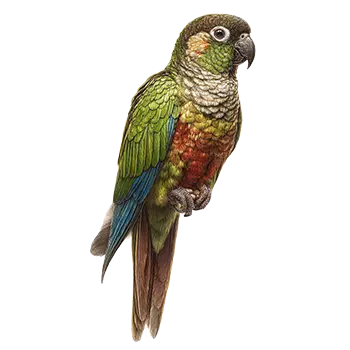
Determining exactly when a Green-Cheeked Conure enters its senior years is less straightforward than with mammals, as birds do not display the dramatic physical aging signs that mark canine or feline senescence. As a general guideline, Green-Cheeked Conures can be considered senior when they reach approximately 15 to 18 years of age, though individual variation is substantial. Some birds remain vigorous well into their twenties, while others begin showing age-related changes earlier, particularly if their lifelong care has been suboptimal.

The earliest signs of aging are often behavioral rather than physical. A senior Green-Cheeked Conure may gradually reduce its activity level, sleeping slightly longer, playing less intensely, and choosing rest over exploration more frequently. The bird may become more routine-dependent, reacting more strongly to changes in its environment or schedule. These shifts tend to be subtle and gradual, which is why caregivers who see the bird every day sometimes fail to notice them until they are quite pronounced.

Physical changes appear as the bird ages further. Feather quality may decline, with plumage becoming duller, thinner, or slower to regrow after molts. The feet and legs may show increased scaliness or stiffness, and the bird's grip strength on perches can diminish. The beak may grow slightly faster or become more prone to flaking as the keratin production process becomes less efficient. Some senior conures develop cataracts or other visual changes that affect their confidence in navigating their environment.

Recognizing the senior stage is not cause for alarm but rather a signal to adapt care routines to the bird's changing needs. A Green-Cheeked Conure that receives thoughtful senior care can maintain excellent quality of life for years, enjoying the same affectionate bond with its caregiver while benefiting from accommodations that address its evolving physical and cognitive capabilities.

Adapted Nutrition for Aging Birds

Nutritional requirements shift as a Green-Cheeked Conure ages, and the diet that served the bird well during its prime adult years may need meaningful adjustment to support aging organ systems, maintain body condition, and address age-related health concerns. Working with an avian veterinarian to tailor the diet to the individual bird's needs is the most effective approach, as aging conures vary considerably in their health profiles.

Caloric needs generally decrease as the bird's metabolism slows and activity level declines. Continuing to offer the same volume of food that sustained an active adult can lead to weight gain, which places additional stress on joints, cardiovascular function, and liver health. Weigh the bird regularly and adjust portions to maintain a stable, healthy weight. If the bird has already gained excess weight, implement dietary changes gradually under veterinary guidance rather than restricting food abruptly, which can cause hepatic lipidosis in overweight birds.

Conversely, some senior conures experience unintended weight loss due to decreased appetite, dental or beak problems that make eating uncomfortable, or malabsorption issues related to aging digestive function. For underweight seniors, increase the caloric density of the diet by offering warm, softened pellets, nutrient-dense cooked grains such as quinoa or brown rice, and healthy fats from sources like a small amount of flaxseed or crushed walnut. Warming food slightly can enhance its aroma and make it more appealing to a bird with diminished olfactory sensitivity.

Senior conures may benefit from increased dietary support for specific organ systems. Foods rich in antioxidants, such as blueberries, sweet potato, and dark leafy greens, help combat oxidative damage associated with aging. Omega-3 fatty acids from flaxseed or chia seed support skin, feather, and joint health. Calcium supplementation becomes particularly important for senior females with a history of egg laying, as long-term calcium depletion weakens bones and increases fracture risk. Discuss specific supplementation with your veterinarian rather than adding products indiscriminately.

Food presentation may also need to be modified for senior birds. A conure with arthritic feet or reduced grip strength may struggle to hold and manipulate hard foods. Offer vegetables in grated or finely chopped form, soften pellets slightly with warm water, and position food dishes where the bird can access them without difficult climbing or balancing. Multiple feeding stations at different cage levels ensure the bird can eat comfortably regardless of where it prefers to perch.

Cage & Environment Modifications

The cage that served a Green-Cheeked Conure well during its agile adult years may present challenges for a senior bird with reduced mobility, diminished vision, or arthritic joints. Thoughtful modifications to the enclosure and its surroundings can prevent injuries, reduce stress, and help the aging bird maintain its independence and comfort.

Perch placement should be reviewed and adjusted. Lower perches to reduce the height of potential falls, and eliminate perches that are positioned so high that the bird must make difficult climbs to reach them. Ensure that food and water dishes are accessible from the bird's preferred resting perch without requiring acrobatic maneuvering. Widen the spacing between perches so the bird can move between them with shorter, safer steps rather than risky lunges. Replace any narrow, smooth dowel perches with wider, textured natural wood branches or padded rope perches that are easier for aging feet to grip securely.

Flat platform perches become increasingly valuable for senior conures. A wide, flat perch positioned near food and water gives the bird a stable surface where it can rest its feet completely flat, relieving the constant gripping pressure that can exacerbate arthritis and foot sores. Some caregivers add a padded platform near the bottom of the cage as a soft landing zone in case the bird loses its footing during the night.

Lighting and visual considerations deserve attention as the bird's eyesight may decline. Avoid rearranging the cage interior frequently, as a bird with compromised vision relies on spatial memory to navigate. Ensure the cage is well lit during daytime hours with full-spectrum lighting, which not only supports vision but also aids vitamin D synthesis and maintains circadian rhythm regulation. Position the cage away from reflective surfaces or bright windows that could create confusing glare or startling reflections.

Temperature management becomes more critical for senior birds. Aging conures are less efficient at thermoregulation and more sensitive to drafts and temperature swings. Keep the cage in a room with stable temperatures between 65 and 80 degrees Fahrenheit, well away from heating vents, air conditioning units, and exterior doors that admit cold drafts. A ceramic heat panel mounted safely outside the cage can provide supplemental warmth during cold months without the burn risk associated with heat lamps.

Cognitive Enrichment & Emotional Support

Cognitive decline is a real but underappreciated concern in aging parrots. While research on avian cognitive aging is limited compared to mammalian studies, experienced avian veterinarians and behaviorists report observable changes in learning speed, problem-solving ability, and memory function in geriatric parrots. Green-Cheeked Conures that remain mentally active throughout their senior years tend to maintain sharper cognitive function and more engaged temperaments than those allowed to become sedentary and understimulated.

Continue training and learning activities with your senior conure, adapting the complexity to the bird's current abilities. If the bird once learned new tricks quickly, it may now need more repetitions and shorter sessions to master new behaviors. Review and practice previously learned commands, as the reinforcement of established neural pathways helps maintain cognitive function. The goal is not to push the bird to perform at its peak adult level but to keep its mind actively engaged in a low-pressure, rewarding context.

Foraging enrichment remains valuable for senior birds, though the difficulty level may need to be reduced. Replace complex multi-step foraging puzzles with simpler challenges that the bird can solve without frustration. Wrap treats loosely in paper rather than tightly, use open foraging trays rather than enclosed boxes, and ensure the bird is actually accessing the hidden food rather than giving up and going hungry. A bird that repeatedly fails at foraging challenges will stop trying, which defeats the purpose of the enrichment.

Emotional support takes on increased importance as the bird ages. Senior Green-Cheeked Conures often become more strongly attached to their primary caregiver and more anxious about separation or changes in routine. Maintain a consistent daily schedule as much as possible, and provide extra reassurance during unavoidable disruptions such as travel, household moves, or the introduction of new family members or pets. The bird's emotional security is deeply connected to its physical wellbeing, and chronic stress in a senior bird can suppress immune function and accelerate age-related decline.

If the conure shares its home with other birds, monitor social dynamics carefully. A senior bird that was once dominant may lose status as it becomes less physically assertive, potentially leading to bullying or food guarding by younger cagemates. Provide separate feeding stations and rest areas to ensure the senior bird is not being displaced from resources. In some cases, housing the senior bird separately while maintaining visual contact with the flock is the best solution for its safety and comfort.

Age-Related Health Conditions

As Green-Cheeked Conures age, they become increasingly susceptible to a range of health conditions associated with cumulative wear on organ systems and the gradual decline of physiological resilience. Awareness of the most common senior health issues allows caregivers to detect early symptoms and pursue timely veterinary intervention, which can significantly extend the bird's comfortable, active lifespan.

Arthritis is one of the most prevalent conditions in geriatric conures. Years of perching, climbing, and gripping produce cumulative stress on the joints of the feet, legs, and sometimes the wings. Signs include reluctance to climb, shifting weight between feet, favoring one foot while sleeping, reduced grip strength, and visible swelling or stiffness in the toe joints. Arthritis cannot be cured, but it can be managed effectively through a combination of anti-inflammatory medications prescribed by an avian veterinarian, environmental modifications to reduce joint stress, and gentle handling that avoids placing strain on painful joints.

Renal disease becomes more common in older conures and can progress silently for months before symptoms become apparent. Early signs include increased water consumption, increased urine volume in droppings with a dilute or watery appearance, weight loss, and lethargy. Blood chemistry panels performed during routine senior wellness examinations can detect elevated uric acid and other markers of renal compromise before clinical symptoms emerge. While renal disease in birds is rarely reversible, early detection allows dietary and supportive measures that slow progression and maintain quality of life.

Cataracts and other visual impairments develop in a meaningful percentage of geriatric conures. The bird may become startled more easily, hesitate before stepping onto hands or perches, misjudge distances when flying or jumping, or show reluctance to move in dim lighting. An avian ophthalmologic examination can determine the extent of visual impairment. While cataract surgery is possible in some avian patients, it is not routinely performed, and most senior conures adapt well to gradual vision loss if their environment is kept consistent and free of hazards.

Cardiovascular disease, including atherosclerosis, affects aging parrots more commonly than many caregivers realize. Risk factors include lifelong high-fat diets, obesity, sedentary lifestyles, and genetic predisposition. Symptoms can be vague and include exercise intolerance, labored breathing after minimal exertion, weakness, and in advanced cases, sudden collapse. Diagnosis requires veterinary imaging and blood work. While advanced cardiovascular disease carries a guarded prognosis, dietary and lifestyle modifications combined with appropriate medications can improve quality of life and extend survival in many cases.

Veterinary Care for Senior Conures

The veterinary care schedule for a senior Green-Cheeked Conure should intensify compared to the annual visits recommended for healthy adults. Semi-annual wellness examinations are advisable for birds over 15 years of age, and quarterly visits may be warranted for birds with known chronic conditions or those over 20 years. The additional expense and effort of more frequent veterinary care pays dividends in early detection and intervention, which are the most powerful tools available for managing geriatric health.

Each senior wellness examination should include a comprehensive physical assessment with particular attention to body condition, muscle mass, joint mobility, feather quality, and abdominal palpation for organ enlargement. Blood work should be more extensive than the standard adult panel, including a complete blood count, full chemistry panel with liver and kidney markers, and thyroid function testing if available. Baseline radiographs can be valuable for detecting early organ enlargement, atherosclerotic changes, or skeletal abnormalities that may not yet be producing clinical signs.

Discuss pain management openly with your avian veterinarian. Birds are notoriously skilled at hiding pain, and a senior conure may be experiencing significant discomfort from arthritis, neuropathy, or organ disease without displaying obvious distress. Behavioral indicators of pain in conures include decreased activity, reduced appetite, changes in vocalization patterns, feather fluffing, and withdrawal from social interaction. Avian pain management has advanced considerably in recent years, and your veterinarian can offer safe, effective options that improve the bird's comfort and quality of life.

Medication administration is often a necessary part of senior care, and it presents practical challenges with a small bird. Work with your veterinarian to find the most manageable delivery method, whether that is liquid medication mixed into a preferred soft food, a flavored oral suspension administered by syringe, or in some cases, injectable medication given during veterinary visits. Consistency in medication timing is important, so develop a routine that works for both you and the bird. Never discontinue prescribed medications without veterinary approval, even if the bird appears to have improved.

End-of-life planning, while emotionally difficult, is a responsible component of senior veterinary care. Discuss with your veterinarian the realistic prognosis for any chronic conditions, the indicators that quality of life is declining, and the options available when medical intervention is no longer able to maintain comfort. Having this conversation before a crisis allows for thoughtful decision-making rather than emergency choices made under extreme emotional stress.

Quality of Life in the Golden Years

Measuring and maintaining quality of life is the central concern of senior Green-Cheeked Conure care. Unlike medical metrics that can be quantified through blood work and imaging, quality of life is a holistic assessment that encompasses the bird's physical comfort, emotional contentment, social engagement, and ability to perform the activities that bring it satisfaction. Caregivers who learn to evaluate quality of life accurately are better equipped to make the compassionate decisions that this stage of the bird's life may require.

Develop a quality of life checklist tailored to your individual bird. Consider factors such as appetite and interest in food, ability to perch and move comfortably, engagement with toys and enrichment, responsiveness to social interaction, sleep quality and duration, grooming behavior, vocalization patterns, and overall demeanor. Score each factor regularly, perhaps weekly, to track trends over time. A gradual decline in one or two areas may be manageable with veterinary support and environmental adjustments, while a consistent decline across multiple categories signals a more serious trajectory.

Adapt your expectations and interactions to match the bird's current capabilities rather than mourning the loss of its youthful vigor. A senior conure may no longer perform acrobatic tricks or fly with the agility of its younger years, but it may find deep satisfaction in gentle cuddling, quiet companionship, and simple foraging activities. Celebrate the behaviors the bird still enjoys and find new ways to enrich its life within its current limitations. Many caregivers report that their bond with their conure actually deepens during the senior years, as the relationship matures into a quieter, more nuanced companionship.

Maintain routine and predictability as much as possible. Senior Green-Cheeked Conures draw comfort from familiar patterns, and disruptions to routine can produce disproportionate anxiety. Keep feeding times, sleep schedules, out-of-cage times, and social interactions consistent from day to day. When changes are unavoidable, introduce them gradually and provide extra reassurance during the transition.

Finally, take care of yourself as well. Caring for an aging companion bird can be emotionally demanding, particularly as health challenges accumulate and the reality of the bird's finite lifespan becomes more immediate. Connect with other experienced bird owners, join online communities for parrot caregivers, and seek support from friends or counselors who understand the depth of the human-animal bond. Your emotional wellbeing directly affects your ability to provide the compassionate, consistent care your senior conure deserves.

Always consult a qualified professional before making any health-related decisions. This content is provided for informational reference only and should not replace professional guidance specific to your animal.