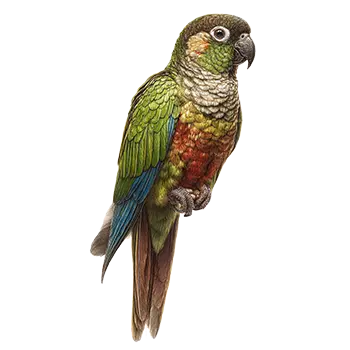

Breeding Green-Cheeked Conures is a significant commitment that extends far beyond simply placing a male and female together and waiting for eggs. Responsible breeding demands thorough preparation, a deep understanding of the species' reproductive biology, financial resources for veterinary care and supplies, and a clear plan for the placement of offspring. Before embarking on a breeding program, prospective breeders must honestly assess whether they have the knowledge, time, and facilities to produce healthy, well-socialized chicks.
Green-Cheeked Conures reach sexual maturity at approximately one to two years of age, but breeding birds younger than two years is inadvisable. Young birds that have not fully matured physically are at greater risk of egg binding, inadequate parenting, and reproductive complications. Ideally, breeding birds should be at least two years old, in excellent health, and free from genetic conditions or known hereditary defects. Both prospective parents should undergo a comprehensive veterinary examination before breeding, including blood work, fecal analysis, and screening for common avian diseases such as Polyomavirus, Psittacine Beak and Feather Disease, and Chlamydiosis.
Sexing Green-Cheeked Conures requires either DNA testing or surgical sexing, as the species is not reliably sexually dimorphic. Visual sex determination based on head shape, size, or behavior is unreliable and has led countless owners to pair two birds of the same sex. A simple DNA test performed on a blood feather or blood sample provides definitive sex identification and should be considered a non-negotiable prerequisite for any breeding attempt.
Consider the demand for offspring before breeding. The companion bird market fluctuates, and producing chicks without pre-arranged homes can result in birds languishing unsold, being placed hastily with unprepared owners, or ending up in rescue organizations. Ethical breeders have waiting lists of qualified buyers before eggs are even laid. They also maintain the capacity to retain any chicks that do not find suitable homes, which means having adequate cage space, time, and financial resources for additional long-term residents.