
The Weaning Transition

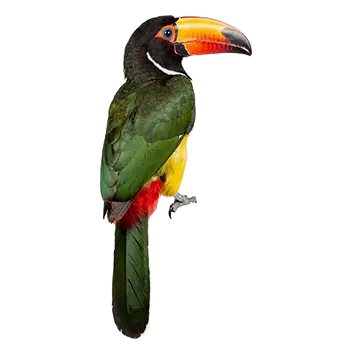
Weaning represents one of the most consequential transitions in a juvenile Green Aracari's life, shifting the bird from complete dependence on hand-feeding formula or parental regurgitation to self-sufficient consumption of solid foods. In Green Aracaris, weaning typically begins around five to six weeks of age when the chick starts showing active interest in solid food items and begins mouthing, tossing, and experimentally crushing soft fruits placed within reach. Unlike psittacine species where weaning can be prolonged and contentious, ramphastids tend to wean relatively quickly once the process starts, often completing the transition within two to three weeks.

The key to successful weaning is offering a variety of appropriate foods alongside continued formula feedings rather than abruptly withdrawing formula. Begin by placing small, easily managed pieces of ripe papaya, banana, blueberries, and seedless grapes in a shallow dish near the chick. Green Aracaris use a characteristic toss-and-catch feeding motion inherited from their toucan relatives, flipping food items toward the back of the throat with a quick upward bill movement. Providing bite-sized pieces that the juvenile can practice this technique with encourages self-feeding confidence.

Formula feedings should be gradually reduced in both frequency and volume as the juvenile demonstrates consistent consumption of solid foods. Monitor daily weight carefully throughout this transition. A slight weight plateau or even a minor dip of a few grams is normal during active weaning as the bird adjusts to processing solid food, but sustained weight loss exceeding five percent of body weight over several days indicates the weaning pace is too aggressive and formula feedings need to be temporarily increased.

The iron storage disease risk that defines ramphastid husbandry must remain central to every dietary decision during weaning. All fruits and supplementary foods offered should be selected for low iron content, and any commercial softbill pellets introduced at this stage must be specifically formulated for toucans and aracaris with controlled iron levels. Avoid iron-fortified foods, dark leafy greens high in iron, and excessive vitamin C supplementation, which enhances intestinal iron absorption. Establishing correct dietary habits during weaning sets the metabolic foundation for the bird's entire life.

Fledging & First Flight

Fledging is a transformative milestone that fundamentally changes the Green Aracari's relationship with its environment and its caregiver. Most Green Aracari juveniles achieve their first sustained flight between six and eight weeks of age, though the timing varies depending on individual development, nutrition, and the amount of wing exercise the bird has been able to perform in the weeks leading up to this point. The fledging period demands careful environmental preparation to ensure that the bird's first flights are safe and confidence-building rather than traumatic.

In the days before fledging, the juvenile will engage in increasingly vigorous wing flapping while perched, often generating enough lift to become momentarily airborne. This is the signal to flight-proof the room or enclosure where the bird spends its time. Remove or cover mirrors and windows, which the bird cannot distinguish from open space. Secure ceiling fans, close toilet lids, cover open water containers, and eliminate any gaps behind furniture or appliances where a panicked fledgling could become trapped. The first flights are clumsy and directionally unpredictable, so minimizing hazards is far more effective than attempting to control the bird's trajectory.

Allow the juvenile to fledge on its own terms rather than tossing or launching the bird into the air. A confident first flight, even if it ends in an ungraceful landing, teaches the bird that its wings are reliable. Forced fledging often produces fear and reluctance to fly. Place familiar perching surfaces at various heights and distances around the room so the fledgling has obvious landing targets. Soft landings on towels or cushions placed beneath elevated perches provide a safety margin during the learning period.

Flight skills develop rapidly once the initial fledging occurs. Within days, the juvenile progresses from short, straight glides to banked turns, controlled deceleration, and accurate landings on designated perches. This is a critical period for building the bird's physical fitness and spatial intelligence. Encourage flight by placing food at different stations, requiring the bird to fly between them. Green Aracaris that are allowed to develop strong flight abilities during the juvenile period tend to be more physically robust and behaviorally well-adjusted throughout their lives than birds that are confined or wing-clipped before they have fully learned to fly.

Diet & Nutritional Management

Once weaning is complete, the juvenile Green Aracari's diet must be carefully structured to support rapid growth, feather maturation, and organ development while strictly managing iron intake. The post-weaning diet forms the nutritional blueprint that the bird will follow into adulthood, making this the ideal time to establish healthy eating patterns and expose the juvenile to the full range of foods it should accept throughout its life.

Fresh fruit should constitute approximately 60 to 70 percent of the juvenile's daily intake. Papaya is the cornerstone fruit for captive ramphastids due to its low iron content, high digestibility, and natural enzyme profile that supports gut health. Banana, blueberries, raspberries, melon, mango, and seedless grapes are all excellent supplementary fruits. Cut fruit into pieces small enough for the juvenile to manage with its developing toss-and-catch technique, and offer a variety each day to ensure broad micronutrient coverage and to prevent the bird from fixating on a single preferred item.

A low-iron commercial toucan pellet should comprise approximately 20 to 30 percent of the diet. These pellets provide balanced protein, vitamins, and minerals formulated to meet ramphastid requirements without the iron overload risk posed by standard bird pellets or mynah bird diets. Introduce pellets early and consistently so the juvenile accepts them as a normal part of its diet. Some individuals resist pellets initially, in which case moistening them with fruit juice or mixing small pellet pieces into a fruit salad can encourage acceptance.

Protein supplementation is important during the juvenile growth phase. Gut-loaded insects such as crickets, mealworms, and waxworms provide high-quality animal protein and stimulate natural foraging behavior. Offer insects daily in limited quantities, roughly five to ten items depending on the juvenile's size and activity level. Hard-boiled egg white, offered in small amounts two to three times per week, is another safe protein source. Avoid raw meat, dog food, cat food, and any processed protein sources, as these frequently contain inappropriate iron levels and preservatives.

Fresh, clean water must be available at all times. Green Aracaris drink frequently and also enjoy bathing, so provide a water dish large enough for the bird to immerse its body. Change the water at minimum twice daily, as fruit residue and droppings contaminate water rapidly. Some keepers offer a separate bathing dish to extend the cleanliness of the drinking water, which is a practical approach as the juvenile becomes more active and playful.

Behavioral Development & Training

The juvenile period is the optimal window for establishing the behavioral foundation that will define the Green Aracari's temperament and manageability for the rest of its life. Green Aracaris are intelligent, curious, and remarkably playful birds, but they can also develop persistent behavioral issues such as biting, food aggression, or excessive fearfulness if their social and environmental needs are not met during this formative stage. Investing time in structured interaction and positive reinforcement training during the juvenile months yields dividends that last for years.

Basic handling skills should be reinforced and expanded during this period. The juvenile should be comfortable stepping onto a hand or arm on cue, accepting gentle restraint for brief periods, and tolerating examination of its feet, wings, and bill. These practical skills make routine husbandry and veterinary visits dramatically less stressful for both the bird and the handler. Use a consistent verbal cue paired with a food reward each time the bird performs the desired behavior. Green Aracaris respond exceptionally well to food-based positive reinforcement because of their strong food motivation and quick associative learning.

Biting is a common juvenile behavior that must be addressed calmly and consistently. Young Green Aracaris explore their world with their bills and may not initially distinguish between appropriate chewing and painful nipping. When the bird bites, avoid loud reactions or sudden withdrawal, which can either frighten the bird or inadvertently reinforce the behavior by providing an exciting response. Instead, calmly place the bird on a neutral surface and briefly withdraw attention. Redirect biting energy toward appropriate targets such as wooden toys, leather strips, or woven palm leaves.

Environmental enrichment is not optional for this intelligent species. Juvenile Green Aracaris need daily access to foraging opportunities, novel objects, and physical challenges that stimulate both their bodies and their problem-solving abilities. Rotate toys and foraging devices regularly to maintain novelty. Hide fruit pieces inside paper cups, woven baskets, or commercially available foraging toys that require manipulation to access the reward. Provide branches of varying diameters for perching and chewing. A bored juvenile Green Aracari will redirect its considerable energy toward destructive or self-directed behaviors, making enrichment a preventive health measure as much as a quality-of-life consideration.

Socialization with multiple people during the juvenile period helps prevent excessive single-person bonding, which can lead to aggression toward other household members as the bird matures. Encourage different family members to participate in feeding, handling, and training sessions so the bird develops a generalized comfort with human interaction rather than an exclusive attachment to one individual.

Housing & Enclosure Requirements

As the juvenile Green Aracari fledges and becomes increasingly active, its housing requirements expand significantly beyond the brooder or small enclosure that served it during the newborn period. Green Aracaris are active, flight-oriented birds that need substantially more space than comparably sized parrots. The juvenile period is the time to transition the bird into its long-term enclosure while it is still adaptable and receptive to new environments.

The minimum enclosure for a juvenile Green Aracari should be at least 4 feet long, 2 feet wide, and 3 feet tall, though larger is always better. Length is more important than height for ramphastids because they are horizontal flyers that navigate between perches in level or slightly descending trajectories rather than climbing vertically like parrots. The enclosure should allow the bird to make short flights between perches without striking the walls or ceiling. Wire spacing must be narrow enough to prevent the bird from catching its bill or toes, generally no wider than one inch by one inch.

Perching should include natural wood branches of varying diameters, ranging from approximately half an inch to one and a half inches, to promote healthy foot development and prevent pressure sores that can develop from standing on uniform-diameter dowels. Position perches at multiple heights, with food and water stations placed at a comfortable mid-height to avoid contamination from droppings. Include at least one flat platform perch, as Green Aracaris enjoy resting on flat surfaces and will often sleep lying down or in a characteristic curled posture with the tail folded over the back.

A nest box or enclosed sleeping chamber is essential for this species. Green Aracaris are cavity roosters that feel insecure and stressed without access to an enclosed sleeping space. Provide a wooden nest box with an entry hole approximately three inches in diameter, mounted at the highest point in the enclosure. The interior should be bare or lined with a thin layer of wood shavings that are changed frequently. The juvenile will quickly adopt the nest box as its sleeping quarters and may retreat to it during periods of stress, which is a healthy coping behavior that should be supported.

Temperature in the housing area should be maintained between 70 and 80 degrees Fahrenheit. Green Aracaris are tropical birds that do not tolerate cold drafts or prolonged temperatures below 65 degrees. Humidity should ideally remain above 50 percent to support skin and feather health. Full-spectrum lighting that includes UVA and UVB wavelengths, provided for 10 to 12 hours daily on a consistent schedule, supports vitamin D synthesis, healthy feather coloration, and behavioral regulation. Position the light source so the bird can move into and out of the illuminated area at will, providing both basking opportunity and shade.

Health Monitoring & Veterinary Care

Veterinary oversight during the juvenile period establishes the health monitoring framework that will serve the Green Aracari throughout its life. The rapid physiological changes occurring during this stage, including skeletal maturation, organ development, and the metabolic shift from formula to solid food, create both opportunities and vulnerabilities. A comprehensive health baseline established now provides the reference point against which all future assessments will be compared.

Serum iron and total iron-binding capacity testing should be performed at least once during the juvenile period, ideally around three to four months of age when the bird has been fully weaned and established on its long-term diet. This establishes whether the dietary management strategy is effectively controlling iron levels. Elevated serum iron or ferritin levels at this early stage demand immediate dietary review and potentially more frequent monitoring. An avian veterinarian experienced with ramphastids will interpret these values in context, as reference ranges for Green Aracaris differ from those for larger toucan species.

Fecal analysis should be conducted during each veterinary visit to screen for intestinal parasites and bacterial imbalances. Juvenile ramphastids that have been housed in outdoor aviaries or in collections with other bird species are at particular risk for coccidia, roundworms, and bacterial enteritis. The rapid gastrointestinal transit time characteristic of frugivorous birds means that pathogen loads can reach clinically significant levels quickly, making routine screening more important than a reactive approach that waits for symptoms to appear.

Between veterinary visits, the caregiver's daily observations serve as the primary surveillance system. Continue daily weight monitoring throughout the juvenile period, noting the gradual upward trend toward the bird's adult weight of approximately 110 to 160 grams. Droppings should be visually assessed at each cage cleaning: normal ramphastid droppings are relatively loose and may vary in color from brown to green to reddish-purple depending on the fruits consumed, but should not be overtly watery, bloody, contain undigested food particles, or produce a foul odor that deviates from the bird's normal baseline.

Watch for signs of feather abnormalities during the juvenile molt and feather development process. Stress bars, which appear as horizontal lines of weakness across feather vanes, indicate periods of nutritional deficit or physiological stress during feather growth. Retained feather sheaths, abnormal feather color or texture, and excessive feather loss beyond normal molting patterns all warrant veterinary evaluation. The juvenile plumage should develop into a clean, well-structured coat with vibrant coloration. Dull, brittle, or irregularly colored feathers suggest dietary deficiency, organ dysfunction, or chronic low-grade illness.

Preparing for Adulthood

The transition from juvenile to adult status in the Green Aracari is a gradual process that typically completes between eight and twelve months of age, though behavioral maturation may continue beyond that point. This transitional period requires the caregiver to shift from the intensive hands-on management of the juvenile months toward a more structured relationship that respects the bird's developing independence while maintaining the handling and health routines that will serve both parties for years to come.

As the juvenile approaches physical maturity, its plumage undergoes a subtle refinement. The juvenile feathering, which may appear slightly duller and less crisply defined than adult plumage, is gradually replaced through the bird's first complete molt. This molt is an energetically demanding process that requires extra nutritional support, particularly in the form of increased protein from insects and egg, and consistent access to bathing water to help loosen feather sheaths. Monitor the bird's weight and energy level closely during the molt, as the combined metabolic demands of growth and feather replacement can leave the bird temporarily vulnerable.

Behavioral patterns also shift during this transitional period. The juvenile's indiscriminate playfulness may give way to more selective social interactions, emerging territorial awareness, and early signs of sexual maturity in some individuals. The bird may begin testing boundaries with increased assertiveness, which is a normal developmental behavior rather than a training failure. Maintain consistent handling routines and behavioral expectations while accommodating the bird's growing need for autonomy. A Green Aracari that has been well-socialized during its juvenile months will typically navigate this transition smoothly, retaining its tameness and trainability even as its personality matures.

This is also the appropriate time to finalize the bird's long-term living arrangements if they differ from the juvenile housing setup. The adult enclosure should be fully flight-capable, equipped with the nest box, enrichment rotation system, and feeding stations that the bird will use indefinitely. Introduce any new cage or aviary during this transitional period rather than waiting until the bird is a fully established adult with strong territorial attachments to its existing space. A juvenile or sub-adult adapts to new surroundings far more readily than a mature bird, making this the least stressful time for any major environmental change.

Finally, ensure that all foundational training behaviors are solidly established before the bird reaches full maturity. Step-up, recall, crate or carrier acceptance, and tolerance of basic handling for nail trimming and health checks should all be fluent, well-practiced skills by the time the bird transitions into its adult years. Training a cooperative young bird is significantly easier than retraining a mature bird that has developed avoidance or defensive behaviors around handling.

Always consult a qualified professional before making any health-related decisions. This content is provided for informational reference only and should not replace professional guidance specific to your animal.