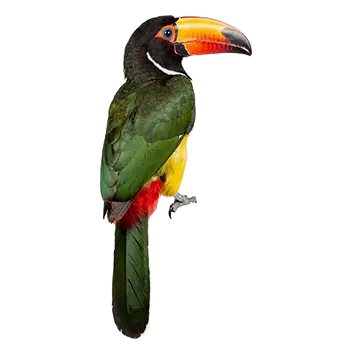

Evaluating quality of life in a declining Green Aracari is the most important and most difficult responsibility a caregiver faces during the end-of-life stage. Birds are evolved to conceal weakness, and even a seriously ill Green Aracari may maintain a veneer of normalcy that makes objective assessment challenging. Developing a structured, repeatable framework for evaluating the bird's daily experience removes some of the emotional ambiguity from this process and provides both the caregiver and the veterinarian with a shared language for discussing the bird's status.
A practical quality-of-life assessment considers several core domains: pain, appetite and hydration, mobility, social engagement, self-care behaviors, and the ratio of good days to bad days. For each domain, evaluate whether the bird's current state falls within an acceptable range relative to its individual baseline, not relative to a younger or healthier version of itself. The question is not whether the bird can do everything it once could, but whether it can still experience comfort, connection, and the basic behaviors that constitute a meaningful daily life for a Green Aracari.
Pain assessment relies on the behavioral indicators described in the senior care context: reduced movement, altered posture, changes in vocalization, reluctance to engage with enrichment or social interaction, and shifts in sleeping patterns. A bird that spends the majority of its waking hours in a posture suggesting discomfort, and whose pain is not adequately controlled by available medications, is experiencing a quality of life that warrants serious discussion with the veterinarian about next steps.
Appetite and hydration are fundamental indicators. A Green Aracari that consistently refuses food, eats only minimal amounts under encouragement, or shows progressive weight loss despite dietary accommodations is communicating that its body can no longer sustain itself. Forced feeding may extend the bird's life in terms of days but often does not restore meaningful quality. Similarly, chronic dehydration that does not respond to environmental and dietary interventions reflects systemic decline.
Track the bird's quality of life over time using a daily journal or scoring system. Record observations about each domain and assign a simple rating, such as good, fair, or poor, for each day. When the trend shows a consistent decline over days to weeks, with poor days increasingly outnumbering good ones, the data provides an objective basis for the difficult conversation about whether continuing treatment serves the bird's interests or merely delays an inevitable and increasingly uncomfortable outcome.