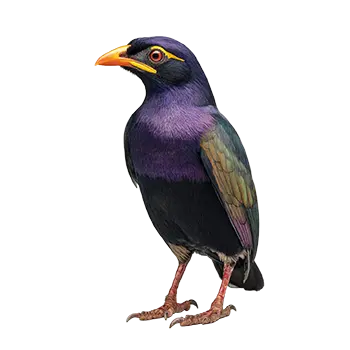

Birds are exquisitely good at concealing weakness, an instinct that serves a wild animal well and serves its owner poorly. A Greater Hill Mynah may hold its normal posture and continue calling until it is very ill indeed, so the signs that a bird is entering its final decline are often quiet and cumulative rather than dramatic. Owners frequently describe a sense that something had been different for a while before anything specific could be named.
The most reliable indicator is sustained weight loss that continues despite adequate food intake and appropriate treatment. Alongside it, look for a bird that sits fluffed for long periods, keeps both feet on the perch rather than resting one, spends time on the cage floor, sleeps with the head tucked during the day, and stops preening so that the plumage becomes unkempt and the vent area soiled.
In this species the terminal path is very often hepatic. Advanced iron storage disease and other chronic liver conditions produce a distended, fluid-filled abdomen, breathing that becomes laboured and worsens with any exertion, green or yellow-green staining of the urate portion of the droppings, easy bruising, and profound lethargy. Other birds decline through renal failure, cardiac insufficiency, or neoplasia, each with its own pattern but a similar outward picture of a bird that is simply running down.
Distinguishing a final decline from a treatable crisis is not something to attempt alone. Many of these signs also appear in conditions that respond well to intervention, and a bird that looks near death from a treatable infection can be back on its perch within days. The purpose of a veterinary assessment at this point is not necessarily to pursue aggressive treatment, but to know honestly what is happening so that the decisions that follow are made with information rather than fear.