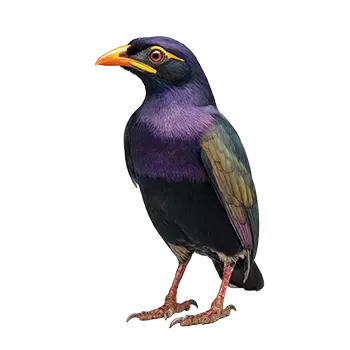

There is no single birthday at which a Greater Hill Mynah becomes old. Most birds begin showing geriatric changes somewhere in their low to middle teens, though a bird kept lean, well exercised, and on a properly low-iron diet may remain effectively middle-aged well past that, while a heavy bird with chronic liver disease may age visibly at eight or nine. Husbandry history predicts aging in this species better than the calendar does.
The earliest changes are usually in activity budget rather than appearance. The bird flies less and hops more, chooses the same favored perch repeatedly, takes more and longer daytime naps, and is slower to come to the front of the cage when someone enters the room. Landing accuracy declines slightly. None of this is dramatic, and it is easy to interpret as the bird simply settling down.
Physical signs follow. The iridescence of the plumage dulls, molts take longer and may leave the bird looking patchy for extended periods, the wattles can become drier or less turgid, and the feet may show thickened scales or flattening of the digital pads. Some birds develop a subtle greying or thinning of feathering around the face.
The critical discipline is to keep asking whether a change is aging or illness, because in a bird these look almost identical from the outside and only one of them is untreatable. Sudden onset, weight loss, changes in droppings, or any respiratory sign should be treated as disease until a veterinarian says otherwise. Gradual, symmetrical, painless slowing across many months is more consistent with age. When in doubt, investigate; the cost of treating a treatable geriatric condition early is far lower than the cost of missing it.