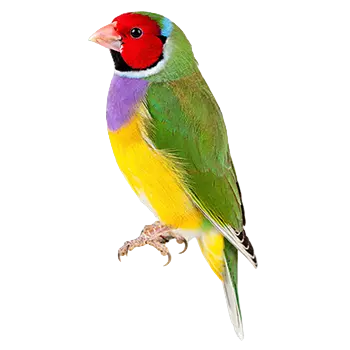

Gouldian Finch chicks hatch after an incubation period of approximately 14 to 16 days. The newly hatched chick is altricial, meaning it arrives blind, featherless, and entirely dependent on its parents for warmth and nourishment. During those critical first hours, the chick's primary need is consistent brooding by one or both parents to maintain a stable body temperature, as hatchlings cannot thermoregulate on their own.
Within the first few hours of life, hatchlings typically begin gaping — opening their mouths wide to signal hunger to the parent birds. This feeding reflex is instinctive and vital, as Gouldian chicks need their first meal within hours of hatching to sustain energy levels. Parent birds will regurgitate a mixture of partially digested seeds and soft food directly into the chick's crop. Breeders should observe from a respectful distance to confirm that feeding has begun without causing undue stress to the adults.
The nesting environment plays a significant role in hatchling survival during this window. The nest box should be positioned away from drafts, direct sunlight, and household disturbances. Ambient room temperature should remain steady, ideally between 75 and 85 degrees Fahrenheit, with gentle humidity to prevent the delicate skin of the hatchlings from drying out. Avoid the temptation to handle newborn chicks unless there is a clear emergency, as unnecessary intervention can cause parental abandonment.
Breeders should also check the nest discreetly for any unhatched eggs or non-viable chicks. If a chick appears significantly smaller or weaker than its clutch mates, it may struggle to compete for feedings. Monitoring crop fullness — visible as a small bulge at the base of the throat — is the most reliable way to determine whether each hatchling is receiving adequate nutrition without disturbing the family unit.