
Growth & Physical Development

The juvenile phase for Gouldian Finches begins once the chick has fully fledged and weaned from parental feeding, typically around five to six weeks of age. At this stage, the young bird sports a dull olive-green plumage that bears little resemblance to the vivid adult coloring the species is famous for. This subdued juvenile plumage serves as natural camouflage and is entirely normal — owners and breeders should not be concerned by the lack of bright color at this stage.

Physical growth continues at a steady pace through the juvenile period. The bird reaches its full adult body length of approximately five to six inches within the first few months, though it may appear slightly slimmer and less filled out than a mature adult. The beak undergoes a gradual color change during this time, transitioning from the dark coloration of a juvenile to the lighter tones seen in adults. Leg and foot development should also be monitored, as perching strength and coordination improve significantly during this period.

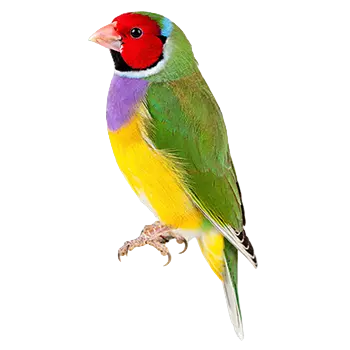
The defining physical event of the juvenile stage is the first molt, which typically begins between eight and twelve weeks of age and can take several months to complete. During this molt, the dull juvenile feathers are gradually replaced by the brilliant adult plumage — revealing the characteristic head color (red, black, or orange-yellow), the purple chest, green back, and yellow belly. The timing and pace of this molt vary between individuals and are influenced by nutrition, light exposure, and overall health.

Breeders and keepers should pay close attention to feather quality during the juvenile molt. Healthy new feathers should be smooth, tightly barbed, and richly colored. Feathers that appear ragged, stress-barred, or abnormally pale may indicate nutritional deficiencies, illness, or environmental stress. Providing optimal conditions during the molt sets the foundation for a lifetime of vibrant plumage.

Nutrition & Diet Transition

The transition from parent-fed hatchling to independently feeding juvenile is one of the most critical nutritional milestones in a Gouldian Finch's life. Newly weaned juveniles should have constant access to a high-quality finch seed mix that includes a variety of small seeds such as millet, canary grass seed, and niger seed. The seed mix alone, however, is insufficient to support the demands of growth and molting, and must be supplemented with additional nutrient sources.

Egg food remains an essential dietary component during the juvenile stage. This protein-rich supplement supports feather growth during the first molt and contributes to overall muscular and skeletal development. Commercially prepared egg food designed for finches is convenient and nutritionally balanced, though many experienced breeders prefer to prepare their own using hard-boiled egg mixed with fine breadcrumbs or dry biscuit. Egg food should be offered fresh daily and removed after a few hours to prevent spoilage.

Fresh vegetables and sprouted seeds add valuable vitamins, minerals, and enzymes to the juvenile diet. Finely chopped leafy greens such as spinach, kale, and dandelion leaves are generally well accepted by young Gouldians once they have observed adult birds eating them. Sprouted seeds — particularly millet and mung beans — are highly digestible and nutrient-dense, making them an excellent supplement during periods of rapid growth. Introduce new foods gradually and observe each bird's willingness to try unfamiliar items.

Mineral supplementation remains important throughout the juvenile stage. Cuttlebone, mineral blocks, and a fine-grit mixture should be available at all times to support bone density and beak condition. Liquid vitamin supplements added to the drinking water can help bridge any nutritional gaps, though these should be used according to manufacturer guidelines to avoid over-supplementation. Clean, fresh water must be replenished daily, and water containers should be positioned to minimize contamination from seed husks and droppings.

Behavioral Changes

Juvenile Gouldian Finches undergo noticeable behavioral shifts as they mature from dependent fledglings into independent young birds. In the weeks immediately following weaning, juveniles tend to stay close to their clutch mates, roosting together at night and foraging in small groups during the day. This flocking instinct is deeply ingrained and provides both security and social learning opportunities as the young birds develop their adult behaviors.

As juveniles approach the onset of their first molt, behavioral patterns begin to diversify. Males may start practicing early vocalizations — quiet, tentative versions of the songs they will use in courtship as adults. These practice songs are often disorganized and fragmented, bearing only a passing resemblance to the structured adult song. Female juveniles are generally quieter but may begin to display increased curiosity about their environment, investigating potential nesting sites even though they are far too young to breed.

Aggression and dominance behaviors also begin to emerge during the juvenile period, though they are typically mild compared to what may be observed in adults. Young males may engage in brief posturing displays — puffing up their chest feathers, bobbing their heads, and occasionally chasing a rival off a preferred perch. These interactions are a normal part of establishing social hierarchy within a group and rarely result in injury, provided the enclosure is spacious enough to allow subordinate birds to retreat.

Keepers should watch for signs of excessive stress or bullying, particularly in mixed-age housing situations where older adults may dominate food stations or preferred roosting spots. A juvenile that consistently sits apart from the group, appears fluffed and lethargic, or shows signs of feather damage from pecking may need to be separated into a quieter environment until it has matured enough to hold its own.

Training & Enrichment

Gouldian Finches are not typically trained in the way parrots or other hands-on companion birds are, but the juvenile stage offers valuable opportunities for environmental enrichment and behavioral conditioning that contribute to a well-adjusted adult bird. The primary goal during this period is to help the young finch develop confidence in its surroundings, become comfortable with routine husbandry, and engage in natural foraging and flight behaviors.

Flight is the single most important form of exercise and enrichment for a juvenile Gouldian Finch. Housing juveniles in the largest enclosure practical for your space allows them to build flight muscles, improve coordination, and engage in the quick directional changes that characterize finch flight. A long, horizontal flight cage or aviary is preferable to a tall, narrow cage, as finches fly horizontally rather than climbing vertically. Multiple perches of varying diameter and texture help develop foot strength and prevent pressure sores.

Foraging enrichment can be introduced by scattering seed across the cage floor or on shallow trays rather than offering it exclusively from a single dish. This encourages the juvenile to engage in natural ground-foraging behavior and provides mental stimulation. Sprigs of spray millet hung at various heights within the cage serve a dual purpose — they encourage physical activity as the bird flies to reach them and provide a nutritious treat that most Gouldians find irresistible.

Acclimating juvenile Gouldians to routine cage maintenance — hand entering the cage for cleaning, replacing food and water, and occasionally rearranging perches — helps reduce the flight-and-panic response that these naturally skittish birds can develop if they are rarely exposed to human interaction. Performing these tasks at consistent times each day and moving slowly and predictably teaches the young birds that the keeper's presence is non-threatening, which reduces chronic stress over the bird's lifetime.

Exercise & Flight Development

Flight development during the juvenile stage is essential for the long-term physical health and psychological well-being of Gouldian Finches. Unlike larger companion birds that may spend significant time climbing and playing on perches, finches are built for rapid, sustained flight and need ample space to exercise this ability daily. Juvenile Gouldians that are confined to small cages during this critical developmental period often develop weak flight muscles, obesity, and behavioral issues stemming from frustration and inactivity.

The ideal housing for juvenile Gouldians during the flight development period is a spacious flight cage or indoor aviary that provides a minimum of three to four feet of horizontal flight distance. The enclosure should be equipped with perches placed at both ends to encourage back-and-forth flight, with the middle of the cage left relatively clear of obstructions. Natural branch perches of varying diameters are preferable to uniform dowels, as they promote healthy foot development and provide a more stimulating environment.

Juvenile Gouldians housed in a colony or flock setting tend to be more active flyers than those kept in pairs or singly, as the social dynamics of the group naturally encourage movement. Playful chasing, competitive perch-hopping, and synchronized group flights are common behaviors in a well-socialized juvenile flock and contribute significantly to cardiovascular fitness and muscular development. Breeders who maintain colony-style housing during the juvenile period often report that these birds transition into adulthood with noticeably better body condition.

Outdoor flight time in a secure, predator-proof aviary is beneficial where climate permits, as natural sunlight supports vitamin D synthesis and the exposure to ambient sounds and sights provides rich sensory stimulation. However, Gouldian Finches are highly sensitive to cold and should never be exposed to temperatures below 65 degrees Fahrenheit. Any outdoor enclosure must also be fully enclosed with fine mesh to prevent escape and protect against predators, insects, and exposure to wild bird diseases.

Sexing & Color Identification

One of the most anticipated aspects of the juvenile stage for Gouldian Finch keepers is the gradual reveal of each bird's adult coloration and sex. Juvenile Gouldians are notoriously difficult to sex visually before their first molt, as both males and females share the same dull olive-green plumage. Several subtle indicators may offer clues to experienced breeders, but definitive visual sexing is generally only reliable once the adult plumage begins to emerge.

As the first molt progresses, the differences between males and females become increasingly apparent. Males develop significantly more vibrant and saturated colors across all body regions — the chest purple is deeper, the green of the back is more intense, and the yellow belly is brighter. Female Gouldians, while still colorful by finch standards, display noticeably softer and more muted versions of the same palette. The distinction is most obvious in the chest and belly regions and becomes unmistakable once the molt is complete.

Head color — the most iconic feature of the Gouldian Finch — also becomes visible during the juvenile molt. The three naturally occurring head color variants are red, black, and orange-yellow, with black-headed birds being the most common in the wild and red-headed birds being the most popular in aviculture. Head color is genetically determined and cannot be influenced by diet or environment, though the intensity and richness of the color can be enhanced by optimal nutrition during the molting period.

For breeders who need to determine sex before the adult molt for pairing or management purposes, DNA sexing via a blood feather or blood sample is a reliable option. This laboratory test is quick, accurate, and non-invasive when performed correctly. Many avian veterinarians and specialized laboratories offer this service at a modest cost. DNA sexing eliminates guesswork and allows breeders to plan pairings, manage colony ratios, and separate birds by sex well before the visual molt confirms what the test has already revealed.

Socialization & Flock Integration

Successfully integrating juvenile Gouldian Finches into an established flock or colony is a process that requires patience, observation, and thoughtful management of the social environment. Gouldian Finches are inherently social birds that thrive in groups, but introducing young, inexperienced birds into a cage or aviary with established adults can create temporary tension as the social hierarchy adjusts to accommodate the newcomers.

The recommended approach is to house juveniles within visual and auditory range of the adult flock before attempting a direct introduction. Placing the juvenile cage adjacent to the main aviary allows the young birds to observe adult behaviors, feeding patterns, and social interactions without being subjected to direct competition or aggression. This observation period, lasting one to two weeks, gives both the juveniles and the resident adults time to acclimate to each other's presence.

When the physical introduction is made, timing and environment matter. Introducing juveniles during a period of relative calm — not during breeding season, when territorial behavior is heightened — increases the likelihood of a smooth transition. Adding multiple juveniles simultaneously is generally more successful than introducing a single bird, as the attention of established residents is distributed rather than focused on one newcomer. Providing extra feeding stations and perches during the integration period reduces competition and gives the juveniles access to resources without having to displace dominant adults.

Monitoring the flock closely during the first several days after integration is essential. Normal adjustment behaviors include brief chasing, perch displacement, and occasional beak fencing, all of which typically diminish within a few days as the new hierarchy settles. Warning signs that intervention may be needed include persistent pursuit of a single bird, preventing a juvenile from accessing food or water, visible feather loss from plucking or pecking, and a juvenile that remains huddled in a corner rather than participating in flock activities. If serious aggression occurs, removing the affected bird and reattempting integration after a cooling-off period is the safest course of action.

Always consult a qualified professional before making any health-related decisions. This content is provided for informational reference only and should not replace professional guidance specific to your animal.