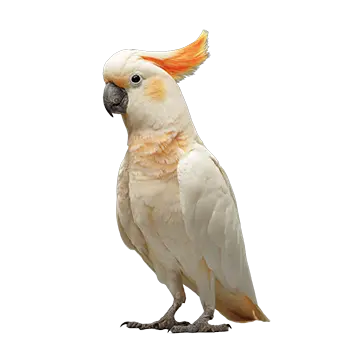

Physical Maturity & Prime Condition

A Citron-Crested Cockatoo reaches full physical maturity between three and four years of age, though behavioral and sexual maturity may continue to develop for an additional year or two beyond that point. The adult bird in its prime is a strikingly beautiful animal, with clean white plumage carrying a subtle pale yellow wash, a vivid citron-orange crest that fans prominently when the bird is excited or alarmed, and orange-tinged ear coverts and undertail feathers that distinguish it from other lesser sulphur-crested cockatoo subspecies. A healthy adult typically weighs between 350 and 425 grams, with some individual variation based on frame size and sex.

Maintaining prime physical condition requires ongoing attention to diet, exercise, and environmental quality. The adult Citron-Crested Cockatoo should exhibit a smooth, tight feather coat with a natural powder-down bloom that gives the plumage a soft, velvety appearance. The beak should be symmetrical, properly aligned, and free of excessive flaking or overgrowth. The feet should be smooth and supple, with nails of appropriate length that do not curl or snag. The eyes should be bright and clear, with the iris color having transitioned from the dark brown or black of juvenility to the lighter brown, reddish-brown, or orange-red that characterizes adult birds, depending on sex.

Body condition assessment should be a regular part of the caregiver's routine. Gently palpate the keel bone during handling sessions to evaluate the bird's weight relative to its frame. The keel should be easily palpable but not prominently protruding, with a thin covering of pectoral muscle on either side. A keel that is difficult to find beneath a thick layer of tissue indicates obesity, which is one of the most common and most consequential health problems in captive cockatoos. Conversely, a sharply prominent keel with little muscle coverage suggests underweight, which may reflect inadequate nutrition, chronic illness, or excessive energy expenditure.

Musculoskeletal health during the prime years benefits enormously from regular flight exercise. Even in a companion bird setting, allowing supervised flight within a safe indoor space strengthens the pectoral muscles, supports cardiovascular health, maintains joint flexibility, and provides cognitive stimulation that perched exercise alone cannot replicate. Birds that have been wing-clipped can still benefit from flapping exercises on a perch or a T-stand, though the benefits are more limited. If the bird has been clipped, consider allowing the flight feathers to regrow fully so the bird can engage in natural locomotion.

Nutrition for Adult Birds

Feeding an adult Citron-Crested Cockatoo requires a balanced approach that provides complete nutrition while preventing the weight gain and metabolic disorders to which cockatoos are particularly susceptible. The adult diet should be built around a high-quality formulated pellet that constitutes approximately sixty to seventy percent of the total daily intake. Pellets provide a nutritionally complete and balanced foundation that seed-based diets cannot match, as seed diets are characteristically high in fat and deficient in essential vitamins, minerals, and amino acids.

The remaining thirty to forty percent of the diet should consist of fresh vegetables and a limited amount of fruit. Dark leafy greens such as kale, Swiss chard, and dandelion greens provide calcium, vitamin A precursors, and other micronutrients. Orange and yellow vegetables including sweet potato, butternut squash, and carrot supply beta-carotene and complex carbohydrates. Cruciferous vegetables like broccoli and cauliflower offer additional nutritional diversity. Fruit should be offered sparingly, no more than five to ten percent of the overall diet, as the sugar content can contribute to weight gain and yeast overgrowth in the digestive tract. Avoid avocado, chocolate, caffeine, alcohol, onion, garlic, and any foods containing xylitol, all of which are toxic to parrots.

Nuts and seeds occupy an important but carefully circumscribed role in the adult cockatoo's diet. These calorie-dense foods are best reserved as training rewards, foraging enrichment items, or occasional treats rather than dietary staples. Almonds, walnuts, and macadamia nuts can be offered in small quantities, ideally within foraging toys that require the bird to work for the reward, thereby combining nutritional supplementation with mental stimulation. Sunflower seeds and safflower seeds should be limited strictly, as cockatoos find them highly palatable and will preferentially select them over more nutritious options if given the choice.

Fresh, clean water must be available at all times and changed at least twice daily. Cockatoos frequently dunk food in their water dishes, creating a bacterial soup that can cause gastrointestinal illness if not refreshed regularly. Some caregivers address this by offering both a drinking water source and a separate bathing dish, though the cockatoo may use either or both for dunking regardless. Monitor water consumption patterns as part of routine health observation, since increased drinking can be an early indicator of kidney disease, diabetes, or other metabolic conditions.

Calcium supplementation may be necessary, particularly for female cockatoos that may produce eggs even without a mate. A cuttlebone or mineral block should be available at all times, and dietary calcium sources such as dark leafy greens should be featured prominently. Discuss vitamin D supplementation with your avian veterinarian, as adequate vitamin D is essential for calcium metabolism and is difficult for indoor birds to obtain through diet alone without access to unfiltered natural sunlight.

Behavioral Patterns & Bonding

The behavioral landscape of an adult Citron-Crested Cockatoo is shaped by the species' profound social intelligence and its deep need for connection. Cockatoos in general are among the most emotionally expressive of all parrot species, and the Citron-Crested subspecies brings a characteristic intensity to its relationships that can be both deeply rewarding and genuinely challenging. Understanding the behavioral patterns of the adult bird is essential for maintaining a healthy human-avian bond and for preventing the behavioral disorders that plague cockatoos kept without adequate social engagement.

The adult Citron-Crested Cockatoo typically bonds deeply with one or two primary caregivers, though a well-socialized bird will be comfortable with a broader circle of people. The bond is expressed through contact-seeking behaviors including cuddling against the caregiver's body, soliciting head scratches, and vocalizing excitedly when the favored person enters the room. This bond is genuine and emotionally significant for the bird, and disruptions to it, whether through changes in household composition, work schedules, or attention patterns, can trigger stress responses including screaming, feather destructive behavior, and appetite changes.

Hormonal behavior is a recurring aspect of adult cockatoo life that caregivers must learn to manage rather than eliminate. Seasonal hormonal surges, typically occurring in spring and sometimes again in autumn, can produce increased aggression, territorial behavior, excessive vocalization, and regurgitation directed at the favored person or a preferred object. Environmental management strategies can help moderate hormonal intensity. Ensure the bird receives a consistent ten to twelve hours of darkness each night, avoid providing enclosed spaces that could be interpreted as nest cavities, limit access to warm, dark, enclosed areas, and avoid petting the bird on the back, wings, or tail, as this stimulates reproductive behavior.

Screaming is the single most frequently cited behavioral complaint among cockatoo owners, and the Citron-Crested subspecies, while somewhat quieter than some of the larger white cockatoo species, is still capable of ear-splitting vocalizations. Understanding the function of screaming is the first step toward managing it. Contact calls at dawn and dusk are biologically normal and should be acknowledged briefly rather than punished. Attention-seeking screaming, however, must not be reinforced. Responding to screaming with attention, even negative attention such as yelling, teaches the bird that screaming is effective. Instead, reinforce quiet behavior with attention and treats, and ensure the bird has adequate enrichment to occupy itself during periods when direct interaction is not possible.

Feather destructive behavior, including plucking, barbering, and over-preening, is tragically common in cockatoos and often reflects unmet social, environmental, or medical needs. If feather destruction is observed, a thorough veterinary workup should be the first step to rule out medical causes such as infection, nutritional deficiency, liver disease, or endocrine dysfunction. If no medical cause is identified, behavioral intervention should focus on increasing enrichment, adjusting the social environment, and potentially consulting with an avian behaviorist experienced in cockatoo issues.

Exercise & Enrichment

An adult Citron-Crested Cockatoo that does not receive adequate physical exercise and mental stimulation will inevitably develop problems, whether physical in the form of obesity and muscle atrophy, or behavioral in the form of screaming, feather destruction, and stereotypic movements. The cockatoo brain is large, complex, and evolved for a life of constant environmental interaction, foraging across diverse habitats, and maintaining intricate social relationships within a flock. The captive environment must offer sufficient complexity to engage this intelligence, or the bird will direct its cognitive energy toward maladaptive outlets.

Daily out-of-cage time is a necessity, not a luxury. The bird should spend a minimum of three to four hours outside its enclosure each day, engaged in supervised exploration, flight exercise, social interaction, and independent play. A dedicated play area equipped with a play stand, climbing structures, and a rotating selection of toys provides a home base for out-of-cage activities. Ensure the play area is located in a space where the bird can observe and participate in household activity, as social inclusion is itself a form of enrichment for this highly gregarious species.

Foraging enrichment replicates the problem-solving and food-seeking behaviors that occupy a wild cockatoo for the majority of its waking hours. In captivity, food is typically presented in a dish that requires no effort to access, depriving the bird of a major source of mental stimulation. Convert meals into foraging opportunities by wrapping food items in paper, hiding them inside foraging boxes or puzzle feeders, threading vegetables onto skewers, or scattering pellets among shredded paper in a tray. The objective is to extend the time the bird spends engaged with its food from seconds to minutes or even hours.

Destructible toys satisfy the cockatoo's powerful need to chew and disassemble. Provide a steady supply of untreated wood blocks, cardboard boxes, palm leaf bundles, and other materials that the bird can shred. Cockatoos are notoriously hard on toys, and a toy that survives more than a few days is likely not engaging enough. Budget for toy replacement as a regular and significant household expense. Rotating toys and introducing novel items regularly prevents habituation and keeps the bird's interest level high.

Cognitive enrichment extends beyond foraging to include training sessions, trick learning, and interactive play. Citron-Crested Cockatoos are capable of learning complex behaviors and enjoy the structured interaction that training provides. Short daily training sessions of ten to fifteen minutes, using positive reinforcement techniques, challenge the bird's problem-solving abilities and strengthen the caregiver-bird relationship. Teaching the bird to identify colors, shapes, or objects by name, to perform sequences of behaviors on cue, or to navigate a simple obstacle course are all enrichment activities that engage the cockatoo's considerable intelligence.

Feather Care & Grooming

The plumage of a healthy adult Citron-Crested Cockatoo is a reliable indicator of overall well-being and requires ongoing maintenance to remain in optimal condition. Cockatoos are powder-down birds, producing a fine, white, keratin-based dust from specialized feathers that helps waterproof and condition the plumage. This powder down is a normal and healthy feature, though it can be a significant concern for caregivers with respiratory sensitivities and requires attention to household air quality.

Bathing is the foundation of feather care for cockatoos. Regular bathing helps remove accumulated powder down, dirt, and dander, softens the feather structure, and supports healthy preening behavior. Most Citron-Crested Cockatoos enjoy bathing, whether through a gentle misting with a spray bottle, a shower perch installed in the caregiver's bathroom, or a shallow dish of lukewarm water placed on the floor or a play stand. Offer bathing opportunities at least two to three times per week, and more frequently during molting periods when the bird's preening needs are increased. Always bathe the bird early enough in the day that the feathers are fully dry before the evening temperature drops.

The annual molt is a significant physiological event during which the bird systematically replaces its entire feather coat over a period of several weeks to a few months. Molting places considerable metabolic demands on the bird, and nutritional support should be adjusted accordingly. Increase protein-rich foods during the molt to support new feather growth, and ensure adequate calcium and vitamin A availability. The bird may be somewhat more irritable or subdued during heavy molting, and pin feathers, the keratin-sheathed casings that protect developing feathers, may cause discomfort. Gentle assistance with pin feathers on the head, where the bird cannot reach to preen them itself, strengthens the social bond and provides welcome physical relief.

Nail and beak maintenance are additional grooming considerations. A healthy bird with appropriate perching surfaces may wear its nails down naturally, but most companion cockatoos require periodic nail trimming to prevent overgrowth that can snag on fabric or cage components. Beak trimming should only be necessary if the beak is growing abnormally due to misalignment, liver disease, or other medical conditions, and should always be performed by an avian veterinarian. A healthy beak is self-maintaining through normal chewing activity, and routine beak trimming of a normally aligned beak is unnecessary and stressful.

Air quality management is essential in a household with a powder-down species. The cockatoo's powder production, combined with dander and feather particles, can degrade indoor air quality significantly. An air purifier with a HEPA filter, placed near the bird's primary living area, reduces airborne particulate levels and benefits both the bird and the human occupants of the home. Regular dusting and vacuuming of surfaces near the cage and play areas further reduces accumulation. Caregivers with asthma, allergies, or other respiratory conditions should discuss the implications of powder-down exposure with their physician.

Preventive Health Care

Preventive veterinary care is the cornerstone of maintaining a Citron-Crested Cockatoo's health throughout its long adult life. An annual wellness examination by a qualified avian veterinarian should be considered an absolute minimum, with semi-annual visits recommended for birds over fifteen years of age or those with known health conditions. The annual examination provides an opportunity to detect subclinical disease before it becomes symptomatic and to maintain the baseline health data that allows meaningful comparison over time.

The annual wellness visit typically includes a thorough physical examination encompassing body condition, feather quality, beak and nail assessment, palpation of the abdomen for organ enlargement, auscultation of the heart and air sacs, and evaluation of the eyes, ears, and nares. A complete blood count and serum biochemistry panel provide objective data on organ function, immune status, and metabolic health. Fecal analysis for parasites and bacterial or fungal culture may also be included. Discuss with your veterinarian whether additional diagnostics such as radiographs, Chlamydia testing, or bile acid levels are appropriate based on the bird's age and history.

Common adult health conditions in Citron-Crested Cockatoos include Psittacine Beak and Feather Disease, aspergillosis, bacterial infections of the respiratory and gastrointestinal tracts, lipomas and other fatty tumors, atherosclerosis, and hepatic lipidosis. Many of these conditions are directly influenced by diet and lifestyle, reinforcing the importance of nutritional management and exercise. PBFD in particular warrants ongoing vigilance, as cockatoos are among the species most severely affected by this circovirus, and adult-onset PBFD can manifest as progressive feather loss and immune suppression after years of apparent health.

Weight monitoring at home complements veterinary visits and provides continuous data that an annual examination alone cannot capture. Weigh the bird weekly on a gram-accurate digital scale, recording the measurement in a dedicated log. Healthy adult weight should remain stable within a narrow range once the bird has reached full maturity. A gradual upward trend suggests dietary adjustment is needed, while an unexplained downward trend may indicate the onset of disease. Sudden weight changes in either direction warrant a veterinary consultation.

Disease prevention through husbandry practices is equally important. Quarantine any new birds for a minimum of thirty days before introducing them to a household with an existing cockatoo. Maintain scrupulous cage hygiene, disinfecting food and water dishes daily and performing thorough cage cleanings weekly. Minimize exposure to aerosolized cooking fumes, especially from overheated nonstick cookware, which releases polytetrafluoroethylene fumes that are rapidly lethal to birds. Scented candles, air fresheners, and aerosol sprays should also be avoided, as the avian respiratory system is far more sensitive to inhaled toxins than the mammalian system.

Common Adult Health Concerns

Despite the best preventive care, adult Citron-Crested Cockatoos may encounter a range of health conditions that caregivers should be prepared to recognize and address. Early identification and prompt veterinary intervention dramatically improve outcomes for most avian health conditions, making the caregiver's daily observation skills a vital complement to professional veterinary care.

Obesity and its downstream consequences represent the most prevalent health challenge in captive adult cockatoos. A sedentary captive lifestyle combined with calorie-dense diets creates conditions for weight gain that would not occur in the wild, where the bird spends hours daily flying and foraging. Obesity increases the risk of hepatic lipidosis, a condition in which fat accumulates in the liver and impairs its function. It also predisposes the bird to atherosclerosis, lipomas, respiratory compromise, and reproductive complications. Weight management through dietary control and increased exercise is the primary intervention, but established hepatic lipidosis requires veterinary treatment including dietary modification, hepatoprotective medications, and monitoring of liver function through blood work.

Respiratory infections are another significant concern, particularly aspergillosis, a fungal infection caused by Aspergillus species that thrive in environments with poor ventilation, high humidity, or accumulated organic debris. Aspergillosis can present as an acute crisis in immunocompromised birds or as a chronic, insidious condition that slowly erodes respiratory function over weeks or months. Symptoms include changes in voice quality, exercise intolerance, tail-bobbing, and labored breathing. Diagnosis typically involves a combination of physical examination, blood work, radiographs, and sometimes endoscopy or CT imaging. Treatment requires long-term antifungal therapy and correction of the environmental conditions that promoted the infection.

Behavioral conditions with health implications, particularly feather destructive behavior, deserve mention in the context of adult health. While feather plucking and self-mutilation are behavioral in their expression, they can have medical triggers including hormonal imbalances, zinc or lead toxicity, gastrointestinal discomfort, dermatitis, and neurological conditions. Any bird exhibiting feather destructive behavior should receive a comprehensive veterinary evaluation before the condition is attributed solely to behavioral or psychological causes. Once medical factors are ruled out, a combined approach involving environmental modification, behavioral intervention, and sometimes anxiolytic medication offers the best chance of improvement.

Reproductive conditions affect adult cockatoos of both sexes but are particularly significant in females. Chronic egg-laying, egg binding, and reproductive tract infections can occur in hens even without a mate present. Environmental management to reduce hormonal stimulation, as described in the behavioral section, is the first line of defense. Egg-bound hens present as emergencies with symptoms including straining, lethargy, fluffed posture, and sometimes leg paralysis from the egg pressing on nerves. This condition is life-threatening and requires immediate veterinary care. Males may develop cloacal prolapse or testicular tumors, both of which require surgical intervention.

Always consult a qualified professional before making any health-related decisions. This content is provided for informational reference only and should not replace professional guidance specific to your animal.