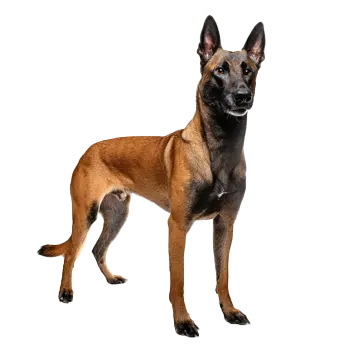

Belgian Police Dog

Belgian Malinois

Quick Facts

🐕 Breed Group
Herding Group
📏 Size Category
Large
📏 Height
Males: 24-26 inches, Females: 22-24 inches
⚖️ Weight
Males: 60-80 pounds, Females: 40-60 pounds
⏱️ Life Expectancy
12-16 years
🧣 Coat Type
Short, straight double coat with dense weather-resistant undercoat
🎨 Coat Colors
Rich fawn to mahogany with black mask and black-tipped overlay
😀 Temperament
Confident, intelligent, driven, alert, loyal, protective
🏃 Exercise Needs
High
🎓 Training Difficulty
Moderate for experienced handlers - requires consistent, structured engagement
👶 Good with Children
Conditional - best with older children in experienced households
🐾 Good with Other Pets
Conditional - strong prey drive requires careful management and early socialization

Other Names & Breed Recognition

Belgian Police Dog is an informal but widely understood designation for the Belgian Malinois, reflecting the breed's overwhelming dominance in modern law enforcement and military working dog programs around the world. The name is not a formal breed title recognized by any kennel club, but it has entered common usage precisely because the association between the Belgian Malinois and police work has become so strong that many people who encounter the breed in a professional context know it first and foremost as a police dog rather than by its registered name. When someone refers to a Belgian Police Dog, they are invariably describing a Belgian Malinois, and the term carries with it an assumption of the breed's elite working capability, intense drive, and formidable physical presence.

The Belgian Malinois itself is one of four varieties of Belgian Shepherd Dog, a group of herding breeds developed in Belgium during the late 19th century. The four varieties are distinguished primarily by coat type and color: the Malinois has a short fawn coat with black mask and overlay, the Tervuren has a long fawn coat, the Groenendael has a long black coat, and the Laekenois has a rough fawn coat. Under the Federation Cynologique Internationale, all four are classified as a single breed called the Belgian Shepherd Dog or Chien de Berger Belge. In the United States and Canada, the American Kennel Club and Canadian Kennel Club recognize each variety as a separate breed, which means the Belgian Malinois has its own breed standard, registration, and show classification independent of the other three.

The breed carries several additional names beyond Belgian Police Dog. Malinois alone is the most common informal reference, used by handlers, trainers, and breed enthusiasts worldwide. The shortened forms Mal and Mali appear frequently in working dog circles. The name Malinois derives from Malines, the French designation for the Belgian city of Mechelen, where the short-coated variety was most extensively bred during the breed's formative period. In Dutch-speaking Belgium, the variety is known as the Mechelaar or Mechelse Herder. In Spanish-speaking countries, Pastor Belga Malinois is the standard reference. Each name points to the same dog, but Belgian Police Dog specifically emphasizes the working role that has defined the breed's modern identity.

Every major kennel club recognizes the breed under the Belgian Malinois designation. The AKC admitted it to the Herding Group in 1959, though Belgian Shepherds of all coat types had been registered in the United States since 1911. The UKC places the breed in the Herding Dog Group, the CKC in Herding Dogs, the FCI in Group 1 (Sheepdogs and Cattledogs), and the Kennel Club in the UK in the Pastoral Group. Regardless of the informal name by which someone first encounters this dog, the breed behind it is the Belgian Malinois, carrying a century of documented breeding history and a performance record in professional working roles that few other breeds can match.

Belgian Police Dog Organizations & Standards

The American Belgian Malinois Club (ABMC), founded in 1978, is the AKC parent club for the breed in the United States. The ABMC maintains the official breed standard, coordinates health research through its health committee, publishes educational resources for prospective owners and breeders, and operates a breed rescue network for Malinois in need of rehoming. The club's breeder referral program connects prospective owners with breeders who have committed to the club's Code of Ethics, which includes requirements for health testing, honest disclosure of breed temperament demands, and lifetime responsibility for dogs produced. The ABMC also sponsors working dog events that showcase the breed's capabilities in protection, detection, obedience, and agility.

The ABMC participates in the OFA Canine Health Information Center program. For a Belgian Malinois to achieve CHIC certification, the dog must have hip dysplasia evaluation via OFA or PennHIP with results registered in the OFA database, elbow dysplasia evaluation via OFA with results registered, and an eye examination performed by a board-certified ACVO ophthalmologist with results registered with CAER. The ABMC additionally recommends that breeders discuss epilepsy history, cancer prevalence with particular attention to hemangiosarcoma, thyroid status, and cardiac health when evaluating breeding candidates. These recommendations go beyond the minimum CHIC requirements and represent the club's broader commitment to reducing the incidence of hereditary conditions in the breed.

The AKC breed standard describes the Belgian Malinois as a well-balanced, square dog that is elegant in appearance with a proud carriage of head and neck. The dog should be strong, agile, well muscled, alert, and full of life, standing squarely on all fours with the topline, forelegs, and hind legs closely approximating a square when viewed from the side. Males stand 24 to 26 inches at the withers and females 22 to 24 inches, with disqualification for males under 23 inches or over 27 inches and females under 21 inches or over 25 inches. The standard specifies males weighing 60 to 80 pounds and females 40 to 60 pounds. The coat is comparatively short and straight, hard enough to be weather resistant, with a dense undercoat, and the basic coloring runs from rich fawn to mahogany with black tips on the hairs creating an overlay effect.

The FCI standard, which governs the breed in most countries outside North America, treats the Malinois as a variety of the Belgian Shepherd Dog rather than an independent breed. The FCI standard specifies an ideal height of 62 centimeters for males and 58 centimeters for females, with a weight range of 25 to 30 kilograms for males and 20 to 25 kilograms for females. While the FCI and AKC standards describe fundamentally the same dog, subtle differences in emphasis exist. The FCI standard places greater weight on working temperament evaluation, and European breeding programs for Malinois have historically prioritized drive and working capability alongside conformation. This dual focus on structure and performance has helped maintain the Belgian Malinois as a genuinely functional working breed rather than allowing divergence between show and working lines to the degree seen in some other breeds.

Kennel Club Recognition

  • American Kennel Club (AKC): Recognized in 1959, Herding Group
  • United Kennel Club (UKC): Recognized, Herding Dog Group
  • Canadian Kennel Club (CKC): Recognized, Herding Dogs
  • FCI: Recognized, Group 1 - Sheepdogs and Cattledogs
  • The Kennel Club (UK): Recognized, Pastoral

Belgian Police Dog Physical Description

The Belgian Malinois presents a picture of refined athleticism that distinguishes it from heavier herding breeds while retaining the substance needed for demanding physical work. The body is square in proportion, meaning the length from the point of the breastbone to the rear of the thigh approximately equals the height at the withers. This square frame gives the dog its characteristic combination of agility and power, allowing it to change direction instantly, accelerate explosively, and sustain high-speed pursuit over considerable distances. The bone structure is moderately heavy in proportion to height, providing strength without the bulk that would compromise speed and endurance.

The head is clean-cut and strong without heaviness, carried proudly on a well-muscled neck that blends smoothly into the body. The skull and muzzle are approximately equal in length, with the top of the skull flattened rather than rounded and a moderate stop between the eyes. The jaws are strong with a full complement of teeth meeting in a scissors bite. The eyes are medium-sized, almond-shaped, and brown to dark brown in color, conveying an alert, intelligent expression that experienced handlers describe as intensely focused. The ears are stiffly erect, triangular in shape, and proportionate to the head, set high and carried vertically when the dog is attentive.

The coat is one of the breed's most practical features and a key reason the Malinois has supplanted longer-coated breeds in many professional working roles. The outer coat is short, straight, and hard enough to provide resistance to weather, thorns, and rough terrain. A dense undercoat provides insulation against both cold and heat. The hair is slightly longer around the neck, forming a subtle collarette, and somewhat longer on the tail and the backs of the thighs. The basic coloring ranges from rich fawn to mahogany, with black tips on the individual hairs creating a characteristic overlay or charcoal effect. A black mask covers the muzzle and extends through the ears, and the chest may show a small amount of white. The practical, low-maintenance coat dries quickly after exposure to water, sheds debris readily, and does not mat or require trimming.

Movement is effortless, smooth, and tireless, with the breed covering ground with a light, springy gait that can be sustained for hours. At a trot, the Belgian Malinois single-tracks, with the legs converging toward a center line beneath the body as speed increases. The drive comes from the rear, with powerful extension of the hind legs, and the topline remains firm and level throughout movement. The tail is carried in a gentle curve during motion, rising slightly but never curling over the back. Watching a fit Belgian Malinois move is observing a dog that was built to work all day without fatigue, and that functional movement is one of the first things an experienced evaluator looks for when assessing the breed.

Affectionate With Family
The Belgian Police Dog forms exceptionally strong bonds with its immediate family, displaying a loyal and devoted attachment that runs deeper than casual affection. These dogs are deeply attuned to their handler's emotional state and physical movements, often positioning themselves nearby at all times. Their attachment can be intense, sometimes to the point of developing separation anxiety if not properly conditioned to accept periods of independence.
Good With Young Children
The high drive and intense energy of the Belgian Malinois make it a challenging match for households with young children. The breed's natural herding instinct may prompt nipping at heels and chasing behaviors that can frighten small children, and the dog's physical speed and power can inadvertently knock toddlers over during play. Families with older, dog-savvy children fare significantly better, particularly when the dog receives thorough obedience training.
Good With Other Dogs
Belgian Malinois can coexist with other dogs, particularly when raised alongside them, but their assertive temperament and strong drive can produce tension in multi-dog environments. Same-sex aggression occurs in some individuals, and the breed's intensity during play can overwhelm calmer companions. Structured introductions and ongoing supervision are advisable, especially with dogs unfamiliar to the household.
Shedding Level
The double coat produces steady shedding year-round with two major seasonal blowouts, typically in spring and fall, during which the undercoat releases in large volumes. Daily brushing during these heavy shed periods helps manage the loose hair, but owners should expect a persistent baseline of hair on clothing, furniture, and floors throughout the year.
Coat Grooming Frequency
The short, straight coat requires relatively modest grooming outside of seasonal shedding periods. Weekly brushing with a firm bristle brush or rubber grooming mitt keeps the coat clean and distributes natural oils. Bathing is needed only occasionally, as the coat's natural texture repels dirt effectively. The breed's low-maintenance coat was a practical asset for working shepherds and remains an advantage for active owners today.
Drooling Level
The Belgian Malinois is a remarkably clean-mouthed breed with tight lips and a dry muzzle. Drooling is essentially nonexistent under normal circumstances, making this dog well suited for indoor environments where slobber would be unwelcome. Occasional drooling may occur in anticipation of food or during periods of extreme heat, but it remains negligible.
Coat Type
The coat is short, straight, and hard enough to provide weather resistance without the bulk or maintenance requirements of longer-coated breeds. A dense undercoat provides insulation in cold weather and is the primary source of seasonal shedding. The hair is slightly longer around the neck forming a subtle collarette, and somewhat longer on the tail and backs of the thighs, giving a finished appearance without excessive furnishing.
Openness To Strangers
Natural wariness toward unfamiliar people is a hallmark of the breed and one of the traits that made it so effective in protection and police work. A well-socialized Belgian Malinois will be watchful and reserved rather than aggressive with strangers, but the breed requires extensive early socialization to ensure that wariness does not escalate into fearfulness or inappropriate aggression. Without deliberate exposure to a wide range of people and situations, the breed's protective instincts can become problematic.
Playfulness Level
Play is not optional for this breed but a deep psychological need that persists well into adulthood and beyond. The Belgian Malinois approaches play with the same intensity it brings to work, and games involving retrieving, tugging, chasing, and problem-solving are essential outlets for its boundless energy and drive. A Malinois that has no opportunity to play will redirect that energy into destructive or neurotic behaviors.
Watchdog/Protective Nature
Few breeds match the Belgian Malinois in natural protective instinct combined with the physical capability to act on it. The breed is perpetually aware of its surroundings, quick to identify unusual activity, and willing to position itself between its handler and a perceived threat without hesitation. This protective nature is the foundation of the breed's dominance in law enforcement and personal protection work, but it demands responsible ownership and thorough training to channel appropriately.
Adaptability Level
The Belgian Malinois can adapt to various living situations provided its substantial exercise and mental stimulation requirements are met without exception. It can live in an apartment if given multiple daily high-intensity exercise sessions, but thrives best in homes with access to outdoor space. The breed does not adapt well to sedentary lifestyles, long periods of isolation, or environments lacking structure and purpose, and will deteriorate behaviorally under such conditions.
Trainability Level
The Belgian Malinois is among the most trainable breeds in existence, combining exceptional intelligence with an intense desire to work and a responsiveness to its handler that borders on obsessive. This trainability is the reason the breed has replaced the German Shepherd as the first choice for many police, military, and detection organizations worldwide. However, that trainability is a double-edged sword: the dog learns bad habits as quickly as good ones, and an inexperienced handler can inadvertently create behavioral problems that are difficult to reverse.

Belgian Police Dog History & Development

The Belgian Malinois traces its origins to the pastoral landscapes of Belgium, where regional herding dogs served shepherds and farmers across the country's diverse terrain for centuries before formal breed classification existed. In 1891, Professor Adolphe Reul of the Belgian School of Veterinary Sciences conducted a census of native herding dogs and proposed organizing them into distinct types based on coat characteristics and regional origin. This initiative led to the formation of the Club du Chien de Berger Belge (Belgian Shepherd Dog Club) that same year. Reul's classification identified four types: the short-coated fawn dogs from the Malines region, the long-coated black dogs from Groenendael, the long-coated fawn dogs from Tervuren, and the rough-coated dogs associated with the Chateau de Laeken. The Malinois variety was shaped primarily by working shepherds who valued function over appearance, breeding for intelligence, stamina, herding ability, and responsiveness to handling.

The breed arrived in the United States in 1911, and the AKC registered the first Belgian Shepherds that year. For several decades, all four Belgian varieties were shown and registered together. In 1959, the AKC separated the varieties into independent breeds, establishing the Belgian Malinois, Belgian Sheepdog (Groenendael), and Belgian Tervuren as distinct registrations. The fourth variety, the Laekenois, did not achieve full AKC recognition until 2020. During the mid-20th century, the Belgian Malinois remained relatively obscure in the United States, overshadowed by the German Shepherd Dog in both public awareness and professional working roles. The breed's population in America was small enough that maintaining genetic diversity required ongoing importation of European stock.

The transformation of the Belgian Malinois from a relatively niche herding breed into the world's preeminent police and military working dog began in earnest during the late 20th century. European military and police organizations, particularly in Belgium, the Netherlands, and France, had long recognized the Malinois as a superior working dog due to its combination of drive, agility, trainability, and physical resilience. As American law enforcement and military units began seeking alternatives to the German Shepherd Dog, which had developed increasing health problems including hip dysplasia in many breeding lines, they discovered that the Belgian Malinois offered comparable or superior working ability with fewer structural vulnerabilities. The breed's lighter frame, explosive athleticism, and intense focus made it particularly suited to the physical demands of tactical operations, building searches, and apprehension work.

The Belgian Malinois achieved global public recognition in 2011 when a military working dog named Cairo, a Malinois, accompanied United States Navy SEAL Team Six on the operation that resulted in the death of Osama bin Laden. That event focused unprecedented attention on the breed and its role in elite military and law enforcement operations. Today, the Belgian Malinois serves with the United States Secret Service, the United States Armed Forces, the Israel Defense Forces, the Australian Defence Force, and police agencies on every continent. The breed's dominance in professional working roles has become so complete that the informal designation "Belgian Police Dog" has entered common language as a description that needs no further explanation. This working heritage is the defining characteristic of the modern Belgian Malinois, shaping everything from breeding priorities to owner expectations.

Belgian Police Dog Temperament & Personality

The Belgian Malinois possesses a temperament that is calibrated for work, and understanding this fundamental reality is essential for anyone considering the breed in any context. This is a dog that was developed to spend all day moving, thinking, making decisions, and responding to its handler's direction. The breed's intelligence is not the quiet, contemplative intelligence of a dog content to lie by the fire and observe. It is an active, restless, seeking intelligence that constantly scans the environment for something to engage with. When that engagement is provided through structured work, training, or intensive play, the result is a focused, responsive, deeply satisfying companion. When it is absent, the result is a frustrated, anxious, destructive animal that will create its own entertainment at the expense of household furnishings, landscaping, and its owner's sanity.

Drive is the word most frequently used to describe the Belgian Malinois temperament, and it encompasses several distinct behavioral tendencies. Prey drive manifests as an intense interest in pursuing moving objects, whether toys, animals, or fleeing people. This drive is the foundation of the breed's effectiveness in apprehension work and detection training, where the dog's reward is often the opportunity to bite or possess a toy. Handler drive describes the breed's strong orientation toward its primary person, an attachment that goes beyond simple affection to become a working partnership in which the dog looks to its handler for direction and purpose. Environmental drive refers to the breed's keen awareness of its surroundings and its willingness to investigate, confront, or engage with novel stimuli. The interplay of these drives creates a dog that is always ready to act, always watching, and always processing.

Protective instincts in the Belgian Malinois are genuine and powerful, reflecting the breed's dual heritage as both a herding guardian and a modern protection specialist. A well-bred Malinois will position itself between its handler and a perceived threat without being commanded to do so, will alert to unusual activity with sharp attention and controlled barking, and will escalate to physical intervention if the situation warrants it. This protectiveness is not the generalized suspicion of a guardy breed but a discriminating alertness that experienced handlers can read and direct. The breed's ability to distinguish between genuine threats and benign situations improves dramatically with thorough socialization and professional training, but the raw protective instinct is always present and must be respected.

Beneath the intensity and drive, the Belgian Malinois is capable of genuine warmth and affection with its inner circle. These dogs form attachments that are absolute in their depth and exclusivity, often bonding most strongly to a single handler while maintaining polite but cooler relationships with other household members. They communicate with remarkable expressiveness, using body language, vocalizations, and direct eye contact in ways that experienced owners describe as nearly conversational. The breed's emotional sensitivity means it responds strongly to its handler's mood, picking up on stress, excitement, and calm with equal acuity. This sensitivity is an asset in training and working contexts but also means the dog can absorb household tension and reflect it back as agitation or anxiety.

Belgian Police Dog Family Life & Living Requirements

Living with a Belgian Malinois requires a household that is prepared to accommodate a dog whose needs are fundamentally different from those of conventional companion breeds. The breed is not impossible to keep as a family pet, but the gap between what a Malinois requires and what most families expect from a dog is wide enough that experienced breed advocates consistently advise against the breed for first-time dog owners. The essential requirements are substantial daily exercise, structured mental engagement, consistent training, and an owner who understands and can manage the breed's intensity without being intimidated by it. When these requirements are met, the Belgian Malinois can be a remarkably rewarding family member. When they are not, the consequences for both dog and household are severe.

Exercise is not optional and cannot be adequately provided by a backyard. A Belgian Malinois needs at least one to two hours of high-intensity physical activity daily, supplemented by mental stimulation that engages its problem-solving abilities. Simple walking is insufficient. The breed needs to run, chase, retrieve, and work through challenges that tax both body and mind. Running alongside a bicycle, swimming, intensive fetch sessions with a ball launcher, and participation in organized dog sports like agility, protection sport, or tracking provide the kind of output this breed requires. Without this level of activity, the Malinois will develop behavioral problems including excessive barking, destructive chewing, digging, fence-jumping, and obsessive behaviors like shadow chasing or light fixation.

The breed's compatibility with children depends heavily on the individual dog's temperament, its level of training, and the age and behavior of the children involved. A well-trained Malinois from stable breeding lines can coexist safely with older children who understand how to interact with dogs respectfully. However, the breed's herding instinct produces nipping behaviors directed at moving targets, including running children, and its physical speed and power can result in accidental knockdowns during play. Young children who scream, run, and grab are particularly at risk of triggering inappropriate responses from a breed with strong prey and herding drives. Supervision should be constant and direct, and children should be taught never to approach the dog while it is eating, sleeping, or in possession of a valued object.

Housing considerations for the Belgian Malinois go beyond simple square footage. The breed can technically live in an apartment if its exercise needs are rigorously met, but a house with a securely fenced yard provides a substantially better foundation. Fencing must be robust and at least six feet high, as the Belgian Malinois is an exceptional jumper and climber capable of clearing standard four-foot fences with minimal effort. The yard should be escape-proofed along the base as well, since the breed will dig under fencing if motivated. The dog should not be left unsupervised in the yard for extended periods, as boredom and isolation will quickly produce destructive or escape-oriented behavior. The Malinois is an indoor dog that needs to be with its people, and outdoor living arrangements are inappropriate for the breed's temperament and social needs.

Belgian Police Dog Training & Exercise Needs

Training the Belgian Malinois is simultaneously one of the most rewarding and most demanding undertakings in the canine world. The breed's extraordinary trainability derives from its combination of high intelligence, intense handler focus, strong prey and food drive, and a work ethic that borders on obsessive. A skilled trainer working with a well-bred Malinois can achieve levels of precision, reliability, and complexity that few other breeds can approach. This is why the breed dominates professional working dog programs, competition obedience, and protection sports worldwide. However, the same qualities that make the Malinois so trainable also make it unforgiving of handler errors, inconsistency, or poor timing.

Positive reinforcement methods built around the dog's natural drives produce the best results with this breed. Most professional Malinois trainers use a combination of food rewards and toy rewards, with the toy serving as the primary motivator for many dogs. The breed's intense prey drive means that the opportunity to chase, catch, and possess a ball or tug toy is often more motivating than food, and this drive forms the foundation of detection training, where the dog learns to search for target odors in exchange for a toy reward. Marker training, which uses a clicker or verbal marker to identify the precise moment the dog performs the desired behavior, is particularly effective because the Malinois processes information rapidly and benefits from the clarity that precise marking provides.

Formalized training should begin early and continue throughout the dog's life. Puppy socialization classes between 8 and 16 weeks are essential for exposing the young Malinois to a wide range of people, animals, surfaces, sounds, and environments during the critical developmental window. Basic obedience training should establish reliable responses to fundamental commands including sit, down, come, stay, and heel. As the dog matures, training should progress to more advanced exercises that challenge the dog's capacity for sustained concentration, impulse control, and complex problem-solving. Without ongoing training, even a well-started Malinois will begin to deteriorate behaviorally, as the breed requires the structure and mental engagement that training provides.

For owners who do not intend to work their Malinois in a professional capacity, organized dog sports offer the best structured outlet for the breed's abilities. Agility provides the physical challenge and handler communication that the breed thrives on. Competitive obedience tests precision and responsiveness. Tracking and scent work engage the dog's olfactory capabilities and problem-solving instincts. Protection sports such as IPO/Schutzhund, French Ring, and Belgian Ring provide a comprehensive test of the dog's tracking, obedience, and protection abilities in a controlled competitive format. Even informal activities like hiking, swimming, and intensive fetch sessions contribute to keeping the Malinois mentally and physically balanced. The critical principle is that this breed must have a job, and if the owner does not provide one, the dog will invent its own.

Belgian Police Dog Health Concerns

The Belgian Malinois is a generally healthy breed with a lifespan of 12 to 16 years, which is notably long for a dog of its size. This relative hardiness reflects the breed's working heritage, as generations of selection for functional performance weeded out many of the structural and genetic weaknesses that plague breeds selected primarily for appearance. However, the Belgian Malinois is not immune to hereditary health conditions, and responsible ownership includes awareness of the breed's known vulnerabilities and commitment to the preventive screening protocols established by the American Belgian Malinois Club.

Hip and elbow dysplasia are the primary orthopedic concerns in the breed, though the Belgian Malinois shows lower incidence rates than many other large breeds. OFA data consistently places the Malinois in a favorable position relative to breeds like the German Shepherd Dog, Labrador Retriever, and Rottweiler for hip dysplasia prevalence. Nevertheless, the condition does occur, and both hip and elbow evaluation are required components of the ABMC CHIC protocol. Prospective owners should verify that both parents of any puppy they are considering have been evaluated and that results are publicly available in the OFA database. For working dogs in particular, joint health directly affects the dog's ability to perform its duties safely and comfortably over its career.

Eye conditions represent another area of documented concern in the breed. Progressive retinal atrophy causes gradual deterioration of the retina leading to blindness, and cataracts can develop at various ages. Pannus, a chronic inflammatory condition of the cornea, also occurs in the breed. Annual eye examinations by a board-certified veterinary ophthalmologist are part of the CHIC protocol and serve as the primary screening tool for these conditions. Early detection of eye disease allows for intervention that can preserve vision or manage progression, making routine screening a practical investment in the dog's long-term quality of life.

Hemangiosarcoma is a particularly concerning condition in the Belgian Malinois. This aggressive cancer of the blood vessel lining most commonly affects the spleen, liver, or heart and often progresses to an advanced stage before producing visible symptoms. The cancer can rupture without warning, causing life-threatening internal bleeding. No reliable screening test currently exists for early detection, which makes awareness of the clinical signs, including sudden lethargy, pale gums, abdominal distension, and collapse, critically important. The ABMC recommends that breeders openly discuss cancer history in their breeding lines, and prospective owners should ask specific questions about hemangiosarcoma incidence in the parents' extended families.

Epilepsy and thyroid dysfunction are additional conditions that the ABMC flags for breeder attention. Idiopathic epilepsy can manifest as seizures of varying severity and frequency, typically with onset between one and five years of age. Hypothyroidism causes metabolic changes including weight gain, lethargy, and coat deterioration. Both conditions are manageable with veterinary care but affect the dog's quality of life if undiagnosed. Gastric dilatation-volvulus, commonly known as bloat, presents an acute risk for the breed's deep-chested body type. This emergency condition requires immediate surgical intervention and can be fatal within hours if untreated. Feeding multiple smaller meals rather than a single large daily meal, avoiding vigorous exercise immediately after eating, and discussing prophylactic gastropexy with a veterinarian are standard risk-reduction strategies.

Common Health Issues

  • Hip dysplasia - A hereditary structural condition in which the hip joint develops abnormally, causing the femoral head and acetabulum to fit poorly together. This leads to progressive joint deterioration, pain, and lameness. OFA or PennHIP evaluation of breeding stock is a required component of the CHIC protocol for Belgian Malinois.
  • Elbow dysplasia - A group of developmental abnormalities affecting the elbow joint, including fragmented coronoid process and osteochondritis dissecans. Signs can appear as forelimb lameness in dogs as young as four to six months of age. OFA elbow evaluation is required under the ABMC CHIC protocol.
  • Progressive retinal atrophy (PRA) - An inherited degenerative condition affecting the photoreceptor cells of the retina, leading to gradual vision loss that progresses to blindness. Night vision deterioration is typically the first noticeable sign, followed by increasing difficulty navigating in dim or bright conditions.
  • Cataracts - Progressive opacification of the eye lens that can develop at various ages in the breed, eventually leading to blindness if untreated. Surgical lens replacement by a veterinary ophthalmologist is effective when performed before the cataract matures fully.
  • Hemangiosarcoma - An aggressive malignant cancer of the blood vessel lining that most commonly affects the spleen, liver, or heart. Belgian Malinois are among the breeds with elevated incidence, and the cancer often reaches advanced stages before symptoms become apparent, making early detection difficult.
  • Epilepsy - Idiopathic seizures of suspected genetic origin that can manifest at various ages, with onset most common between one and five years. The American Belgian Malinois Club recommends that breeders openly discuss seizure history in their breeding lines as part of responsible health disclosure.
  • Gastric dilatation-volvulus (bloat) - A life-threatening emergency in which the stomach fills with gas and rotates on its axis, cutting off blood supply. The Belgian Malinois, as a deep-chested breed, carries elevated risk for this condition, and preventive gastropexy may be discussed with the veterinarian during spay or neuter surgery.

Preventive Care & Health Monitoring

  • OFA or PennHIP hip dysplasia evaluation before breeding - Required CHIC test for Belgian Malinois. Radiographic evaluation of hip joint conformation with results registered in the OFA public database to support informed breeding decisions.
  • OFA elbow dysplasia evaluation before breeding - Required CHIC test. Radiographic screening for developmental elbow abnormalities with results registered with OFA to reduce the incidence of heritable joint disease in future generations.
  • Annual CAER eye examination by a board-certified veterinary ophthalmologist - Required CHIC test. Screens for progressive retinal atrophy, cataracts, pannus, and other heritable ocular conditions that can affect vision and quality of life.
  • Degenerative myelopathy DNA testing - Recommended optional test to identify carriers of the SOD1 mutation associated with progressive spinal cord degeneration, allowing breeders to make informed decisions that reduce the risk of producing affected offspring.
  • Discuss epilepsy and hemangiosarcoma history with breeder - The ABMC recommends open discussion of seizure history, cancer prevalence, thyroid status, and cardiac health when evaluating breeding stock, as no definitive DNA tests exist for these conditions.
  • Preventive gastropexy for bloat-prone individuals - A prophylactic surgical procedure that tacks the stomach to the abdominal wall to prevent gastric torsion. Can be performed during routine spay or neuter surgery and significantly reduces the risk of life-threatening bloat episodes.

Belgian Police Dog Grooming & Maintenance

The Belgian Malinois coat is one of the breed's most practical features, requiring substantially less maintenance than the longer-coated Belgian Shepherd varieties while still providing effective protection against weather extremes. The short, straight outer coat lies close to the body and naturally repels dirt, dries quickly after exposure to water, and resists matting and tangling. The dense undercoat provides thermal regulation in both hot and cold conditions. For a breed that may be required to work in mud, water, dust, and undergrowth as part of its daily duties, this self-maintaining coat is a genuine functional advantage that contributed to the Malinois supplanting longer-coated breeds in many professional working roles.

Weekly brushing with a firm bristle brush, rubber grooming mitt, or short-toothed undercoat rake keeps the coat in good condition during most of the year. This brushing removes loose hair, distributes natural oils throughout the coat, and provides an opportunity to check the skin for parasites, hot spots, or injuries. Bathing is needed infrequently, typically only when the dog has encountered something particularly dirty or odorous, as the coat's natural oils provide its own cleaning and weatherproofing. Over-bathing strips these oils and can cause dry skin and coat dullness. A bath every two to three months is sufficient for most companion Malinois, with working dogs bathed as needed based on the conditions they encounter.

Seasonal shedding is the one area where the Malinois coat demands significantly more attention. Twice a year, typically in spring and fall, the undercoat releases in large volumes over a period of two to three weeks. During these blowouts, daily brushing with an undercoat rake or deshedding tool is necessary to remove the loose coat and prevent it from accumulating on every surface in the house. Some owners find that a warm bath followed by thorough blow-drying at the onset of a seasonal shed accelerates the process and reduces the duration of heavy shedding. Even with diligent grooming during blowout periods, owners should expect significant hair accumulation in the home.

Beyond coat care, the Belgian Malinois requires the same baseline grooming maintenance as any breed. Nails should be trimmed every two to three weeks, or as needed based on the dog's activity level and the surfaces it exercises on. Dogs that run regularly on pavement or concrete may wear their nails down naturally and require less frequent trimming. Ears should be checked weekly for debris, redness, or odor that could indicate infection, though the erect ear carriage promotes good airflow and makes the breed less prone to ear problems than drop-eared breeds. Dental hygiene is important for long-term health, with daily brushing using a canine-specific toothpaste representing the gold standard for preventing periodontal disease. Professional dental cleanings should be performed as recommended by the veterinarian based on the individual dog's dental health. Establishing these grooming routines during puppyhood ensures that the adult dog accepts handling and maintenance without resistance.