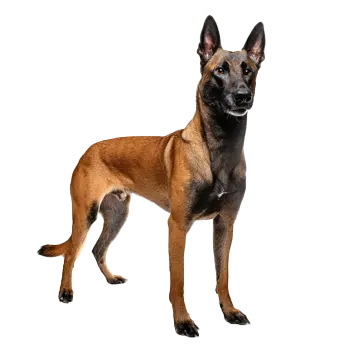

Belgian Malinois are not apartment dogs by any reasonable measure. While exceptions exist for handlers who provide extraordinary amounts of daily exercise and mental engagement, the breed generally requires a living environment with enough indoor and outdoor space to accommodate their energy, movement patterns, and psychological need for purpose. A house with a securely fenced yard is the practical minimum for most owners.
Indoor space should allow your Malinois to move freely between rooms without feeling confined. This breed tends to patrol its environment, checking windows, doors, and family members as part of its natural guarding instinct. Restricting a Malinois to a single small room for extended periods amplifies anxiety and can trigger destructive behavior that has nothing to do with disobedience and everything to do with unmet spatial and psychological needs.
Outdoor space needs to be genuinely secure, not just fenced in the conventional sense. Malinois are athletic enough to clear a standard four-foot fence without difficulty, and many can scale six-foot barriers when motivated. Fencing should be at least six feet tall, ideally with coyote rollers or lean-in extensions at the top. The fence line should also be checked for dig-out potential, as some Malinois will excavate under fencing with surprising speed and determination.
For owners in rental properties or homes with limited yard space, the housing conversation becomes less about the physical structure and more about the daily commitment to off-property exercise. Dog parks, training fields, hiking trails, and structured sport venues can compensate for limited home acreage, but only if used consistently and not as occasional outings.