
Toucan Species Guide - Furry Critter Network

Toucan

Quick Facts

🔬 Scientific Name
Ramphastos toco (Toco Toucan, representative species)
🦜 Breed Group
Toucan
📏 Adult Size
33-65 cm (13-25 inches) depending on species
🦅 Wingspan
43-60 cm (17-24 inches)
⏱️ Lifespan
15-20 years (up to 25 in captivity)
😊 Temperament
Playful, Curious, Energetic, Social
🔊 Noise Level
Moderate (croaking, yelping, barking calls)
🗣️ Talking Ability
None
🍽️ Diet Type
Frugivore (fruit, insects, small vertebrates)
🌍 Origin
Central and South America

Toucan - Names & Recognition

The name "toucan" derives from the Tupi word tukana, adopted into Portuguese and French during the colonial exploration of South America and subsequently anglicized into its modern form. The Tupi peoples of Brazil were among the first to name these conspicuous forest birds for European record, and the linguistic origin reflects the deep association between toucans and the indigenous cultures of the Neotropics, where the birds feature prominently in mythology, ceremonial regalia, and artistic representation. In Spanish-speaking Latin America, toucans are generally called tucanes, while in Brazil the Portuguese tucano remains the standard common name. Various species carry additional vernacular names in local languages across their range, and in English the family name extends to the smaller members known as toucanets and aracaris.

The family Ramphastidae belongs to the order Piciformes, placing toucans in the same broader lineage as woodpeckers, barbets, and honeyguides rather than with the parrots they superficially resemble in popular imagination. The family contains approximately 40 to 45 species depending on taxonomic authority, distributed across five genera: Ramphastos (the large toucans), Andigena (the mountain toucans), Selenidera (the dichromatic toucanets), Pteroglossus (the aracaris), and Aulacorhynchus (the green toucanets). The genus Ramphastos contains the most familiar and largest species, including the toco toucan (Ramphastos toco), the keel-billed toucan (Ramphastos sulfuratus), and the channel-billed toucan (Ramphastos vitellinus), all of which are kept in captivity and have become iconic symbols of tropical biodiversity.

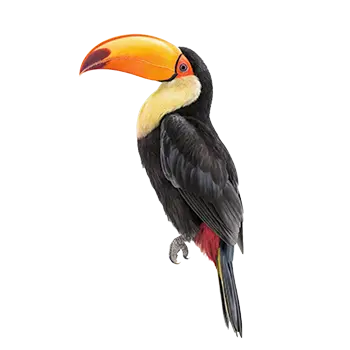
The toco toucan is the largest and most widely recognized member of the family, and it serves as the de facto representative species when toucans are discussed in general terms. Its enormous orange bill, black plumage with white bib, and striking blue orbital skin have made it one of the most instantly recognizable birds on Earth, featured in countless logos, advertisements, and educational materials. The keel-billed toucan, with its multicolored bill of green, orange, red, and blue, is the national bird of Belize and rivals the toco in popular recognition. Both species are commonly encountered in zoological collections and, to a lesser extent, in private aviculture, though the specialized care requirements of all toucans limit their suitability as companion birds to dedicated, experienced keepers.

Organized recognition of toucans in aviculture falls primarily under softbill fancier organizations and zoological associations rather than the breed-registry model used for domesticated species. The American Federation of Aviculture (AFA) recognizes ramphastids within its softbill division, and species-specific studbooks are maintained by the Association of Zoos and Aquariums (AZA) for several toucan species managed under cooperative breeding programs. The Toucan Preservation Project and similar private conservation initiatives work to maintain genetically diverse captive populations and support field research on wild toucan ecology. Unlike parrots, toucans have not been subjected to extensive selective breeding for color mutations or morphological variation, and captive birds generally represent wild-type phenotypes.

Aviculture Registry Recognition

  • aza: Recognized, Piciformes
  • American Federation of Aviculture (AFA): Recognized, Softbill

Toucan Physical Description

The toucan's defining anatomical feature is its extraordinarily large bill, which in the toco toucan can measure up to 20 centimeters in length and constitute roughly one-third of the bird's total body length. Despite its imposing size, the bill is remarkably lightweight, constructed of a thin outer shell of keratin covering a honeycomb matrix of bony trabeculae and air-filled cells that provide structural rigidity with minimal mass. The bill typically weighs only about 50 grams in a toco toucan, representing approximately five percent of the bird's total body weight. This ingenious architectural solution allows the toucan to wield an oversized tool for fruit manipulation, nest access, and social display without the metabolic penalty of carrying a solid bone structure of equivalent size.

Research has revealed that the toucan bill serves a critical thermoregulatory function beyond its obvious roles in feeding and display. The bill is densely perfused with blood vessels that can be dilated or constricted to control heat exchange with the environment. By increasing blood flow to the bill's surface in hot conditions, toucans can rapidly radiate excess body heat, functioning as a biological equivalent of an elephant's ears or a jackrabbit's pinnae. Thermal imaging studies have demonstrated that the bill surface temperature can change by more than 10 degrees Celsius within minutes as the bird modulates vascular flow. During cool nighttime roosting, blood flow to the bill is minimized to conserve body heat, and the bird tucks the bill beneath its back feathers to further reduce thermal loss.

Body plumage across the Ramphastos genus follows a broadly consistent pattern of predominantly black dorsal feathering with contrasting bright patches on the throat, breast, and rump. The toco toucan displays a white throat and upper breast with a narrow red band at the lower border, set against jet-black body plumage with a bright red undertail and white uppertail coverts. The keel-billed toucan has a bright yellow throat and upper breast with green facial skin and a predominantly green bill decorated with orange, blue, and red. Mountain toucans of the genus Andigena display more muted plumage in grays, blues, and olive tones that complement their cloud forest habitat. Aracaris are generally smaller and more slender, with banded breast plumage in reds, yellows, and blacks that varies by species. Sexual dimorphism is minimal in most toucan species, with males typically showing slightly larger bills than females but otherwise similar plumage.

The toucan's feet are zygodactyl, with two toes pointing forward and two backward, an arrangement shared with their woodpecker relatives and with parrots, though the toucan's foot structure evolved independently from the psittacine version. This toe configuration provides excellent grip for perching on branches of varying diameter and stability for the hopping locomotion that characterizes toucan movement through the canopy. The tail is relatively long and squared, with ten rectrices that can be folded sharply upward over the back during roosting to accommodate the bird's length within the confines of a tree cavity. Eyes are surrounded by brightly colored bare skin, typically in shades of blue, green, or orange depending on the species, which contributes to the bird's expressive facial appearance and plays a role in species recognition and social signaling.

Affection Level
Hand-raised toucans develop remarkably affectionate bonds with their keepers, seeking physical contact, perching on shoulders, and nuzzling against their person's face and hands. Their affection is enthusiastic and physical in a way that surprises people accustomed to the more reserved softbill temperament. Toucans that are well-socialized from a young age will actively solicit interaction, hopping toward their keeper and presenting their bill for gentle stroking. However, this bond is highly individual-specific, and toucans can be wary or nippy with unfamiliar people.
Sociability
Wild toucans are gregarious birds that roost communally, with small flocks of up to six individuals squeezing into a single tree cavity by folding their tails over their backs and tucking their bills beneath their wings. This social nature carries into captivity, where toucans thrive on regular interaction and become visibly dejected when isolated. They are animated, attention-seeking birds that insert themselves into household activity with persistent curiosity. Toucans housed with compatible companions engage in mutual preening, play-fighting with their bills, and synchronized roosting.
Vocalization
Toucan vocalizations are distinctive and carry considerable distance in their forest habitat, but they are fundamentally different in character from the screaming calls of parrots. Toco toucans produce deep, resonant croaking calls reminiscent of a frog, while keel-billed toucans deliver sharp, yelping barks. Aracaris and toucanets tend to produce higher-pitched, more rapid calls. The sounds are repetitive and can be persistent, particularly at dawn and dusk, but most keepers find them tolerable compared to parrot-level noise. Toucans do not learn to mimic human speech or environmental sounds.
Intelligence
Toucans demonstrate keen problem-solving abilities and observational learning that reflect their foraging ecology in complex forest canopies. They quickly learn to manipulate latches, open containers, and extract food from puzzle feeders. Their spatial memory is excellent, enabling them to remember the locations of fruiting trees across large home ranges in the wild and food sources within captive environments. Toucans are also remarkably perceptive about human behavior, reading body language cues and anticipating routine events such as feeding time, cage cleaning, and the arrival of preferred people.
Exercise Needs
Toucans are highly active, athletic birds that require substantial space for hopping, short flights, and physical play. In the wild, they move through the forest canopy with a characteristic hopping gait interspersed with short, undulating flights between trees. Captive toucans need enclosures large enough to permit flight and a varied landscape of perches, platforms, and enrichment structures to keep them physically engaged. A sedentary toucan confined to a small cage will rapidly develop obesity, muscle atrophy, and behavioral problems including aggression and stereotypic movements.
Maintenance Level
Toucans are among the most demanding of all commonly kept companion birds in terms of daily maintenance. Their fruit-based diet requires daily preparation of fresh produce, generates copious liquid droppings that necessitate frequent and thorough cleaning, and cannot be replaced with the shelf-stable seed and pellet diets that simplify care for parrots and finches. Their susceptibility to iron storage disease requires careful dietary management and regular veterinary monitoring. Enclosure requirements are substantial, as toucans need flight-capable housing that far exceeds the dimensions of a standard parrot cage.
Trainability
Toucans respond well to positive reinforcement training, particularly when food rewards are used, and can learn a variety of behaviors including step-up, station training, voluntary crate entry, and simple recall. Their food motivation makes them responsive trainees during short, focused sessions. However, they lack the sustained attention span and complex cognitive engagement that characterize parrot training, and they do not learn vocal commands or develop the extensive trick repertoires associated with cockatoos or macaws. Training is most effective when aligned with the toucan's natural play behaviors and curiosity.
Independence
Toucans are not independent birds and do not tolerate extended periods of social isolation well. Their gregarious nature demands regular interaction with either human companions or other toucans, and birds left alone for extended periods may develop stress-related behaviors including feather deterioration, excessive vocalization, and aggression. Unlike some parrot species that can entertain themselves for hours with toys and foraging devices, toucans tend to lose interest in solitary enrichment quickly and redirect their energy toward seeking social contact or engaging in destructive behavior.

Natural Habitat & Range

Toucans are exclusively Neotropical birds, distributed from southern Mexico through Central America and across South America as far south as northern Argentina. The family achieves its greatest species diversity in the lowland and montane rainforests of the Amazon Basin, the Atlantic Forest of Brazil, and the cloud forests of the Andes, though individual species occupy a range of forested habitats from sea-level mangroves to elevations exceeding 3,000 meters. The toco toucan is exceptional within the family in its tolerance of open and semi-open habitats, frequently occurring in cerrado savanna, gallery forest, palm groves, and even urban parks and gardens across central and eastern South America, while most other toucan species are more strictly associated with closed-canopy forest.

Lowland rainforest species such as the channel-billed toucan, the white-throated toucan (Ramphastos tucanus), and the chestnut-mandibled toucan (Ramphastos ambiguus) occupy the mid-canopy and canopy layers of tropical evergreen forest, where they forage primarily in fruiting trees and nest in natural tree cavities or abandoned woodpecker holes. These species are generally sedentary, maintaining home ranges that shift in response to the spatial and temporal availability of fruiting trees but rarely undertaking true migratory movements. In contrast, the mountain toucans of the genus Andigena inhabit the mossy cloud forests and elfin woodlands of the Andes at elevations between 1,600 and 3,400 meters, where they experience significantly cooler temperatures and more seasonal food availability than their lowland relatives.

Aracaris of the genus Pteroglossus are the most social members of the family, frequently encountered in small flocks of six to fifteen birds that move through the forest canopy as cohesive units, roosting communally in tree cavities at night. The fiery-billed aracari, the collared aracari, and the many-banded aracari are among the most commonly observed members of this genus, and their gregarious habits and conspicuous plumage make them a familiar sight in their respective ranges. The green toucanets of the genus Aulacorhynchus occupy a range of forest habitats from lowland evergreen forest to highland cloud forest, and their predominantly green plumage provides effective camouflage in the canopy that contrasts with the bold coloration of their larger relatives.

Habitat loss represents the primary conservation threat to toucan populations across the Neotropics. Deforestation for agriculture, cattle ranching, and urban expansion has eliminated vast areas of forest habitat, particularly in the Atlantic Forest of Brazil, where less than 12 percent of the original forest cover remains. Toucans are particularly vulnerable to habitat fragmentation because they require large fruiting trees for food and mature trees with suitable cavities for nesting, resources that are among the first to disappear in degraded forest remnants. Several toucan species are listed as Near Threatened or Vulnerable by the IUCN, including the yellow-browed toucanet and the Saffron toucanet, and ongoing deforestation threatens to push additional species toward elevated conservation concern.

Temperament

Toucans possess a temperament that is entirely distinct from both the demanding emotional intensity of parrots and the hands-off independence of finches, occupying a unique behavioral niche among companion birds. They are exuberantly playful, endlessly curious, and physically animated, moving through their environment with a bouncing, hopping energy that gives them an almost comedic quality. A toucan investigating a new object will approach it with a series of rapid lateral head tilts, tap it experimentally with the tip of its bill, toss it in the air, catch it, and repeat the process with evident engagement. This playful disposition extends to interactions with their keepers, and well-socialized toucans will initiate games of toss, peek-a-boo behind objects, and gentle bill-fencing with a patient handler.

The bonding pattern of captive toucans differs significantly from that of parrots. Where a parrot may form an exclusive, possessive bond with a single person that manifests as jealousy and aggression toward others, toucans tend to develop primary bonds with their keeper that are affectionate and enthusiastic without the same exclusionary intensity. A well-socialized toucan may be friendly and interactive with multiple family members while still showing a clear preference for its primary person. This more generalized sociability makes toucans somewhat easier to integrate into multi-person households than many parrot species, though they can still develop fear-based avoidance of specific individuals who have handled them roughly or startled them.

Despite their engaging qualities, toucans present temperamental challenges that prospective keepers must understand. They are impulsive, opportunistic birds that will eat anything within reach, chew or dismantle unattended objects, and explore spaces with a thoroughness that borders on destructive. Their bills, while incapable of the crushing force a parrot delivers, can still deliver a painful pinch and are dexterous enough to open containers, unfasten clasps, and remove small objects from pockets and hair. Toucans that are bored, understimulated, or seeking attention will vocalize persistently, become nippy, and may develop redirected aggression toward cage furnishings or companion birds.

The social temperament of toucans means that single birds kept as companions require a substantial daily time commitment from their keepers. Unlike a pair of finches that can fulfill each other's social needs indefinitely, or a parrot that may contentedly shred toys for hours, a single toucan expects active engagement and will escalate attention-seeking behaviors if ignored. Keepers who work away from home for extended hours should seriously consider housing toucans in compatible pairs or small groups, or may find that a less socially demanding species is a more appropriate choice for their lifestyle.

Care Requirements

Housing is the most significant practical challenge in toucan keeping, as these active, flight-dependent birds require enclosures far larger than what standard pet bird cages provide. A single toucan or pair requires a minimum enclosure approximately 2.5 meters long by 1.5 meters wide by 2 meters tall, though larger is always better and outdoor aviaries are ideal where climate permits. The enclosure must be constructed with smooth-surfaced wire mesh or bars rather than chain-link fencing, which can catch and damage the bird's bill and toes. Bar spacing should be narrow enough to prevent the bird from inserting its head, generally no more than 2.5 centimeters. Indoor housing requires that the room be bird-proofed, warm, well-ventilated, and easy to clean, given the volume and liquid consistency of toucan droppings.

Perching within the enclosure should prioritize natural wood branches of varying diameters, arranged to provide clear flight paths across the longest dimension of the space. Toucans prefer to hop along branches rather than climb, and their zygodactyl feet grip most securely on branches between 2 and 5 centimeters in diameter. A roosting box or enclosed sleeping shelter should be provided, as toucans naturally roost in tree cavities and feel most secure sleeping in an enclosed space. The roosting box should be large enough for the bird to enter comfortably and turn around, with an entrance hole slightly larger than the bird's body. During cooler months, the sleeping box helps conserve body heat, which is particularly important for tropical species maintained in temperate climates.

Temperature management is critical for toucans, which are tropical birds with limited tolerance for cold. Most species should be maintained at ambient temperatures above 15 degrees Celsius, with an ideal range of 20 to 28 degrees Celsius. Temperatures below 10 degrees Celsius can be dangerous, particularly for birds accustomed to stable tropical warmth. Toucans housed outdoors in temperate climates require heated indoor shelters accessible at all times during cooler months. Conversely, these birds tolerate tropical heat well, provided they have access to shade, bathing water, and adequate ventilation. Humidity should be maintained between 50 and 70 percent to support respiratory health and feather condition.

Bathing is an essential and enthusiastically pursued activity for toucans. Most individuals bathe daily if given the opportunity, splashing vigorously in shallow water dishes, misting from spray bottles, or standing beneath gentle rain or shower streams. Bathing supports feather condition, skin health, and provides significant behavioral enrichment. The bathing area should be designed to contain the considerable splash zone a bathing toucan creates and should be cleaned and refilled after each use. Some keepers install shallow drip or mist systems within the enclosure that allow the bird to bathe on its own schedule.

Cleaning demands for toucan enclosures substantially exceed those of seed-eating birds. The fruit-based diet produces large-volume, liquid droppings that stain rapidly, promote bacterial and fungal growth, and attract insects if not removed promptly. Daily floor cleaning, perch wiping, and food dish sanitization are minimum requirements. The entire enclosure should receive a thorough deep-clean weekly, with disinfection of all surfaces using bird-safe products. Many experienced toucan keepers design enclosures with washable surfaces, floor drains, and removable perch systems to simplify the daily cleaning burden.

Feeding & Nutrition

The toucan diet in the wild is primarily frugivorous, with fruit constituting approximately 80 to 90 percent of intake, supplemented by insects, spiders, small lizards, frogs, bird eggs, and nestlings taken opportunistically. Toucans are important seed dispersers in their forest ecosystems, swallowing small fruits whole and regurgitating or defecating intact seeds at considerable distances from the parent tree. Their fruit preferences span a wide range of tropical species including palms, figs, Cecropia, melastomes, and laurels, and they shift their foraging focus seasonally to track the phenology of fruiting across their home range. This dietary ecology has profound implications for captive nutrition, as replicating the nutritional profile of wild tropical fruits with commercially available temperate produce requires careful planning.

The captive toucan diet should be built around a foundation of low-iron, low-citric-acid fruits offered fresh daily. Papaya is widely considered the ideal staple fruit for toucans, providing excellent nutrition with very low iron content and moderate sugar levels. Blueberries, bananas, melon, mango, and dragon fruit are all appropriate regular offerings. Grapes, raisins, and dried fruits must be avoided entirely due to their high iron content, and citrus fruits should be limited because ascorbic acid dramatically enhances intestinal iron absorption. The dietary emphasis on iron restriction cannot be overstated: iron storage disease is the primary killer of captive toucans, and every dietary decision should be evaluated through the lens of iron content.

Commercial low-iron softbill pellets designed specifically for ramphastids and other iron-sensitive species should form a supplementary component of the diet, providing balanced vitamins and minerals in a controlled iron formulation. These pellets are typically soaked in water or mixed with diced fruit to encourage acceptance, as toucans are instinctive fruit eaters and may initially reject dry pellets. Standard parrot pellets, dog food, and generic softbill diets are not appropriate for toucans, as they typically contain iron levels that are dangerously high for ramphastid physiology. The distinction between toucan-specific and general softbill formulations is a critical one that new keepers must understand.

Animal protein should be offered in controlled quantities to supplement the fruit base, reflecting the toucan's natural opportunistic consumption of insects and small vertebrates. Appropriate protein sources include gut-loaded crickets, mealworms, waxworms, small pieces of cooked egg, and pinky mice for larger species. Protein supplementation is particularly important during the breeding season, when growing chicks require higher protein intake, and during the molt, when feather synthesis increases amino acid demands. However, excessive animal protein can predispose toucans to gout, so protein offerings should be moderate and balanced against the fruit base.

Food presentation is an important element of toucan nutrition that serves both dietary and enrichment functions. Toucans are tactile, playful feeders that enjoy manipulating food items with their bills, tossing berries into the air and catching them, and dismantling larger pieces of fruit into bite-sized portions. Offering whole fruits that require the bird to work for its food, scattering food items across multiple feeding stations within the enclosure, and using puzzle feeders that require the bird to extract food from containers all provide physical and cognitive stimulation while extending the duration of feeding bouts. Multiple feeding sessions throughout the day more closely replicate the natural foraging pattern of continuous small meals rather than a single large offering.

Toucan Health & Lifespan

Captive toucans maintained under optimal husbandry conditions can live 15 to 20 years, with exceptional individuals reaching 25 years or beyond. This represents a significant potential lifespan that rewards the substantial investment of time and resources required for proper toucan care. However, the average lifespan of captive toucans in practice falls considerably short of this potential, primarily due to the devastating impact of iron storage disease on birds fed inappropriate diets. The difference between a toucan maintained on a carefully managed low-iron diet by an experienced keeper and one fed a conventional softbill or parrot diet can be a decade or more of life, making dietary management the single most consequential health decision in toucan keeping.

Iron storage disease warrants particular emphasis because its progression is insidious and its effects are largely irreversible. Dietary iron accumulates gradually in the liver parenchyma over months and years, causing progressive hepatocyte damage that may produce no visible clinical signs until organ function is critically compromised. Birds may appear outwardly healthy while harboring advanced hepatic iron deposition, and the first sign of illness may be sudden collapse or death. Serum ferritin and transferrin saturation levels can provide some indication of iron status but do not reliably reflect tissue iron concentrations. Liver biopsy remains the gold standard for diagnosis, and periodic monitoring is recommended for birds in long-term captive management.

Beyond iron storage disease, toucans are susceptible to a range of infectious and metabolic conditions that require veterinary familiarity with softbill medicine rather than the psittacine-focused approach that dominates companion avian practice. Aspergillosis, candidiasis, bacterial enteritis, and parasitic infections all occur in captive toucans and require species-appropriate diagnostic and treatment protocols. The toucan's high metabolic rate, relatively small body mass relative to surface area, and limited fasting tolerance mean that illness progresses rapidly, and the window for effective intervention is narrow. A toucan that stops eating, becomes fluffed or lethargic, or sits on the floor of its enclosure should be considered an emergency requiring immediate veterinary attention.

Preventive health management for toucans should include annual or semi-annual veterinary examinations by a practitioner experienced in ramphastid medicine, complete blood work including liver enzyme panels, fecal parasite screening, and periodic assessment of hepatic iron status. Maintaining detailed records of body weight, food consumption, droppings consistency, and behavioral patterns provides a baseline against which subtle changes can be detected early. The toucan keeper's daily observation is the first line of defense in health monitoring, as the birds' naturally active and food-motivated behavior means that any deviation from normal energy levels or appetite is a meaningful clinical signal.

Common Health Issues

  • Iron Storage Disease (Hemochromatosis) - Iron storage disease is the single most significant health threat facing captive toucans and is the leading cause of premature death in this family. Toucans have evolved in a dietary niche dominated by low-iron tropical fruits and have limited physiological capacity to regulate iron absorption, causing excess dietary iron to accumulate in the liver, heart, and other organs over time. Progressive iron deposition leads to organ damage, liver failure, and sudden death, often without preceding clinical signs. Diagnosis requires liver biopsy or advanced imaging, as serum iron levels do not reliably reflect tissue iron stores. Prevention through strict dietary iron restriction is far more effective than treatment of established disease.
  • Aspergillosis - Aspergillosis is a fungal respiratory infection caused by Aspergillus species that represents a serious and often fatal condition in captive toucans. The disease is promoted by poor ventilation, damp environmental conditions, dusty substrates, and immunosuppression from stress or concurrent illness. Toucans stressed by inappropriate housing, transport, or social isolation are particularly vulnerable. Symptoms include labored breathing, tail bobbing, lethargy, weight loss, and voice changes. Treatment requires prolonged antifungal therapy, and prognosis is guarded once clinical signs appear, making environmental management and stress reduction the primary preventive strategies.
  • Gout (Uric Acid Deposition) - Gout occurs when uric acid crystals accumulate in the joints (articular gout) or internal organs (visceral gout) due to impaired renal function or excessive dietary protein. Toucans fed diets high in animal protein or those with underlying kidney compromise are predisposed to this painful and often irreversible condition. Articular gout manifests as swollen, painful joints, particularly in the feet and toes, while visceral gout may cause sudden death with minimal preceding symptoms. Dietary management emphasizing appropriate protein levels and ensuring adequate hydration are the primary preventive measures.
  • Candidiasis (Crop and Gastrointestinal Yeast Infection) - Candida infections of the crop, esophagus, and gastrointestinal tract are common in captive toucans, particularly in immunocompromised birds, those on antibiotic therapy, and hand-fed chicks. The high-sugar fruit diet that toucans require provides an ideal substrate for yeast proliferation when the normal gut flora is disrupted. Symptoms include regurgitation, crop stasis, white plaques in the oral cavity, and weight loss. Treatment involves antifungal medication and restoration of normal gut flora, and recurrence is common in birds with underlying immune compromise or environmental stress.
  • Bumblefoot (Pododermatitis) - Bumblefoot is a bacterial infection of the plantar surface of the feet that develops when pressure sores from inappropriate perching surfaces become colonized by Staphylococcus or other bacteria. Toucans are particularly susceptible because their zygodactyl feet concentrate body weight on the central foot pad, and captive birds often spend extended time on perches of uniform diameter that create sustained pressure points. Early-stage bumblefoot presents as reddened, swollen foot pads, progressing to deep abscesses and joint infection if untreated. Prevention requires varied-diameter natural wood perches and padded resting surfaces.
  • Trauma and Bill Injuries - Despite its impressive size, the toucan's bill is a lightweight honeycomb structure of keratin over bone trabeculae that is vulnerable to fracture and cracking from collision injuries, cage bar impacts, and aggressive encounters with other birds. Bill injuries can be functionally devastating, as the bill is essential for feeding, thermoregulation, preening, and social interaction. Minor cracks may be repaired with veterinary-grade adhesive and composite materials, but severe fractures involving the bill's blood supply can lead to necrosis of the bill tip. Enclosure design that minimizes collision risk and compatible social groupings that prevent aggressive bill-fencing injuries are important preventive measures.

Preventive Care & Health Monitoring

  • Low-iron diet management - The cornerstone of toucan preventive health is strict dietary iron restriction to prevent iron storage disease. All fruits, vegetables, and supplementary foods should be evaluated for iron content, with high-iron items such as grapes, raisins, spinach, broccoli, and peas excluded or strictly limited. Citrus fruits and other foods high in vitamin C should be offered in moderation, as ascorbic acid dramatically enhances non-heme iron absorption. Commercial toucan pellets specifically formulated with low iron content (below 100 ppm) should replace standard softbill or parrot pellets, which often contain iron levels dangerously high for ramphastids.
  • Regular avian veterinary monitoring - Toucans require veterinary care from practitioners experienced in softbill medicine, which differs significantly from the psittacine-focused practice that dominates companion avian veterinary care. Annual wellness examinations should include complete blood panels, liver enzyme evaluation, and fecal parasite screening. Periodic liver biopsy or hepatic iron quantification via MRI may be recommended for long-term monitoring of iron storage status. Establishing a relationship with a qualified avian veterinarian before an emergency arises is essential, as softbill expertise is less widely available than parrot-focused avian medicine.
  • Environmental hygiene and humidity management - The high-moisture fruit diet of toucans produces voluminous, liquid droppings that create a persistently damp enclosure environment favorable to bacterial and fungal growth. Daily cleaning of cage floors, perches, and food preparation surfaces is non-negotiable. Adequate ventilation without direct drafts reduces aspergillosis risk by limiting airborne fungal spore concentrations. Ambient humidity should be maintained between 50 and 70 percent to support respiratory and feather health while preventing the excessively damp conditions that promote pathogen growth.
  • Perch diversity and foot health management - Providing a variety of natural wood perches of differing diameters, textures, and orientations is essential for preventing bumblefoot in captive toucans. Perches should range from approximately 2 to 5 centimeters in diameter and include branches with natural bark texture that promotes healthy foot grip and wear. Flat platform perches padded with soft material should be provided as resting surfaces to relieve pressure on the plantar foot pad. Perches should be inspected regularly for contamination and replaced when they become smooth, soiled, or develop sharp edges.
  • Behavioral enrichment and social management - Comprehensive behavioral enrichment is a preventive health measure for toucans, reducing the chronic stress that predisposes birds to immune suppression, aspergillosis, and behavioral disorders. Enrichment should include novel food presentation methods, puzzle feeders, natural browse branches for shredding, water features for bathing, and rotation of cage furnishings to maintain environmental novelty. Social enrichment through regular human interaction or compatible avian companionship is equally critical, as isolated toucans develop stress-related health problems at significantly higher rates than socially fulfilled individuals.
  • Quarantine and disease screening for new birds - All newly acquired toucans should be quarantined in a separate facility for a minimum of 30 to 45 days before introduction to existing birds. During quarantine, comprehensive health screening including blood work, fecal analysis, crop wash, and physical examination by an avian veterinarian should be completed. Screening for aspergillosis, candidiasis, and bacterial infections is particularly important for toucans arriving from pet trade channels, as the stress of capture, transport, and multiple rehoming events significantly increases disease susceptibility.

Training & Vocalization

Toucan training relies on positive reinforcement methods, with preferred food items serving as the primary motivator. Because toucans are intensely food-motivated and naturally curious, they typically engage readily with training sessions that offer novel treats or favored fruits. The fundamental behaviors to establish include step-up onto the hand or a perch, stationing (going to and remaining on a designated perch), voluntary crate entry for transport, and targeting (touching the bill tip to a target stick). These practical behaviors simplify daily management, reduce handling stress, and facilitate veterinary examination. Training sessions should be brief, typically five to ten minutes, as toucans have limited attention spans compared to parrots and will lose focus or become frustrated during prolonged sessions.

Target training is particularly valuable for toucans because the bill provides a natural target instrument. By rewarding the bird for touching its bill tip to a designated stick or object, the keeper can guide the toucan to specific locations, onto scales for weighing, into carriers for transport, and through other management procedures without physical restraint. Clicker training, in which a click sound marks the precise moment of the desired behavior and bridges the gap between action and food reward, works effectively with toucans and accelerates the learning process. Consistency in cues, timing, and reward delivery is essential, as toucans are perceptive observers that quickly detect and exploit inconsistencies in the training protocol.

Toucan vocalization, while distinctive and persistent at times, differs fundamentally from parrot vocalization in both mechanism and content. Toucans are not vocal learners and cannot mimic human speech, music, or environmental sounds. Their vocalizations are innate species-specific calls that serve territorial, social, and alarm functions. The toco toucan produces a deep, grunting croak often compared to the call of a large frog, repeated in rhythmic series that can continue for extended periods, particularly at dawn and dusk. Keel-billed toucans deliver a sharper, more explosive yelping call. Aracaris produce high-pitched, rapid chattering sequences. While none of these sounds approach the decibel levels of a screaming cockatoo or macaw, they can be surprisingly loud in an indoor environment and may be produced with monotonous persistence that tests the patience of keepers and neighbors.

Managing vocalization in captive toucans involves understanding the behavioral triggers that promote calling and modifying the environment accordingly. Toucans call most intensely at dawn and dusk, reflecting their crepuscular activity peaks in the wild, and this timing-based calling is largely innate and cannot be trained away. However, attention-seeking vocalization that occurs throughout the day can be managed by ensuring the bird's social, dietary, and enrichment needs are met, avoiding inadvertent reinforcement of calling by responding to vocal demands, and providing alternative outlets for the bird's energy through foraging opportunities, play, and training sessions. Covering the cage or dimming lights during the evening can signal roosting time and reduce sunset-triggered calling bouts.

Children & Other Pets

Toucans can coexist with older, responsible children who understand the specific handling and behavioral requirements of these unusual birds, but they are not appropriate pets for households with young children. The toucan's bill, while incapable of the crushing bite force of a parrot, is a long, pointed instrument that can deliver painful jabs and pinches, particularly when the bird is startled, overexcited, or defending food. More importantly, the toucan's impulsive temperament and tendency to lunge at interesting objects, including eyes, jewelry, and small fingers, creates a risk profile that requires mature judgment and controlled movements from anyone interacting with the bird. The combination of a toucan's speed, reach, and lack of inhibition around novel stimuli makes unsupervised interaction with young children inadvisable.

Older children and teenagers who are invested in the bird's care and willing to learn proper handling techniques can develop rewarding relationships with a family toucan. Teaching children to read the bird's body language, to move calmly and predictably around it, and to respect its boundaries builds transferable skills in animal awareness and responsible pet ownership. Age-appropriate involvement in daily care, including food preparation, feeding, and bath provision, provides hands-on experience with animal husbandry. Supervised training sessions using positive reinforcement methods are particularly engaging for older children and strengthen the bond between child and bird.

The relationship between toucans and other household pets requires careful management and, in many cases, strict physical separation. Cats are unambiguous predatory threats to toucans, and even a cat that appears disinterested can be triggered by the bird's rapid hopping movements and bright coloration into a lethal predatory strike. Dogs, particularly those with prey drive or excitable temperaments, also pose serious risks. The toucan's long bill, while potentially defensive, is not an effective weapon against a determined predator, and the bird's hollow, lightweight skeleton makes it extremely vulnerable to crushing injuries from even a moderate blow. Toucans should never be left unattended in the same space as cats or dogs, regardless of the predator's apparent temperament.

Housing toucans with other bird species requires species-specific knowledge and careful compatibility assessment. Toucans are natural nest predators that will raid the nests of smaller birds to consume eggs and chicks, making mixed-species housing with small finches, doves, or other nesting birds inappropriate in any enclosure where breeding is occurring. Some zoological facilities successfully house toucans in large, well-designed mixed-species exhibits alongside similarly sized or larger birds, but these arrangements require extensive space, multiple feeding stations, and careful monitoring for aggression. In private aviculture, toucans are generally best housed with other toucans of compatible species and temperament, or maintained as single-species pairs or groups.