
Bowls, Feeders & Water Stations

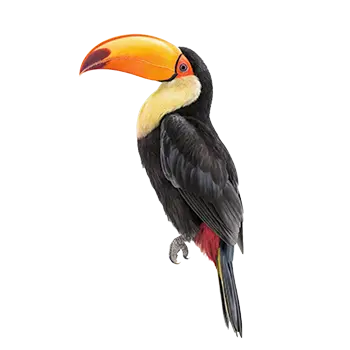
Choosing the right feeding and watering equipment for a toucan is more nuanced than it might appear. Toucans eat by tossing food to the back of their throat, which means they need wide, open dishes that allow them to pick up items with the tip of their bill and flick upward without obstruction. Deep, narrow bowls that work perfectly for parrots are frustrating and messy for toucans. Shallow, broad dishes made from stainless steel or heavy ceramic are the best options — they provide ample surface area for food access and are heavy enough to resist tipping during enthusiastic feeding sessions.

Multiple feeding stations are highly recommended, even for a single bird. Placing food dishes at different locations within the enclosure encourages the toucan to move around and mimics the distributed food sources it would encounter in the wild. This approach also helps prevent food guarding behavior in multi-bird setups. Each station should offer a slightly different food selection — pellets at one, fresh fruit at another, and insects or treats at a third — to promote a varied diet.

Water dishes require equally careful selection. Toucans drink by dipping their bill and tilting their head back, so the water container must be wide enough for the bill to submerge and deep enough to allow a full drink without the bird scraping the bottom. However, the dish should not be so deep that a bathing toucan could submerge itself dangerously. Many keepers use two water stations: a smaller, cleaner drinking dish positioned higher in the cage and a larger, shallower dish at a lower level for bathing.

Cleaning frequency for toucan food and water dishes is significantly higher than for most other pet birds. The combination of soft, sugary fruit and warm, humid environmental conditions creates ideal breeding grounds for bacteria and mold. Food dishes should be washed after every meal, and water dishes should be rinsed and refilled at least twice daily. Investing in duplicate sets of dishes allows you to swap in clean ones immediately while the soiled set is being sanitized.

Grooming & Hygiene Tools

Toucans require relatively little hands-on grooming compared to parrots, but the grooming they do need involves specialized tools and careful technique. Nail trimming is the most common grooming task, as captive toucans on smooth perches can develop overgrown nails that catch on cage furnishings and cause injury. A pair of sharp, small animal nail clippers or a rotary nail grinding tool designed for birds should be part of every toucan keeper's supply kit.

Bill care is generally unnecessary for healthy toucans, as the bill is made of keratin and maintains itself through normal use. However, keepers should regularly inspect the bill for cracks, chips, or abnormal growth patterns that could indicate nutritional deficiencies or injury. A chipped or cracked bill can usually heal on its own, but severe damage may require veterinary attention. Having a styptic powder or cornstarch on hand is wise in case a nail trim or minor bill injury causes bleeding.

Misting bottles are an essential grooming accessory for toucans. Regular misting with lukewarm water helps maintain feather condition, supports natural preening behavior, and supplements the humidity in the bird's environment. A dedicated spray bottle with a fine mist setting works well for daily use. Some keepers invest in pump-action pressure sprayers that produce a finer, more consistent mist with less hand fatigue — particularly useful if you are misting multiple birds or large enclosures.

Cleaning supplies specific to the toucan's living space should also be considered essential accessories. Bird-safe disinfectants, scrub brushes for perches and dishes, and a handheld steam cleaner for sanitizing cage surfaces without chemicals are all worthwhile investments. Toucans produce a high volume of messy droppings, and maintaining a clean environment is one of the most important factors in preventing illness. Having the right cleaning tools readily accessible makes daily maintenance faster and more thorough.

Carriers & Travel Equipment

A sturdy, appropriately sized travel carrier is an essential accessory for every toucan owner, even if you rarely travel with your bird. Veterinary visits, emergency evacuations, and occasional relocations all require a safe way to transport your toucan, and improvising at the last minute is stressful for both bird and keeper. The ideal toucan carrier is large enough for the bird to perch comfortably with its tail clear of the walls, well-ventilated, and easy to clean.

Standard parrot travel cages can work for toucans, but the dimensions may not be ideal. Toucans are longer-bodied than most parrots and need more horizontal space relative to their overall size. A carrier designed for a medium to large parrot will usually accommodate a toucan, but verify that the internal perch is positioned so the bird's tail does not press against the back wall. Some keepers modify carriers by repositioning the perch or adding a custom-cut natural wood dowel at the optimal height and depth.

For longer trips, consider a carrier with attached food and water cups that can be accessed from outside without opening the main door. Toucans dehydrate quickly, especially when stressed, and the ability to offer water during transport without risking an escape is important. Line the carrier floor with paper towels or a washable pad, as the bird will almost certainly produce droppings during transit, and easy cleanup prevents the mess from becoming a hygiene issue.

Acclimating your toucan to its carrier before an actual trip reduces transport stress significantly. Leave the carrier open in the bird's play area periodically, place treats inside to create positive associations, and practice short sessions with the door closed before the first real outing. A toucan that views its carrier as a familiar, non-threatening space will travel with far less anxiety than one being forced into an unfamiliar container during an already stressful situation.

Lighting & Environmental Accessories

Full-spectrum lighting is one of the most important accessories for indoor toucans. These tropical birds rely on UVA and UVB wavelengths for vitamin D synthesis, calcium metabolism, and overall physiological health. Without adequate UV exposure, captive toucans can develop metabolic bone disease, poor feather quality, and behavioral changes. A quality avian full-spectrum light fixture mounted above the enclosure, set on a twelve-hour timer, is a non-negotiable accessory for any toucan that does not receive regular, unfiltered natural sunlight.

When selecting a full-spectrum light, look for products specifically rated for avian use with documented UVB output. Not all full-spectrum bulbs are created equal — many products marketed as full-spectrum for general household use produce negligible UVB radiation. The fixture should be mounted at the manufacturer's recommended distance from the perching area, as UVB output decreases rapidly with distance and the effective range varies by product. Replace bulbs according to the manufacturer's schedule, as UV output degrades over time even if the visible light appears unchanged.

Humidifiers are another environmental accessory that most toucan keepers consider essential. Maintaining humidity levels between sixty and eighty percent in the bird's living area supports respiratory health, feather condition, and overall comfort. Cool-mist humidifiers are generally preferred over warm-mist models for avian environments, as they do not create a burn risk and produce a finer vapor that disperses more evenly. Position the humidifier so that moist air reaches the bird's enclosure without creating wet surfaces on electrical components or cage hardware.

Thermometers and hygrometers placed near the enclosure allow you to monitor temperature and humidity at a glance. Digital models with remote sensors are particularly useful because the sensor can be placed inside the cage while the display remains outside for easy reading. Some combination units log minimum and maximum readings over a twenty-four-hour period, which helps you identify temperature swings that occur overnight or when the household heating and cooling system cycles.

Safety & Identification

Microchipping is the most reliable form of permanent identification for captive toucans and is strongly recommended by avian veterinarians and breeders. Unlike leg bands, which can catch on cage furnishings and cause injury, a microchip is implanted subcutaneously and provides a permanent, tamper-proof identification number linked to your contact information in a national database. If your toucan escapes or is stolen, a microchip dramatically increases the chances of recovery.

Leg bands are commonly applied to toucans by breeders as a form of identification at a young age, and many birds arrive in their new homes already banded. If your toucan wears a leg band, inspect it regularly for signs of constriction as the bird matures — bands that were properly sized for a juvenile can become dangerously tight on an adult. If the band appears to be causing irritation, restricted circulation, or snagging on cage components, consult your avian veterinarian about safe removal.

First-aid supplies should be assembled and kept readily accessible in any household with a toucan. A basic avian first-aid kit includes styptic powder for bleeding nails or minor wounds, sterile gauze, medical tape, blunt-tipped scissors, a small flashlight for examining the bird, and the contact information for your avian veterinarian and the nearest emergency avian clinic. Hemostatic agents designed for birds stop bleeding much faster than general-purpose products and should be the primary item in your kit.

Window and mirror decals are a simple but critically important safety accessory for toucans that spend time outside their cages. Toucans fly fast and have limited ability to perceive clear glass or reflective surfaces as solid barriers. Collisions with windows and mirrors are a leading cause of injury and death in free-flighted pet birds. UV-reflective window decals, which are visible to birds but nearly invisible to humans, are the most effective option for preventing collisions in rooms where your toucan has flight access.

Seasonal & Climate-Specific Gear

Toucans in temperate climates face seasonal challenges that require gear adjustments throughout the year. During winter months, supplemental heating becomes critical if the bird's living space drops below seventy degrees. Ceramic heat emitters, which produce warmth without light, are a popular choice for providing overnight heat without disrupting the bird's sleep cycle. Radiant heat panels mounted on or near the cage offer another option that creates a warm zone the bird can move toward or away from as needed.

Any heating device used near a toucan must be positioned so that the bird cannot make direct contact with it. Burns from heat lamps and ceramic emitters are a serious risk, and the heating element should always be mounted outside the cage or behind a protective guard. Thermostatically controlled heating systems are strongly preferred over manual setups, as they maintain a consistent temperature without the risk of overheating if you forget to adjust or turn off the device.

Summer brings its own set of considerations, particularly for toucans housed in outdoor aviaries. Shade structures, misting systems, and frozen treats help manage heat stress during peak temperatures. Even indoor toucans may need additional cooling if your home's air conditioning is insufficient or inconsistent. A clip-on fan directed near but not directly at the enclosure can improve air circulation, though the airflow should never blow directly on the bird, as this can cause chilling and respiratory stress.

Seasonal changes in daylight also affect toucan behavior and health. As day length shortens in autumn and winter, toucans may become less active, eat less, and show changes in feather condition. Adjusting the full-spectrum light timer to maintain a consistent twelve-hour photoperiod throughout the year helps stabilize the bird's circadian rhythm and prevent the seasonal behavioral shifts that can occur when captive birds are exposed to natural light cycles in northern or southern latitudes. Consistency in lighting, temperature, and humidity across seasons is the foundation of year-round toucan health.

Always consult a qualified professional before making any health-related decisions. This content is provided for informational reference only and should not replace professional guidance specific to your animal.