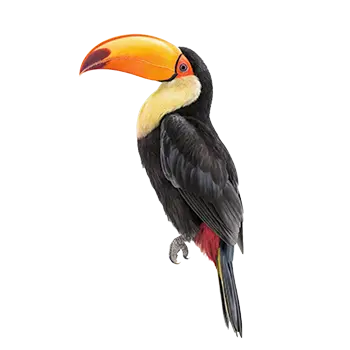

Toucan chicks hatch blind, naked, and entirely helpless. Unlike many other bird species, newborn toucans arrive without any down feathers, leaving their pink skin fully exposed to the environment. Their eyes remain sealed shut, and their oversized feet and underdeveloped bills give them a fragile, almost alien appearance. During these first critical hours, the chicks are completely dependent on their parents for warmth and protection.
Both parents share incubation duties, and this cooperative behavior continues immediately after hatching. The adult birds will brood the chicks almost continuously during the first day, keeping them tucked beneath their bodies to maintain a stable temperature. In captivity, if the parents are not present or are inexperienced, a brooder set to approximately 95 to 97 degrees Fahrenheit is essential to replicate the warmth the chicks would normally receive.
During the first 24 hours, chicks typically do not eat. They are sustained by the remaining yolk sac absorbed just before hatching, which provides enough nutrition to carry them through this initial period. Keepers should resist the urge to offer food too soon and instead focus on ensuring the environment is warm, humid, and free of drafts. Any disturbance should be kept to an absolute minimum to reduce stress on both the chicks and the parent birds.
It is important to observe the chicks without excessive handling. Check that each chick appears to be breathing normally and is positioned safely within the nest cavity or brooder. If a chick appears lethargic, cold to the touch, or has not been brooded by the parents within a few hours, intervention may be necessary. Contact an avian veterinarian experienced with softbills for guidance on next steps.