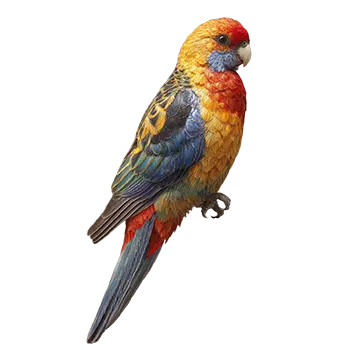
Proper nutrition is fundamental to Golden-Mantled Rosella health, affecting everything from feather quality and immune function to longevity and disease resistance. In their native Australia, rosellas are often maintained on seed-based diets that work reasonably well with the extensive flight exercise possible in large outdoor aviaries. However, modern avian nutrition research demonstrates that varied diets including pellets, fresh foods, and limited seeds produce healthier birds with better longevity, particularly for pet birds in cage situations with less exercise than aviary birds.
The foundation of a captive Golden-Mantled Rosella diet can take one of two approaches, both having proponents in aviculture. The traditional seed-based approach uses high-quality small parrot seed mix as the staple, supplemented heavily with fresh vegetables, greens, and occasional fruits. The modern pelleted approach uses quality small parrot pellets as the foundation (40-50% of intake), with fresh foods comprising another 30-40%, and seeds offered as treats and supplements (10-20%). Both approaches can produce healthy birds when properly implemented with adequate variety and supplementation, though the pelleted approach provides more consistent, balanced nutrition with less risk of nutritional deficiencies.
For those choosing a seed-based diet, use high-quality small parrot or budgie/cockatiel mixes containing variety including canary seed, millet (white, red, Japanese), oats, wheat, a limited amount of sunflower and safflower seeds, and minimal amounts of higher-fat seeds like hemp and niger. Avoid cheap seed mixes with excessive amounts of large, oily seeds or milo (which many birds reject). Offer approximately 1-2 tablespoons of seed mix daily per bird, adjusting based on body condition and activity level. Supplement heavily with daily fresh foods to prevent nutritional deficiencies inherent in seed-only diets.
For those using pelleted diets, choose quality formulations specifically designed for small to medium parrots. Reputable brands formulated with natural ingredients, minimal artificial colors, and appropriate nutrient ratios are available from specialty avian feed manufacturers. Offer pellets free-choice, allowing the bird to eat as desired while monitoring body condition to prevent obesity. Some rosellas initially resist pellets if not raised on them, requiring gradual conversion by mixing increasing amounts of pellets with decreasing amounts of seeds over several weeks, ensuring the bird maintains adequate food intake during transition.
Fresh vegetables should be offered daily regardless of whether the base diet is seed or pellet. Excellent vegetable choices include dark leafy greens (kale, collard greens, dandelion greens, chard, carrot tops), orange vegetables high in vitamin A (carrots, sweet potato, butternut squash—cooked), cruciferous vegetables (broccoli, cauliflower, Brussels sprouts), peppers (all colors), green beans, snap peas, corn, and sprouted seeds or beans. Offer vegetables chopped into appropriate sizes or whole for the bird to manipulate. Wash all produce thoroughly to remove pesticide residues. Organic produce may be preferable for items on the Environmental Working Group's Dirty Dozen list when budget allows.
Fruits provide vitamins, variety, and are often enthusiastically received but should be offered in moderation due to high sugar content. Suitable fruits include berries (blueberries, strawberries, raspberries), apple (remove seeds), pear, melon, papaya, mango, grapes (cut in half), pomegranate, and limited amounts of banana. Offer fruits several times weekly rather than daily, comprising no more than 10-15% of total diet. Avoid avocado entirely as it is toxic to birds, and remove pits and seeds from stone fruits which may contain harmful compounds.
Seeds for birds on pelleted diets become treats and training rewards rather than staples. A teaspoon of mixed seeds daily provides enrichment and food motivation for training without causing nutritional imbalance. Seeds that rosellas particularly enjoy include millet sprays (which also provide foraging enrichment), sunflower seeds (limit quantity due to high fat), safflower, pumpkin seeds, and various wild grass seeds when available. Sprouted seeds offer enhanced nutrition compared to dry seeds and are enthusiastically received by most rosellas.
Nuts can be offered occasionally in very small quantities as special treats, though they are high in fat and should not be daily offerings. Suitable options include almonds, walnuts, pecans, and pine nuts, offered raw and unsalted. Avoid macadamia nuts which may be toxic to some birds. One or two small nut pieces weekly is sufficient.
Cooked foods add variety and nutrition. Cooked whole grains including brown rice, quinoa, whole wheat pasta, barley, and oats can be offered several times weekly. Legumes like lentils, chickpeas, black beans, and kidney beans provide protein but must be thoroughly cooked as raw or undercooked beans contain toxic compounds. Scrambled or hard-boiled eggs (no butter, oil, or seasonings) offer high-quality protein once or twice weekly. Some keepers prepare grain and vegetable mixes called "chop" in batches, freezing portions for convenient daily feeding.
Foods to strictly avoid include chocolate (highly toxic), avocado (toxic), caffeine, alcohol, high-fat foods, high-salt foods, sugar and candy, processed human foods, onions and garlic (can damage blood cells), apple seeds and fruit pits (contain cyanide compounds), raw beans (contain toxins), mushrooms (some species are toxic), rhubarb leaves (toxic), and anything moldy or spoiled. When uncertain about a food's safety, research thoroughly before offering.
Supplementation depends on the base diet. Birds on quality pelleted diets with good variety of fresh foods typically need minimal supplementation. Those on seed-based diets benefit from vitamin and mineral supplementation. Provide cuttlebone, mineral block, or calcium block constantly available, though many rosellas ignore these. Sprinkling small amounts of calcium powder (without added vitamin D3 if birds receive adequate UV exposure) on vegetables several times weekly ensures adequate intake, particularly important for breeding females. Vitamin supplementation for seed-based diets can be provided by lightly dusting food with quality avian vitamin powder once or twice weekly. Avoid adding liquid vitamins to water as this promotes bacterial growth and doesn't ensure proper dosage. Birds on pelleted diets generally don't require additional vitamin supplementation unless specific deficiencies are identified.
Water must be fresh, clean, and available at all times. Change water at least daily, more frequently if soiled by food dunking or droppings. Use filtered or bottled water if local tap water quality is questionable. Most municipal water is safe, though heavily chlorinated water can be left standing in open containers for several hours before offering, allowing chlorine to dissipate. Avoid distilled water which lacks beneficial minerals.
Feeding schedules typically involve offering fresh foods in the morning when birds are hungry and most likely to consume them. Remove perishable items after 4-6 hours to prevent spoilage, particularly important in warm weather when bacterial growth accelerates. Seeds or pellets can remain available throughout the day. Some keepers offer a second serving of fresh foods in the evening. Rosellas eat relatively small amounts frequently throughout the day rather than large meals, so food should always be available in some form.
Presentation variety maintains interest and provides enrichment. Offer foods in different forms—sometimes chopped, sometimes whole for manipulation; hanging from clips or skewers; stuffed into foraging toys; scattered on the cage floor encouraging ground foraging behavior; or mixed together in colorful combinations. Varying presentation methods keeps meals interesting and engaging while encouraging natural foraging behaviors.
Monitoring food consumption and body condition ensures nutritional adequacy and detects problems early. Observe which foods are readily consumed versus ignored, adjusting offerings while maintaining nutritional balance. Regularly assess body condition by palpating the keel bone (breastbone), which should have modest muscle coverage without excessive fat or prominent boniness. Weigh birds weekly on a gram scale, recording weights to track trends. Weight loss exceeding 10% of body weight is significant and warrants veterinary attention. Normal weight for Golden-Mantled Rosellas ranges from approximately 90-120 grams depending on individual size and build, with males typically heavier than females. Obesity manifests as excessive fat deposits over the keel, abdomen, and thighs, while underweight birds show prominent keel bones. Adjust food quantities and types based on body condition assessment.