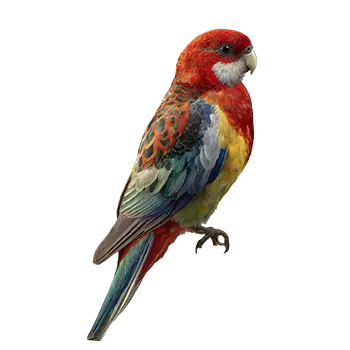

Essential Accessories Overview

Beyond the cage itself, a well-equipped Eastern Rosella setup relies on a carefully chosen collection of accessories that support the bird's daily comfort, hygiene, health, and behavioral needs. These items are not luxuries or afterthoughts. Each fills a specific functional role that contributes to the bird's overall welfare, and skipping any major category creates a gap that eventually manifests as a health or behavioral problem.

The accessory categories that every rosella owner should address include bathing and water management, lighting, food and water station hardware, travel equipment, grooming tools, and cage covering. Some of these, like full-spectrum lighting, are critical for birds housed indoors under artificial light. Others, like a quality travel carrier, may see infrequent use but are indispensable in the moments they are needed, whether for veterinary visits, evacuations, or relocations.

Quality matters more than quantity when building an accessory kit. A single well-designed stainless steel food dish that locks securely to the cage bars and resists tipping outperforms three cheap plastic bowls that crack, stain, and harbor bacteria in surface scratches. Similarly, one properly rated full-spectrum light fixture delivers more measurable health benefit than a drawer full of novelty accessories that serve no functional purpose. Prioritizing essential items in durable materials creates a setup that serves the bird reliably for years.

Eastern Rosellas have some species-specific accessory needs that differ from those of larger parrots or smaller finches. Their moderate size, active flight habits, preference for bathing, and sensitivity to photoperiod all influence which products are appropriate. Accessories designed for cockatiels and similar medium parakeets generally fit well, while products sized for macaws or budgies may be functionally unsuitable even if they physically fit the cage.

Bathing and Water Equipment

Eastern Rosellas are enthusiastic bathers that engage with water frequently and vigorously when given the opportunity. Regular bathing maintains feather condition by removing accumulated dust, dander, and dried preening oil, and it supports the natural waterproofing structure of the plumage. A rosella denied regular bathing opportunities often develops dull, brittle feathers and may resort to excessive preening or feather picking as a substitute for the sensory experience of water contact.

Attachable bird baths that mount over the cage door opening are the most popular bathing solution for indoor rosellas. These enclosed bath houses contain the splashing to some degree, reducing the water damage to surrounding furniture and flooring. The bath should be sized for a medium parakeet, deep enough for the bird to submerge its belly and wing edges but not so deep that a smaller individual could be at risk. Clear or translucent bath houses allow the owner to observe the bird during bathing without causing the disturbance that sometimes discourages shy bathers.

Shallow ceramic or stainless steel dishes placed on the cage floor offer a more naturalistic bathing experience. Many rosellas prefer open-dish bathing to enclosed bath houses, as it allows the full wing-spreading and fluttering behavior they would exhibit at a natural water source. The obvious trade-off is water containment. Floor-level bathing dishes should be placed on an absorbent mat or towel to manage spillover, and they should be removed after the bathing session to prevent the bird from drinking soiled bathwater.

Mist bathing with a clean spray bottle provides an alternative for birds that are reluctant to enter standing water or as a supplemental bathing method between full baths. Use plain, lukewarm water in a dedicated spray bottle that has never contained cleaning products or chemicals. Mist above the bird and allow the droplets to fall gently onto the plumage rather than spraying directly at the bird, which many rosellas find startling. Misting two to three times per week helps maintain feather moisture levels and encourages preening behavior.

Lighting Systems

Full-spectrum lighting is arguably the most important accessory for any Eastern Rosella housed primarily indoors. Standard household lighting, whether incandescent, LED, or fluorescent, lacks the ultraviolet wavelengths that birds rely on for several critical physiological processes. Without UVB exposure, rosellas cannot synthesize vitamin D3 through their skin and preen gland secretions, which impairs calcium metabolism and leads to weakened bones, poor eggshell quality in breeding hens, and compromised immune function over time.

UVA light is equally important though less discussed. Birds see into the ultraviolet spectrum, and UVA wavelengths reveal plumage patterns invisible to human eyes. These UV-reflective feather markings play a role in species recognition, mate selection, and social communication. A rosella living under lighting that lacks UVA is effectively colorblind to an entire dimension of its visual world, which has measurable effects on behavior, breeding success, and psychological wellbeing.

Avian-specific full-spectrum bulbs are manufactured by several companies and are available in both fluorescent tube and compact fluorescent configurations. The bulb should produce UVB output in the 290 to 315 nanometer range and UVA output in the 315 to 400 nanometer range, with a color rendering index above ninety and a color temperature between 5000 and 6500 Kelvin. These specifications mimic natural daylight more closely than standard household bulbs and are printed on the packaging of quality avian lighting products.

Mounting distance matters because UV intensity decreases rapidly with distance from the source. Most avian UVB bulbs need to be positioned twelve to eighteen inches from the bird's primary perching area to deliver effective UV exposure. Placing the light on top of a wire-top cage or mounting it on an adjustable stand beside the cage achieves this range. The bulb should never be separated from the bird by glass or plastic, as these materials filter out virtually all UVB radiation. A wire mesh cage top, by contrast, allows adequate UV transmission. UV bulbs degrade over time and should be replaced every six to twelve months even if they continue to produce visible light, as the UV output drops below therapeutic levels well before the bulb burns out visually.

Food and Water Stations

The dishes used to deliver food and water seem like the simplest component of a rosella setup, but their design, material, and placement directly influence the bird's nutrition, hygiene, and daily routine. Stainless steel dishes are the clear standard for avian use. They resist bacterial biofilm, do not absorb odors or stains, tolerate high-temperature dishwasher cycles, and last indefinitely without degrading. Ceramic dishes are acceptable if they are lead-free and uncracked, but they chip more easily than steel and hairline fractures can harbor bacteria.

Plastic dishes should be avoided despite their low cost and wide availability. Plastic scratches under normal use, and those scratches become microscopic trenches where bacteria and yeast colonies establish themselves. No amount of scrubbing fully sterilizes a heavily scratched plastic dish. Even BPA-free plastics degrade over time under exposure to UV light, heat, and the acidic foods commonly offered to parrots, releasing compounds into the food and water that have no place in a bird's diet.

Locking dish holders that clamp or bolt to the cage bars prevent the tipping, flipping, and dropping that rosellas are capable of when motivated. Dishes that simply hook over a bar are adequate for calm birds but can be dislodged by an active rosella, spilling food across the cage floor and leaving the bird without access to water until the owner discovers the problem. Quick-release locking mechanisms that allow the owner to remove the dish for filling and cleaning without reaching deep into the cage simplify daily maintenance.

Water bottle systems designed for birds provide a cleaner alternative to open water dishes for drinking. Rosellas that bathe in their water dishes contaminate the drinking supply with feather dust, food particles, and droppings within minutes of a fresh fill. A glass or BPA-free plastic water bottle with a stainless steel drinking tube mounted on the cage exterior keeps drinking water clean for much longer. Some birds require a brief training period to learn to use a bottle, and a backup open water dish should remain available until the bird is reliably drinking from the bottle.

Travel Carriers

A purpose-built travel carrier is essential equipment for every Eastern Rosella owner, even if the bird never leaves the home for recreational outings. Veterinary visits, household emergencies, evacuations, and relocations all require a safe, secure means of transporting the bird, and improvising with cardboard boxes or makeshift containers in a moment of crisis is dangerous for both the bird and the handler.

Small to medium hard-sided carriers designed for birds or small animals provide the best combination of security, ventilation, and durability. The carrier should be just large enough for the bird to turn around, perch comfortably, and extend its wings slightly without being so spacious that the bird is thrown around during vehicle movement. A carrier approximately fourteen inches long, ten inches wide, and twelve inches tall suits an Eastern Rosella well. Hard-sided construction protects against crushing and prevents the bird from chewing its way out during transport.

Ventilation openings should be numerous and positioned on multiple sides to ensure adequate airflow in any orientation. The openings must be small enough to prevent the bird from pushing its head through, which typically means slots or holes no wider than three-eighths of an inch. A secure door latch is critical, as rosellas are mechanically curious and capable of working open simple gravity latches and spring clips given enough time and motivation.

Carrier familiarization before an actual transport event dramatically reduces the stress of travel. Leaving the carrier open in the room near the cage with treats placed inside allows the bird to explore it voluntarily. Over several days to weeks, the bird comes to associate the carrier with positive experiences rather than the sudden confinement that characterizes an emergency capture-and-load. A bird that enters its carrier willingly is far safer and calmer during transport than one that was chased around the room and grabbed.

Grooming Tools

While Eastern Rosellas manage the majority of their own grooming through preening and bathing, a few specific grooming tools should be on hand for situations that require human intervention. Nail clippers or a nail file designed for birds address overgrown nails, which can occur when a rosella's perch selection does not provide enough natural abrasion to keep nails at a functional length. Overgrown nails catch on fabric, cage bars, and toys, creating a risk of torn nails or dislocated toes.

Small bird nail clippers with a scissor action or guillotine action are both suitable for a rosella's nails. The critical skill is identifying the quick, the blood vessel visible as a darker core within the translucent nail. Cutting into the quick causes bleeding and pain, so conservative trimming that removes only the sharp tip is always preferable. Styptic powder or a styptic pencil should be within arm's reach during any nail trim session in case the quick is accidentally nicked. For owners uncomfortable performing nail trims, avian veterinarians and experienced bird groomers offer the service at modest cost.

Wing clipping is a personal decision that each owner must make based on the bird's living environment and safety considerations. Owners who choose to clip should use sharp, properly sized wing scissors and remove only the outermost five to six primary flight feathers on each wing, leaving the inner feathers intact for insulation and appearance. Clipping should be symmetrical to prevent the bird from spiraling during attempted flight, which can cause crash injuries.

Beak maintenance is almost never required for a healthy rosella with access to appropriate chew materials and a varied diet. The beak is a self-maintaining structure that wears evenly through normal eating, chewing, and beak-grinding behavior. An overgrown or misaligned beak usually indicates an underlying health problem such as liver disease, nutritional deficiency, or mite infestation and should prompt a veterinary evaluation rather than at-home trimming. Attempting to file or clip a bird's beak without veterinary training risks cracking the beak, causing hemorrhage, or creating misalignment that worsens with each growth cycle.

Cage Covers and Sleep Accessories

Sleep quality directly influences an Eastern Rosella's hormonal regulation, immune function, and daytime behavior. Rosellas require ten to twelve hours of uninterrupted darkness each night to maintain a healthy circadian rhythm. In most households, ambient light from screens, hallway fixtures, and streetlights penetrates the room after the bird's natural sunset rest time, and a cage cover is the most practical solution for creating the consistent darkness the bird needs.

The ideal cage cover is made from a tightly woven, opaque, breathable fabric that blocks light without restricting airflow. Dark-colored cotton or cotton-polyester blends work well. The cover should drape fully over the cage on all sides and reach to the bottom without pooling on the floor where it could be pulled through the bars and chewed. Some commercially available cage covers include ventilation panels made from mesh fabric that allow air circulation even when the cover is positioned tightly against the cage.

Night frights, also called thrashing episodes, are a recognized risk for rosellas and many other parakeet species. A sudden noise, vibration, or flash of light during sleep can trigger a panicked explosion of flight within the cage, resulting in broken blood feathers, bruised wing tips, and facial injuries from colliding with bars. A dim night light positioned nearby can reduce the severity of night frights by providing just enough ambient light for the bird to orient itself when startled, without being bright enough to disrupt the sleep cycle.

The sleeping environment should be free from drafts, which can chill a roosting bird, and positioned away from heating or cooling vents that create air currents and temperature fluctuations. If the cage is in a room with inconsistent nighttime temperatures, a thermostatically controlled ceramic heat emitter mounted safely above the cage provides radiant warmth without light. This is particularly important for young birds, elderly individuals, and any rosella recovering from illness, all of whom have reduced capacity to thermoregulate during the long overnight rest period.

Always consult a qualified professional before making any health-related decisions. This content is provided for informational reference only and should not replace professional guidance specific to your animal.