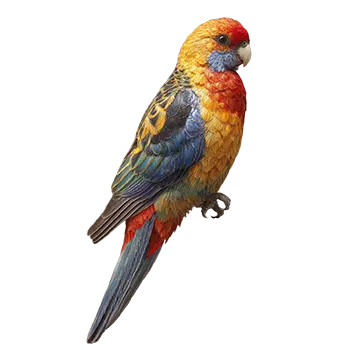

Outfitting a Golden-Mantled Rosella's environment with the right accessories transforms a basic cage into a functional, healthy living space. While the cage or aviary provides the structural enclosure and toys address enrichment needs, accessories fill the practical gaps between those categories, covering everything from perching surfaces and feeding hardware to bathing stations, lighting, and travel equipment. Each accessory choice has implications for the bird's physical health, daily comfort, and long-term welfare.
The accessory needs of a rosella differ from those of the larger parrot species that dominate the companion bird market. Most bird accessories are designed and marketed with cockatiels, conures, and larger hookbills in mind, which means rosella owners must pay careful attention to sizing, material strength, and functional appropriateness. A perch designed for a macaw's grip diameter will cause foot strain in a rosella, and a carrier built for a large Amazon will leave a rosella with too much unsecured interior space during transport.
Quality should always take precedence over quantity when building an accessory collection. A smaller number of well-chosen, durable items will serve the bird far better than a large collection of cheap products that need frequent replacement and may introduce safety hazards through substandard materials or construction. Stainless steel, food-grade ceramic, and untreated natural wood are the material benchmarks against which all accessories should be measured.
Building an accessory kit gradually rather than all at once allows the keeper to observe how the bird interacts with each item and make informed decisions about subsequent purchases. A rosella that ignores flat-bottomed water dishes but readily bathes in a clip-on bath house is communicating a clear preference that should guide future accessory choices. Paying attention to these individual tendencies prevents wasted spending and ensures the bird's environment is genuinely tailored to its needs.