
Origins & Development

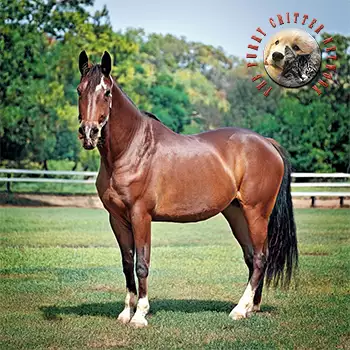
The term Warmblood refers not to a single breed but to a collection of European sport horse breeds developed through centuries of selective crossbreeding between heavier cold-blooded draft horses and lighter hot-blooded breeds such as Thoroughbreds and Arabians. The goal was to produce a horse that combined the calm temperament and sturdy frame of the draft horse with the athleticism, speed, and refinement of the lighter breeds. This blending of bloodlines gave rise to the name "Warmblood," a designation that sits between the two extremes of equine type.

The earliest foundations of Warmblood breeding can be traced to the royal studs and military remount programs of continental Europe during the 17th and 18th centuries. Countries such as Germany, the Netherlands, Denmark, and Sweden established state-run breeding programs designed to produce versatile horses capable of serving in cavalry units, pulling carriages, and working agricultural land. These programs were highly organized, with strict stallion licensing and mare inspections that laid the groundwork for the studbook systems still in use today.

As the demand for military and carriage horses declined in the 20th century, European breeders pivoted toward producing horses suited for competitive sport. Thoroughbred and Arabian bloodlines were introduced in greater proportions to increase speed, scope, and elasticity of movement. This transition was remarkably successful, and by the mid-20th century, Warmblood breeds had begun to dominate the international competition arena in dressage, show jumping, and three-day eventing.

Today, the major Warmblood registries include the Hanoverian, Holsteiner, Oldenburg, Dutch Warmblood (KWPN), Danish Warmblood, and Swedish Warmblood, among many others. Each registry maintains its own studbook and selection criteria, but cross-registration and the exchange of genetic material between registries is common. This open studbook philosophy is a defining characteristic of Warmblood breeding, allowing breeders to continuously refine and improve the sport horse through the introduction of proven bloodlines from other registries.

Historical Roles

For much of their early history, Warmbloods served primarily as cavalry mounts and carriage horses for European nobility and military forces. The Hanoverian, for example, was originally bred in the 18th century at the state stud of Celle in Lower Saxony to serve as a strong, reliable mount for officers and a capable horse for pulling state coaches. Similarly, the Holsteiner traces its origins to monasteries in the Schleswig-Holstein region, where monks bred sturdy horses for both riding and draft work as early as the 13th century.

During the Napoleonic Wars and the broader conflicts of the 18th and 19th centuries, Warmblood-type horses proved indispensable to European armies. Their combination of stamina, courage, and trainability made them superior mounts for cavalry charges, reconnaissance missions, and the movement of artillery. National breeding programs were expanded and refined during this period, with governments investing heavily in stallion stations and mare inspections to ensure a steady supply of quality remounts for the military.

The mechanization of warfare and transportation in the early 20th century rendered the cavalry horse obsolete, and many European breeding programs faced an existential crisis. The response was a deliberate and systematic shift toward producing sport horses. Breeders introduced more Thoroughbred blood to lighten the frame and increase athleticism, while retaining the trainable temperament and soundness that had always defined the Warmblood type. This transformation was one of the most successful pivots in the history of animal breeding.

Beyond the military and sporting arenas, Warmbloods have also served important roles in ceremonial and diplomatic contexts. State carriages drawn by matched teams of Warmbloods remain a feature of royal occasions in several European countries, and mounted police units in Germany, the Netherlands, and Scandinavia continue to favor Warmblood breeds for their calm demeanor and imposing presence in crowd control situations.

Cultural Symbolism

In European culture, the Warmblood horse has come to symbolize the intersection of tradition, discipline, and athletic excellence. The sport horse is deeply embedded in the national identity of countries like Germany and the Netherlands, where breeding and competition are woven into the fabric of rural life. In regions such as Hanover, Holstein, and Westphalia, horse breeding is not merely an agricultural enterprise but a source of regional pride that connects modern communities to centuries of equestrian heritage.

The Warmblood also carries strong associations with the classical riding tradition, a discipline rooted in Renaissance horsemanship and codified by institutions such as the Spanish Riding School of Vienna and the French Cadre Noir. While those schools historically favored Iberian and Lipizzaner horses, the principles they established — collection, balance, harmony between horse and rider — became the philosophical foundation upon which modern dressage was built, and Warmbloods have become the primary vehicles for expressing that art at the highest levels of international competition.

In broader popular culture, the Warmblood represents aspiration and achievement within the equestrian world. Owning a well-bred Warmblood with strong competition bloodlines is a significant investment, and the breed type is closely associated with the upper echelons of the sport. This has given the Warmblood a certain cachet that extends beyond the riding arena, making it a symbol of sophistication and dedication to the equestrian arts.

The cultural significance of the Warmblood also extends to the elaborate traditions surrounding stallion licensing and mare inspections. Events such as the Hanoverian Stallion Licensing in Verden and the KWPN Stallion Show in 's-Hertogenbosch are major cultural occasions that draw thousands of spectators and serve as showcases for the finest young horses in the breed. These events blend agricultural tradition with modern sport science in a way that is uniquely characteristic of the Warmblood breeding community.

Breed Registries & Standards

Warmblood breeding is governed by a network of studbook societies, each of which maintains its own registry, breeding standards, and selection criteria. Unlike closed studbook breeds such as the Thoroughbred, Warmblood registries operate on an open or semi-open studbook model, meaning that horses from approved outside bloodlines can be introduced to improve the gene pool. This flexibility is one of the defining features of Warmblood breeding and has been instrumental in the rapid improvement of the sport horse over the past century.

The major German registries — Hanoverian, Holsteiner, Oldenburg, Westphalian, Trakehner, and others — each have their own regional character, but they cooperate under the umbrella of the German Equestrian Federation (FN) and share a common framework for stallion performance testing and mare evaluations. The Dutch Warmblood registry (KWPN) is one of the largest and most influential in the world, with a breeding program that has produced an extraordinary number of Olympic and World Championship competitors in both dressage and show jumping.

Stallion licensing is the cornerstone of Warmblood quality control. Young stallions are presented before expert panels that evaluate conformation, movement, jumping ability, and temperament. Only those that meet the registry's standards are approved for breeding. Many registries also require stallions to complete a performance test — which may include ridden evaluations, free-jumping assessments, and endurance trials — before receiving full breeding approval. This rigorous selection process ensures that only the most talented and physically sound stallions contribute to the next generation.

Mare inspections and performance testing complement the stallion selection process by evaluating the female side of the breeding equation. Mares are scored on conformation, movement quality, and overall type, and high-scoring mares receive premium or elite designations that enhance their breeding value. Some registries also offer mare performance tests that assess rideability and jumping ability, providing breeders with additional data to inform their breeding decisions.

In North America, organizations such as the American Hanoverian Society, the International Sporthorse Registry, and the American Warmblood Society serve as extensions or affiliates of the European studbooks, facilitating breed inspections, registrations, and mare and stallion evaluations for breeders outside of Europe.

The Warmblood Today

The modern Warmblood is the dominant force in international equestrian sport. At the Olympic Games, World Equestrian Games, and major Grand Prix competitions around the globe, Warmblood breeds consistently fill the majority of starting positions in dressage, show jumping, and eventing. The WBFSH (World Breeding Federation for Sport Horses) publishes annual rankings that track the performance of Warmblood studbooks in international competition, and breeds such as the KWPN, Hanoverian, Oldenburg, and Westphalian routinely occupy the top positions.

Breeding practices continue to evolve with advances in reproductive technology and sport science. Embryo transfer, artificial insemination with frozen semen, and even intracytoplasmic sperm injection (ICSI) have expanded the genetic options available to breeders and made it possible to produce foals from top-performing mares without interrupting their competition careers. Genomic testing and linear profiling provide increasingly sophisticated tools for predicting the performance potential of young horses.

The globalization of Warmblood breeding has been one of the most significant trends of the past few decades. While Europe remains the traditional heartland, thriving breeding programs now exist in North America, Australia, South America, and parts of Asia. The exchange of genetic material across borders has accelerated, with semen from top European stallions shipped worldwide and talented young horses exported to competition stables on every continent.

Despite their competitive dominance, Warmbloods have also found a growing role in the amateur and recreational riding market. Their trainable temperaments and versatility make them well-suited for riders who may not compete at the international level but still value quality movement, good conformation, and a willing attitude. Many breeders now market horses specifically toward the serious amateur, recognizing that the long-term health of the breed depends on a broad base of owners and riders beyond the professional ranks.

Notable Individuals

The history of the Warmblood is studded with legendary horses whose achievements have defined the breed's reputation in international sport. Valegro, a Dutch Warmblood gelding ridden by Charlotte Dujardin, set multiple world records in dressage and won individual gold medals at the 2012 and 2016 Olympic Games, captivating audiences with his extraordinary expression and the seemingly effortless harmony he shared with his rider. His performances brought dressage into the mainstream sporting consciousness and demonstrated the athletic potential of the modern Warmblood.

In show jumping, horses like the Hanoverian stallion For Pleasure, ridden by Marcus Ehning and later Lars Nieberg, became legends for their power, scope, and longevity at the highest level of the sport. The Holsteiner stallion Dorado, the KWPN mare Sapphire, and numerous other Warmbloods have earned Olympic and World Championship medals, cementing the breed type's dominance in the jumping arena. The Hanoverian stallion Sandro Hit revolutionized dressage breeding as both a competitor and a sire, producing hundreds of successful sport horses and becoming one of the most influential breeding stallions of the modern era.

In eventing, Warmbloods have increasingly challenged the traditional dominance of Thoroughbreds and Thoroughbred crosses. Horses like the Holsteiner gelding Sam and the Hanoverian mare Butts Abraxxas have proven that the modern Warmblood possesses the stamina, courage, and cross-country ability to compete at the highest levels of the three-day event, adding yet another dimension to the breed's competitive portfolio.

Beyond the competition arena, individual Warmbloods have served as ambassadors for their breed through public demonstrations, breeding showcases, and educational programs. Stallions like Totilas, whose spectacular performances under Edward Gal brought unprecedented public attention to dressage, transcended the equestrian world entirely and became recognized names even among non-riders. These individuals have played a crucial role in shaping public perception of the Warmblood and inspiring new generations of breeders and riders.

Always consult a qualified professional before making any health-related decisions. This content is provided for informational reference only and should not replace professional guidance specific to your animal.