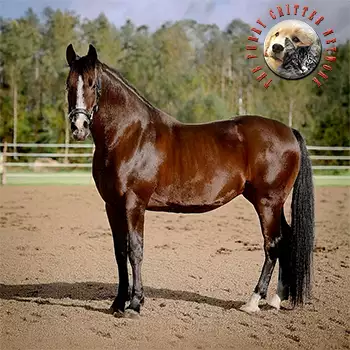
Dutch Warmbloods present as refined, elegant sport horses whose conformation optimizes athletic performance in dressage and jumping. The breed standard emphasizes functional correctness that supports soundness and movement quality rather than arbitrary aesthetic preferences. Different breeding directions produce subtle conformational variations suited to their intended disciplines.
Height typically ranges from 15.2 to 17 hands, with most Dutch Warmbloods averaging 16.2 hands at maturity. Minimum heights for breeding approval are 15.2 hands for mares and 15.3 hands for stallions, ensuring adequate size for sport horse requirements. No upper height limit exists, though excessively tall horses prove impractical for sport and are not favored.
The head is refined and elegant, reflecting Thoroughbred influence in the breed's development. Expressiveness and intelligence should be evident in the horse's appearance. The head leads into a muscular, arched neck that meets prominent withers, creating the topline essential for proper saddle fit and athletic function.
Shoulders are long and sloping, enabling the freedom of movement and length of stride that characterize superior dressage horses while supporting the mechanics of jumping. The angle of the shoulder significantly affects stride length and movement quality. Deep girth provides ample heart and lung room for sustained athletic effort.
The body should appear rectangular when viewed from the side, with adequate length for athletic function without excessive length that would compromise strength. The back connects powerful hindquarters to the forehand, transmitting the impulsion generated behind to create forward movement.
Hindquarters provide the engine that drives dressage engagement and jumping thrust. They should be powerful and well-muscled, with hock joints positioned relatively low to the ground. This conformation creates the leverage necessary for collection in dressage and the thrust required for jumping effort.
Legs display adequate bone with clean, correct joints positioned to support athletic stress over careers spanning potentially decades. Movement should be straight and true, with rhythm, elasticity, and natural suspension varying by breeding direction. Dressage types emphasize expression and elevation; jumping types emphasize scope and technique.
Bay, black, brown, chestnut, and gray are common colors, with white markings frequently seen. Tobiano coloring exists through the influence of the approved stallion Samber, though pintos remain rare. Color preferences are minimal, with functional correctness far outweighing cosmetic considerations in evaluation.
Riding Suitability
★★★★★
Dutch Warmbloods are purpose-bred riding horses engineered for Grand Prix level performance in dressage and show jumping. Their elastic gaits, natural balance, and athletic conformation create ideal mounts for serious competitors. Different breeding directions produce horses optimized for specific disciplines, allowing buyers to select types matching their goals.
Temperament
★★★★★
KWPN breeding explicitly selects for uncomplicated temperaments that enable training progression to the highest levels. Bad-tempered horses are excluded from breeding, ensuring cooperative dispositions persist across generations. Dressage types emphasize submissiveness while jumping types require courage, but all should be manageable for competent riders.
Activity Level
★★★★★
As purpose-bred sport horses, Dutch Warmbloods require regular exercise and mental engagement that develops their athletic potential. They thrive with consistent training programs that progress systematically toward competition goals. Their activity needs match those of other performance warmbloods rather than casual pleasure horses.
Space Requirements
★★★★★
Dutch Warmbloods require standard warmblood facilities with space for their substantial size and athletic development. Two to three acres per horse provides adequate turnout, while stalls should measure at least 12x12 feet. Access to appropriate training facilities significantly benefits athletic development.
Grooming Requirements
★★★★★
Dutch Warmbloods have practical sport horse coats requiring standard daily grooming. Show preparation varies by discipline, from the braided manes of dressage to the pulled manes of hunter classes. Their generally healthy coats respond well to consistent care without requiring elaborate maintenance.
Climate Adaptability
★★★★★
Developed in the Netherlands' temperate climate, Dutch Warmbloods adapt successfully to varied conditions worldwide. They handle cold adequately and tolerate moderate heat with appropriate management. The breed's global distribution demonstrates successful adaptation across diverse environments from Europe to North America and beyond.
Health Hardiness
★★★★★
Stringent veterinary requirements for breeding approval have produced a fundamentally sound breed. Horses with significant joint problems, congenital defects, or hereditary conditions are excluded from breeding. This systematic selection creates horses with strong foundations for athletic careers, though individual management remains important.
Feed Management
★★★★★
Dutch Warmbloods are considered easy keepers that can gain weight readily, requiring attention to calorie balance. Performance horses need feeding programs supporting athletic demands while maintaining appropriate condition. The general guideline of 2% body weight in forage daily applies, adjusted for individual metabolism and workload.