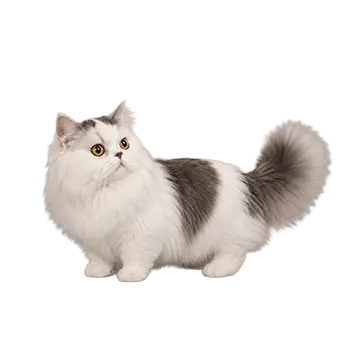

Origins & Development

The Napoleon is one of the youngest deliberately created cat breeds, with origins that are unusually well documented because they unfolded so recently. The breed traces back to Joe Smith, an American breeder of Basset Hounds who became fascinated by the genetics of short-legged animals. He is widely reported to have been inspired by a front-page feature in the Wall Street Journal in June 1995 about the then-emerging Munchkin cat, and within a year he had begun a breeding program of his own.

Smith's idea was straightforward but ambitious: pair the short legs of the Munchkin with the soft, rounded features and plush coat of the Persian group. Beginning in 1996, he crossed Munchkins with so-called doll-faced Persians, an older Persian type known for a longer nose and an open, sweet expression rather than the extremely flat face seen in many modern show Persians. He collaborated with Persian breeder Deb Kenny during these early years.

A defining goal of the program was that the breed should be appealing in both of its natural forms. Because the short-legged trait does not pass to every kitten, litters naturally produce both short-legged and long-legged cats. Smith wanted a cat that looked distinctive and desirable either way, which is why the breed has always embraced both leg types rather than discarding one.

The result was a small, sturdy cat with a round, baby-doll face, large expressive eyes, and a dense coat available in both long and short lengths. From the outset the Napoleon was conceived as a companion breed rather than a working animal, bred for temperament and appearance to suit life as a house cat.

The Munchkin & Persian Heritage

Understanding the Napoleon means understanding its two parent lineages. The short legs come from the Munchkin, a breed whose modern history is usually traced to the early 1980s, when a short-legged pregnant cat was rescued in Louisiana and went on to produce kittens that shared the trait. The characteristic short stature is caused by a naturally occurring dominant gene affecting bone growth, a form of dwarfism comparable in concept to the build of certain dog breeds.

The Persian side contributes a very different inheritance. Persians are among the oldest and most established breeds in the cat fancy, with a presence stretching back to the nineteenth century. From them the Napoleon draws its luxurious coat, its rounded head, and the gentle, sweet facial expression that gives the breed much of its charm. The doll-faced Persians used in development were specifically chosen to avoid the breathing-related concerns associated with the flattest faces.

Blending these two lines produced a cat that is neither purely Munchkin nor purely Persian. The Napoleon inherits the playful, ground-level curiosity often seen in short-legged cats alongside the calm, affectionate disposition associated with the Persian group. This combination of traits is exactly what early breeders were aiming to fix into a consistent, recognizable type.

Because the breed sits at the intersection of these lineages, its permitted breeding combinations are tightly defined to preserve both health and type. This careful structuring of the gene pool has been central to the breed's development and to the ongoing conversations about its welfare.

The Story Behind the Name

The breed's original name, Napoleon, is a direct nod to Napoleon Bonaparte, the French military and political leader popularly associated with short stature. The choice was a piece of playful branding: a small cat carrying the name of a famously commanding historical figure. The pairing leaned on the enduring cultural shorthand that links small size with outsized presence.

That association also connects to the popular notion of a so-called "Napoleon complex," the idea that smaller individuals compensate with bold personalities. Whether or not the historical Napoleon fits the stereotype, the name gave the breed an instantly memorable identity and a touch of humor that suited a compact, confident little cat.

In 2015 the breed's name was formally changed to Minuet by The International Cat Association, the registry most closely associated with its development. The minuet is a graceful, measured dance, and the new name was intended to evoke the breed's elegant, surprisingly nimble movement rather than its stature. Today the cat is known by both names, with Napoleon remaining the more familiar term to many enthusiasts and Minuet serving as the official designation.

Both names continue to circulate in the cat world, and breeders and owners often use them interchangeably. The dual identity is itself a small piece of the breed's cultural story, reflecting how a young breed's reputation can evolve even within a couple of decades.

Recognition & Breed Standards

The Napoleon's path through the formal cat fancy has been gradual. In 2001 Joe Smith contacted The International Cat Association, and the new breed was added to the list of experimental breeds. By the following year it had advanced to Registration Only status, an important early rung on the ladder toward full recognition that acknowledged the breed's name and began tracking its pedigrees.

Smith stepped away from the project in 2008, and other dedicated breeders carried the work forward through the slow, demanding process of establishing a stable, healthy population. Their persistence paid off: in 2015 the breed was renamed Minuet, and in 2016 it achieved full championship status with TICA, meaning it could compete on equal footing with long-established breeds.

The breed standard recognizes both the short-legged form, historically called the standard, and the long-legged form, now often referred to as the Minuet Tall. Permitted outcrosses are limited to Minuet-to-Minuet, Minuet-to-Munchkin, and Minuet to one of the Persian-group breeds, which include the Persian, Himalayan, and Exotic Shorthair. These restrictions are designed to maintain type while managing genetic health.

Recognition is not universal, and this is an important part of the breed's regulatory picture. The breed is acknowledged under the Napoleon name by the Rare and Exotic Feline Registry, but several major registries decline to register Munchkin-derived breeds. Organizations such as the Governing Council of the Cat Fancy in the United Kingdom and the Fédération Internationale Féline do not recognize these breeds, citing welfare concerns related to the dwarfism trait. This difference of opinion among registries is a defining feature of where the breed stands today.

The Breed Today

The Napoleon remains a relatively rare breed. The narrow set of permitted outcrosses, combined with the time and care required to breed responsibly, keeps numbers modest compared with mainstream cat breeds. Even so, the breed has found a steady following and can be seen in show halls and pet homes around the world.

Modern Napoleons come in a pleasing range of forms: long-haired and short-haired coats, short-legged and long-legged builds, and a wide variety of colors and patterns inherited from the Persian group. This variety means that prospective owners can find a cat that suits their preferences while still belonging to the same recognizable breed family.

The breed's reputation rests largely on temperament. Napoleons are widely described as affectionate, people-oriented, and playful, combining the easygoing sweetness of their Persian heritage with a lively curiosity. Despite their short legs, many are energetic and enjoy bursts of zooming around the house, dispelling any assumption that they are sedentary lap cats alone.

Responsible breeders today place heavy emphasis on health screening and ethical pairings, reflecting both the lessons of the breed's short history and the ongoing scrutiny it receives. For supporters, this careful stewardship is what allows the breed to continue developing while keeping the welfare of individual cats front and center.

Community & Enthusiasts

Because the Napoleon is young and uncommon, it has no single famous individual cat the way some older breeds boast a celebrated champion or mascot. Instead, the breed's cultural footprint is community-driven, sustained by a network of small catteries, breed clubs, and devoted owners who share photos, advice, and pedigrees.

Short-legged cats in general have enjoyed a surge of affection in the digital age, and the Napoleon benefits from that broader fascination. Their compact build and expressive faces make them natural favorites among people drawn to distinctive, charming cats, and enthusiast groups help newcomers learn about the breed's history, care needs, and the considerations involved in choosing one.

Breed advocates also play an important educational role. Because the Napoleon sits at the center of an active welfare conversation, knowledgeable owners and breeders often work to ensure that interest in the breed is matched by understanding of responsible sourcing, health testing, and realistic expectations. In that sense, the breed's most notable figures are the breeders and owners who steward it thoughtfully rather than any single celebrated cat.

Always consult a qualified professional before making any health-related decisions. This content is provided for informational reference only and should not replace professional guidance specific to your animal.