
Film & Television

As a young and relatively rare breed, the Napoleon has not built up the kind of film and television résumé that long-established breeds enjoy. Movies and shows that feature distinctive cats have historically leaned on breeds with decades of public recognition, and a designer breed that only reached championship status in 2016 simply has not had time to become a screen staple.

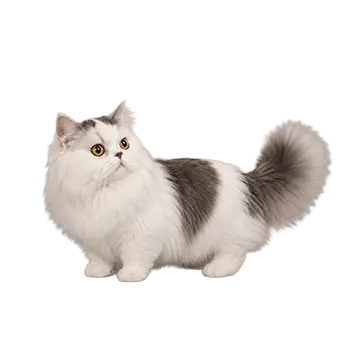
When short-legged cats do appear in visual media, they tend to be cast for novelty and charm, their unusual proportions reading instantly as endearing on camera. The Napoleon's Persian-derived sweet face and plush coat make it photogenic, qualities that lend themselves well to any production looking for a cat that registers as cuddly and characterful.

For viewers, it is worth remembering that on-screen cats are usually identified loosely, and a short-legged cat in a film or commercial may be a Munchkin, a Napoleon, or simply a mixed cat with short legs. The breed's media presence is therefore best understood as part of a broader cultural appetite for cute, distinctive cats rather than a catalog of specific starring roles.

Literature & Art

Cats have been a fixture of art and literature for centuries, and the Persian group in particular has long been associated with images of luxury, elegance, and domestic comfort. The Napoleon inherits this visual lineage, carrying forward the soft, rounded silhouette that artists have favored when depicting pampered house cats.

Contemporary illustration and design have embraced the exaggerated cuteness of short-legged cats, and the Napoleon fits neatly into a modern aesthetic that celebrates compact, big-eyed animals. Greeting cards, character art, and decorative illustration increasingly feature stylized small-statured cats that echo the breed's proportions, even when no specific breed is named.

In writing about cats, the Napoleon tends to appear in breed guides, hobbyist publications, and the broader literature of the modern cat fancy rather than in classic fiction, simply because of its recent emergence. Its story, blending careful breeding, naming whimsy, and ongoing ethical debate, makes it a frequent subject in articles exploring how new breeds come into being.

Internet & Social Media

If the Napoleon has a true pop-culture home, it is online. Short-legged and dwarf cats have become a beloved category across social platforms, where their playful movement and unusual proportions are perfectly suited to short video clips and photo feeds. The breed rides the same wave of affection that has made Munchkin-type cats reliably popular with internet audiences.

Visual platforms reward exactly the traits the Napoleon offers: an expressive doll face, a fluffy coat, and the comic charm of a small cat zooming around at ground level. Owners frequently document daily life with their cats, and these casual posts do as much to shape public perception of the breed as any formal media appearance ever could.

The online enthusiasm cuts both ways, and it is a recurring theme in coverage of the breed. The same viral appeal that wins fans also fuels demand, which raises questions about sourcing and ethics that thoughtful members of the community work to keep in view. For many people, social media is both where they first encounter the Napoleon and where they learn about the responsibilities that come with it.

Advertising & Branding

Cute, distinctive cats have long been a tool of advertising, and the visual logic that favors them applies neatly to the Napoleon. A small cat with a sweet face and an unusual silhouette is memorable, and memorability is precisely what advertisers seek when they reach for an animal to anchor a campaign or a product image.

In practice, advertising tends to use whatever cat best fits a creative brief rather than a specific pedigree, so a short-legged cat in a commercial is more often chosen for its look than billed by breed. The Napoleon's appeal in this context is therefore largely indirect, contributing to a general visual vocabulary of charming, compact cats that brands draw upon.

Within the pet industry itself, breeds with strong aesthetic identities can become informal shorthand for cuteness in packaging and promotion. The Napoleon's photogenic qualities make it a natural fit for that role, even as its rarity means it is rarely identified by name to the general public.

The Popularity Effect

The rise of designer cat breeds has reshaped how people choose and acquire pets, and the Napoleon sits squarely within that trend. Distinctive looks that perform well online can translate quickly into demand, and a breed that photographs as irresistibly as the Napoleon is well positioned to attract attention far beyond the traditional cat fancy.

That popularity carries real consequences. When demand for an unusual breed rises faster than the supply of responsibly bred kittens, there is a risk that less scrupulous breeding fills the gap. For a breed built on a dwarfism trait that already invites welfare scrutiny, the stakes of irresponsible breeding are especially high, which is why ethical sourcing is such a persistent theme in discussions of the Napoleon.

The healthiest version of the breed's popularity is one paired with education. Prospective owners who understand the breed's history, its health considerations, and the importance of choosing a careful breeder help ensure that affection for the Napoleon supports its welfare rather than undermining it. In that sense, the popularity effect is not simply something that happens to the breed but something its community actively works to shape.

Always consult a qualified professional before making any health-related decisions. This content is provided for informational reference only and should not replace professional guidance specific to your animal.