
Origins & Development

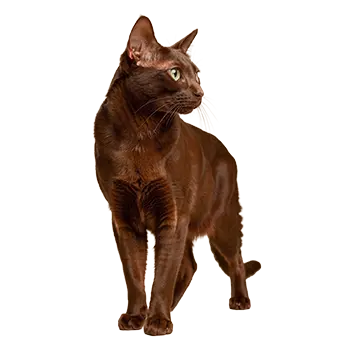
The Havana Brown traces its roots to deliberate breeding efforts in 1950s England, where breeders sought to create a solid chocolate-colored cat with a distinctive warm brown coat. The breed emerged from carefully planned crosses between Siamese cats carrying the chocolate gene and domestic black shorthairs, with some Russian Blue influence introduced along the way. Early breeders were captivated by the idea of a self-colored brown cat, a color that had appeared sporadically in cat fancy history but had never been established as a distinct breed.

The pioneering group of British breeders, including Baroness von Ullmann and Mrs. Armitage Hargreaves, worked throughout the early 1950s to stabilize the chocolate brown coloring and refine the breed's type. Their efforts yielded a cat that was initially known as the Chestnut Foreign Shorthair in Britain, reflecting both its color and its foreign (or oriental) body type. The first recognized specimen of this new breed was a male named Elmtower Bronze Idol, born in 1952, who became the foundation of the breed's development.

The breed's journey to the United States began in the mid-1950s when several cats were exported to American breeders. In 1959, the Cat Fanciers' Association granted the breed championship status under the name Havana Brown, a name that stuck in North America even as the British breeding program diverged in a different direction. American breeders developed the Havana Brown along a moderately foreign body type, distinguishing it from the more extremely oriental cats being bred in Britain under the name Chestnut Oriental Shorthair.

The divergence between the British and American lines became so pronounced that they are now considered essentially separate breeds. The British version was eventually absorbed into the Oriental Shorthair breed, while the American Havana Brown retained its unique identity with a distinctive muzzle shape, moderate body, and rich mahogany coat that sets it apart from any other breed in the cat fancy world.

Historical Roles

While the Havana Brown as a recognized breed is a product of the twentieth century, solid brown cats have appeared in historical records for centuries. Swiss manuscript illustrations from the 1400s and 1500s depict brown cats alongside their more common tabby and black counterparts, suggesting that the chocolate coloring surfaced periodically in domestic cat populations throughout Europe. These early brown cats were not bred selectively but were simply natural variants that appeared from time to time in litters.

In Southeast Asian cat traditions, brown cats held a place of cultural importance long before Western breeders took notice. The Tamra Maew, a collection of Thai cat poems dating back several centuries, describes and illustrates cats of a rich brown hue alongside the more well-known Siamese coloring. These brown cats were considered auspicious and were believed to bring good fortune to their owners, a cultural reverence that reflects the deep bond between humans and cats in that region of the world.

Brown cats made their first documented appearance in European cat shows during the late 1800s. A self-brown cat was reportedly exhibited at a cat show in England in 1894, and similar cats appeared at shows in the early 1900s. However, the Siamese Cat Club of Britain issued a statement in 1920 discouraging the breeding of any Siamese that did not have blue eyes, which effectively pushed brown self-colored cats to the margins of the cat fancy for several decades. It was not until the post-war period that breeders revived their interest in producing a true-breeding solid brown cat.

The Havana Brown's role has always been that of a cherished companion rather than a working cat. Unlike breeds with histories tied to pest control, guarding, or farm work, the Havana Brown was created expressly for companionship and the aesthetic pleasure of its unique coloring. This focus on temperament and beauty has shaped the breed's development from its earliest days, producing a cat that is deeply bonded to its human family and notably interactive in the home.

Cultural Symbolism

The Havana Brown's rich chocolate coat has made it a symbol of elegance and rarity within the cat fancy community. The breed's color, often described as a warm mahogany reminiscent of a polished chestnut or a fine Havana cigar, carries associations with luxury, warmth, and refinement. The very name of the breed evokes this connection, though there remains some debate about whether the name references Havana cigars, the Havana rabbit breed that shares a similar coloring, or some combination of the two.

In the broader culture of cat breeding and exhibition, the Havana Brown has come to represent the ideals of purposeful, thoughtful breeding. The breed's creation was not an accident but a deliberate artistic and scientific endeavor, and its preservation in the face of extremely small population numbers speaks to the dedication of its breeders. The Havana Brown community often frames their work in terms of stewardship, viewing themselves as guardians of a living heritage that could easily be lost without careful management.

The breed's rarity has also contributed to its mystique. With fewer than one thousand Havana Browns estimated to exist worldwide at various points in the breed's history, owning one has carried a certain cachet among cat enthusiasts. This scarcity has made the Havana Brown a frequent topic of discussion in breed preservation circles, where it serves as a case study in the challenges of maintaining genetic diversity within a small population. The breed's story is often cited in conversations about the responsibilities that come with creating and maintaining a breed standard.

The Havana Brown's distinctive muzzle shape, sometimes described as resembling a corn cob, has become an iconic feature that breed enthusiasts celebrate as a hallmark of proper type. This unique facial structure, combined with the breed's vivid green eyes and warm brown coat, gives the Havana Brown a look that is immediately recognizable to those familiar with the breed and contributes to its status as one of the most visually distinctive cats in the fancy.

Breed Clubs & Standards

The Cat Fanciers' Association recognized the Havana Brown for championship competition in 1959, making it one of the earlier breeds to achieve full status in that registry. The CFA standard emphasizes the breed's unique head shape, calling for a distinctive muzzle that is longer than it is wide with a pronounced stop at the whisker pads. The standard also specifies the rich, warm brown coat color and vivid green eyes that define the breed's appearance, along with a medium-sized, muscular body that falls between the extremes of cobby and svelte.

The International Cat Association also recognizes the Havana Brown and has granted it championship status. TICA's standard is broadly similar to CFA's, though there are subtle differences in emphasis. Both registries agree on the essential character of the breed: the warm mahogany coat, the distinctive head shape, the green eyes, and the moderately foreign body type. Judges in both organizations look for the overall impression of a well-balanced, medium-sized cat with a striking color and an alert, intelligent expression.

The Havana Brown Fanciers Society has served as the primary breed club for the Havana Brown in the United States, working to promote the breed, support responsible breeding practices, and educate the public about this uncommon cat. The club has played a critical role in coordinating breeding efforts to maintain genetic diversity within the breed's small population, sometimes facilitating outcross programs approved by the registries to bring fresh genetic material into the breed while preserving its essential characteristics.

Breed preservation has been an ongoing concern for the Havana Brown community. With such a small population, every breeding decision carries significant weight, and breeders must balance the desire to maintain breed type with the need to avoid the health problems that can arise from excessive inbreeding. Some registries have approved limited outcross programs allowing the introduction of certain other breeds, such as specific colors of Oriental Shorthairs or chocolate-point Siamese, to broaden the gene pool while maintaining the Havana Brown's distinctive traits.

The Breed Today

The Havana Brown remains one of the rarest cat breeds in the world, with a global population that has fluctuated at critically low levels for much of its history. Active breeders of Havana Browns number only a handful in any given year, spread across North America and a few other countries. This scarcity means that prospective owners often face waiting lists that can stretch for months or even years, and kittens are rarely available without advance planning and a relationship with a breeder.

Despite its rarity, the Havana Brown enjoys a devoted following among those who have experienced the breed's remarkable personality. Owners consistently describe the Havana Brown as one of the most human-oriented and interactive cat breeds, often using their paws to reach out and touch their owners as a form of communication. This tactile nature, combined with a playful intelligence and a moderate energy level, makes the Havana Brown a particularly engaging companion that forms deep bonds with its family.

The breed's future depends heavily on the continued efforts of dedicated breeders who are committed to maintaining the breed's health, temperament, and distinctive appearance. Breed preservation programs, carefully managed outcrossing, and genetic testing have all become important tools in ensuring that the Havana Brown continues to thrive. The breed's small community of breeders and enthusiasts maintains a strong network of communication and cooperation, sharing knowledge and sometimes coordinating breeding plans across considerable distances to produce healthy, well-typed kittens.

Interest in the Havana Brown has seen periodic surges as cat lovers discover this unusual breed through social media, cat shows, and breed profiles. While the breed is unlikely to ever become common due to the small number of breeders and the careful, deliberate approach to breeding that its preservation requires, the Havana Brown has a secure, if modest, place in the cat fancy world. Its combination of striking beauty, exceptional temperament, and fascinating history ensures that it will continue to captivate those who encounter it.

Notable Individuals

Elmtower Bronze Idol, born in 1952, holds a foundational place in Havana Brown history as one of the earliest recognized specimens of the breed. Bred in England by a group of dedicated fanciers working to produce a self-colored brown cat, Bronze Idol demonstrated the warm chocolate coat and pleasing temperament that the breeders had been working to achieve. His existence provided proof that a true-breeding solid brown cat was possible and helped galvanize the breeding program that would eventually produce the modern Havana Brown.

Roofspringer Doushka Donya is remembered as one of the early Havana Browns to make the journey from England to the United States, where she contributed to the establishment of the American breeding population. The cats that crossed the Atlantic in the 1950s formed the foundation of the American Havana Brown, and their descendants carry forward the genetic legacy of those pioneering imports. The relatively small number of foundation cats makes these early individuals particularly significant in the breed's pedigree history.

In the show ring, various Havana Browns have achieved notable success despite the breed's small numbers. Regional and national wins in CFA and TICA have helped raise the breed's profile and demonstrate that the Havana Brown can compete at the highest levels of cat show competition. These show successes, while not as frequent as those of more popular breeds simply due to the smaller number of Havana Browns being exhibited, carry special weight within the breed community as affirmations of the quality and type that breeders are working to maintain.

The breeders themselves are often regarded as notable figures within the Havana Brown community, given the extraordinary dedication required to sustain such a rare breed. Many Havana Brown breeders have devoted decades to the breed, carefully planning litters, mentoring new breeders, and advocating for breed preservation. Their collective efforts represent an ongoing story of commitment to a breed that exists only because a small group of passionate individuals continues to champion it generation after generation.

Always consult a qualified professional before making any health-related decisions. This content is provided for informational reference only and should not replace professional guidance specific to your animal.