
Film & Television

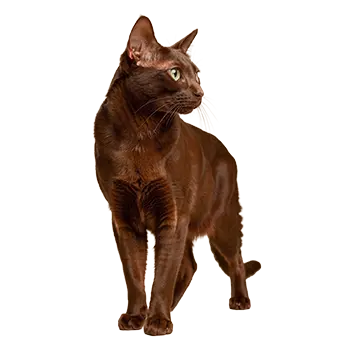
The Havana Brown's striking appearance, with its rich chocolate coat and luminous green eyes, gives it a naturally photogenic quality that lends itself well to the screen. However, the breed's extreme rarity has meant that its appearances in film and television have been infrequent compared to more common breeds like the Siamese or Persian. When brown cats do appear in visual media, they often attract attention precisely because their coloring is unusual and visually arresting against typical set backgrounds.

Documentary and educational programming about cat breeds has provided the Havana Brown with some of its most prominent screen time. Breed showcase segments on animal-focused networks and streaming platforms have featured the Havana Brown as an example of a rare and distinctive breed, often highlighting its unique muzzle shape, its warm personality, and the challenges of breeding and preserving such a small population. These appearances, while niche, have helped introduce the breed to audiences who might never encounter one in person.

The breed's temperament makes it well suited for on-set work, as Havana Browns are known for their calm demeanor and strong bond with handlers. Their willingness to be held and their curiosity about new environments are traits that professional animal trainers value. Still, the logistical challenge of sourcing a Havana Brown for a production, given the tiny number of cats available, means that other brown-coated breeds or mixed-breed cats are more commonly cast when a script calls for a chocolate-colored feline.

As streaming platforms have expanded the market for specialty content, the Havana Brown has appeared in breed profile videos and short-form content aimed at cat enthusiasts. These productions typically combine footage of the cats in home settings with interviews from breeders, offering viewers an intimate look at a breed that most will never see at their local shelter or pet store.

Literature & Art

Brown cats have appeared in artistic depictions stretching back centuries, long before the Havana Brown was established as a formal breed. Medieval and Renaissance-era manuscripts and paintings occasionally include cats with brown or chocolate coloring alongside the more typical tabbies and blacks, suggesting that solid brown cats were recognized as a distinct and noteworthy variation even in earlier periods of history. These early depictions provide a visual record of the brown coat color's periodic emergence in domestic cat populations.

In modern cat breed literature, the Havana Brown occupies a prominent place in discussions of rare breeds and breed preservation. Books dedicated to cat breeds routinely feature the Havana Brown, often devoting considerable space to its unique development story and the challenges of maintaining its population. The breed's history reads almost like a thriller in miniature, with near-extinction events, transatlantic journeys, and the tireless efforts of a small band of dedicated breeders providing rich narrative material.

Breed-specific publications and cat fancy magazines have featured the Havana Brown in articles ranging from breed profiles to in-depth examinations of coat color genetics. The science behind the chocolate gene, which produces the Havana Brown's distinctive coloring, is a topic of particular interest in feline genetics literature and has been the subject of scholarly articles as well as popular writing aimed at breeders and enthusiasts.

The Havana Brown's visual distinctiveness has also made it a subject of interest for pet portrait artists and photographers who specialize in capturing the qualities that make individual breeds unique. The interplay of the breed's warm brown coat against its vivid green eyes presents a compelling color palette, and skilled artists have produced striking portraits that celebrate the breed's beauty. These works circulate within the breed community and at cat shows, contributing to the Havana Brown's cultural presence within the cat fancy world.

Internet & Social Media

The internet has been a powerful tool for raising awareness of the Havana Brown among audiences who would otherwise never encounter the breed. Social media accounts dedicated to individual Havana Browns have attracted followers drawn to the breed's unusual coloring and expressive faces. The rich brown coat photographs exceptionally well, creating scroll-stopping images that stand out in feeds dominated by more common cat colors and patterns.

Breed-specific online communities and forums have provided a vital space for Havana Brown owners and breeders to connect, share information, and coordinate breeding efforts. Given the breed's tiny population, these digital gathering places serve a function that goes beyond casual socializing. They are practical tools for breed preservation, allowing breeders separated by vast distances to discuss pedigrees, health testing results, and kitten availability in real time.

Video content featuring Havana Browns has found a receptive audience on platforms where cat content consistently performs well. Clips showcasing the breed's distinctive behavior, particularly its tendency to reach out and touch people with its paws, have generated significant engagement among viewers unfamiliar with the breed. These viral moments, while modest in scale compared to the internet's most famous cats, have introduced the Havana Brown to new audiences and sparked interest in the breed.

The Havana Brown's rarity has itself become a talking point in online discussions about cat breeds. Listicles and social media posts about the world's rarest cat breeds frequently include the Havana Brown, and the resulting comments sections often fill with people expressing surprise that such a breed exists. This cycle of discovery and sharing has created a slow but steady stream of awareness that benefits the breed, even if it does not translate directly into a surge of new breeders or owners.

Advertising & Branding

The Havana Brown's elegant appearance and luxurious coat color give it natural potential as a symbol of sophistication in advertising, though its rarity has limited its commercial use. The breed's warm chocolate coloring evokes associations with premium goods, fine craftsmanship, and natural beauty, qualities that advertisers frequently seek to convey. When brown cats do appear in advertising materials, they tend to be cast in contexts that emphasize warmth, comfort, and understated elegance.

Pet industry brands targeting discerning cat owners have occasionally featured rare breeds like the Havana Brown in their marketing materials. The breed's association with exclusivity and careful breeding aligns well with premium pet food, grooming product, and accessories brands that want to communicate quality and sophistication. However, the practical difficulty of sourcing a Havana Brown for a photo shoot means that many such campaigns use lookalike cats or digital imagery instead.

Within the cat fancy world, the Havana Brown's image appears regularly in breed club promotional materials, cat show programs, and registry publications. These materials serve both to promote the breed to potential owners and to celebrate its unique qualities within the breeding community. Show catalogs featuring winning Havana Browns are prized by breed enthusiasts and contribute to the breed's visual identity within the organized cat fancy.

The breed's name itself carries branding potential, with its evocative reference to Havana conjuring images of warmth, tradition, and craftsmanship. Whether the name originally referenced Havana cigars, Havana rabbits, or some other inspiration, the association has become part of the breed's identity and contributes to its perception as a breed with depth, character, and a story worth telling.

The Popularity Effect

Unlike many cat breeds that have experienced dramatic popularity surges following media exposure, the Havana Brown has remained consistently rare throughout its history. This stability is partly by design, as the breed's small number of dedicated breeders have prioritized quality and health over rapid expansion. The breed's population has never been large enough to support the kind of commercial breeding operations that can quickly increase a breed's numbers in response to market demand.

The absence of a major pop culture moment featuring the Havana Brown has meant that the breed has been spared the boom-and-bust cycle that has affected other breeds. When a breed suddenly becomes popular due to a movie, television show, or viral internet moment, the resulting surge in demand often leads to irresponsible breeding, health problems, and eventually a wave of abandoned animals as the trend fades. The Havana Brown's quiet, steady presence in the cat fancy has insulated it from these dynamics.

There is a certain irony in the Havana Brown's relationship with popularity. The breed possesses many of the qualities that typically drive breed popularity: a striking and unusual appearance, an exceptional temperament, and a compelling backstory. Yet its very rarity has prevented it from achieving the kind of visibility that would trigger widespread demand. This creates a self-reinforcing cycle in which the breed remains unknown because it is rare, and remains rare in part because it is unknown.

Breed advocates have navigated this dynamic carefully, seeking to raise awareness of the Havana Brown while also ensuring that increased interest does not outpace the community's ability to produce healthy, well-socialized kittens. The goal is not popularity for its own sake but rather a sustainable level of interest that supports the breed's long-term preservation. This measured approach reflects the values of the Havana Brown community, which has always prioritized the welfare of the cats over the expansion of their numbers.

Always consult a qualified professional before making any health-related decisions. This content is provided for informational reference only and should not replace professional guidance specific to your animal.