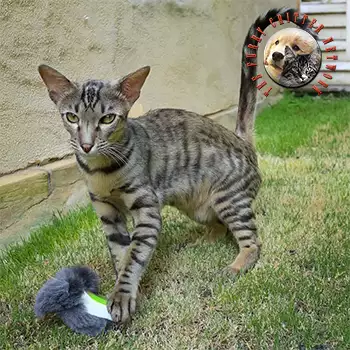

The Oriental Shorthair derives its name from its relationship to Oriental cat breeds, particularly the Siamese, combined with its short coat length. The term "Oriental" in cat fancy refers to breeds sharing the Siamese body type and temperament but displaying different coat colors and patterns beyond the pointed pattern characteristic of Siamese cats. The "Shorthair" designation distinguishes this variety from the Oriental Longhair (sometimes called Javanese or Balinese depending on registry), though both share the same body type, temperament, and genetic background. The breed is recognized consistently by this name across all major cat registries including The Cat Fanciers' Association (CFA), The International Cat Association (TICA), and international organizations.
The breed name is pronounced straightforwardly: "or-ee-EN-tal SHORT-hair" in English. International variations maintain the essential elements with linguistic adaptations—in French, "Oriental à poil court"; in German, "Orientalisch Kurzhaar"; in Spanish, "Oriental de Pelo Corto." Despite these translations, the English name is widely used internationally, reflecting the standardization of cat fancy terminology in the modern era. The name clearly communicates the breed's essential characteristics: its Oriental type and short coat.
Colloquially, Oriental Shorthair enthusiasts occasionally use shortened forms like "Oriental," "OSH," or simply "Ori" in casual conversation and written communications. These abbreviations are understood within the cat fancy community and among breed enthusiasts but are less common in formal contexts. The full breed name remains standard in most situations, providing clear identification and distinguishing them from Oriental Longhairs and other Oriental-type breeds.
Historically, before the breed achieved formal recognition and standardization, these cats were sometimes called "Foreign Shorthairs" in British cat fancy, reflecting their non-British origins and type. This terminology was used particularly in the United Kingdom during the breed's early development when cats of Oriental type but non-pointed coloring were being developed. However, "Foreign Shorthair" fell out of use as "Oriental Shorthair" became the internationally accepted designation. Some older British cat fancy literature may still reference Foreign Shorthairs when discussing the breed's history.
The breed is sometimes informally called "Siamese in party colors" or "colorful Siamese," playful references to their relationship with Siamese cats and their wide range of coat colors and patterns beyond the traditional Siamese points. These colloquial terms capture the essence of the breed—essentially Siamese cats in an extraordinary rainbow of colors—but aren't official names. They appear more frequently in casual conversation and marketing materials than in formal cat fancy documentation.
The relationship and naming distinction between Oriental Shorthair and Siamese can be confusing to those unfamiliar with cat fancy terminology. Essentially, cats with the distinctive Oriental body type and temperament are called "Siamese" if they display pointed coloration (darker color on face, ears, legs, and tail with pale bodies) and "Oriental Shorthair" if they display any other color or pattern. This distinction is somewhat arbitrary from a genetic standpoint—they're closely related breeds sharing most characteristics—but is maintained by cat registries for showing and breeding purposes.
No significant regional variations or alternative names exist for Oriental Shorthairs beyond these historical and colloquial references. The breed's relatively recent formal recognition (CFA granted championship status in 1977) and development during the era of standardized international cat fancy prevented the development of disparate regional names. In all countries where Orientals are present, the breed is known as Oriental Shorthair with only linguistic translation variations. This consistency facilitates international communication among breeders and enthusiasts while clearly identifying this distinctive breed that brings Siamese personality and type to an extraordinary palette of over 300 recognized color and pattern combinations.