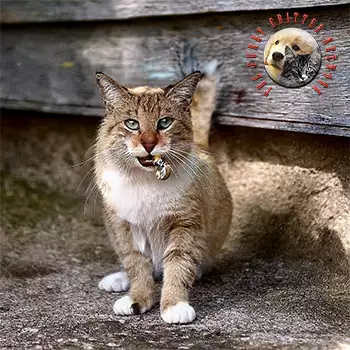

The Ceylon cat traces its ancestry to the free-roaming domestic cats of Sri Lanka, the island nation formerly known as Ceylon. For centuries, small, ticked-coat cats thrived across the island's villages, temples, and urban centers, living alongside human populations in a semi-feral relationship that shaped their hardy constitution and sociable temperament. These cats were not the product of deliberate breeding programs but rather the result of natural selection in an island environment with a warm, tropical climate and limited genetic influx from outside populations. Sri Lanka's geographic isolation in the Indian Ocean played a significant role in shaping the genetic distinctiveness of its native cat population, and while trade routes brought occasional outside cats to the island's port cities, the core population of village cats maintained a remarkably consistent phenotype over many generations.
The earliest written references to the cats of Ceylon appear in colonial-era accounts by European travelers and administrators. Portuguese, Dutch, and British observers noted the prevalence of small, agile cats in Sri Lankan households and temples, sometimes remarking on their distinctive coat patterns and their close relationships with the island's inhabitants. These accounts, while not scientific breed descriptions, provide valuable historical evidence that the phenotype associated with the modern Ceylon cat existed long before any formal breeding program was established. The cats of Sri Lanka also occupied a respected place in the island's Buddhist culture, with monasteries and temples hosting populations of free-roaming cats that were treated with kindness in keeping with Buddhist principles of compassion toward all living beings.
The transformation of Sri Lanka's native cats into a recognized pedigree breed began in the early 1980s, when Italian veterinarian and cat enthusiast Dr. Paolo Pellegatta traveled to Sri Lanka and became captivated by the island's distinctive domestic cats. Recognizing their unique appearance and temperament, Pellegatta selected several cats from different regions of the island and brought them back to Italy with the goal of establishing a formal breeding program that would preserve and promote the breed's natural characteristics. His approach was notably conservative: rather than attempting to reshape the cats through selective breeding toward an idealized standard, he sought to maintain the natural phenotype that had evolved on the island over centuries. This philosophy of preservation rather than modification set the Ceylon apart from many other breeds that were engineered through extensive crossbreeding programs.
The Italian cat fancy community embraced the new breed with enthusiasm. Working with fellow breeders and the support of Italian cat registries, Pellegatta developed a formal breed standard that codified the physical and temperamental traits he had observed in Sri Lanka's native cats. The standard emphasized the breed's natural proportions and coat qualities, avoiding the extreme features that characterize some modern pedigree breeds. By the mid-1980s, the Ceylon was being exhibited at Italian cat shows and attracting attention from fanciers across Europe.
The Federazione Italiana Associazioni Feline granted the Ceylon preliminary recognition in 1988, marking a significant milestone in the breed's formal history. This recognition validated years of careful breeding work and established the Ceylon as a legitimate pedigree breed within one of Europe's largest cat fancy organizations. The breed continued to develop within Italian breeding circles throughout the 1990s, with breeders working to expand the gene pool while maintaining the distinctive characteristics that defined the breed. The Ceylon's journey from anonymous village cat to documented pedigree breed unfolded in barely a decade, a testament to both the quality of the original Sri Lankan stock and the dedication of the Italian breeders who championed it.