
Natural History Literature & Field Guides

The Scaly Breasted Parakeet first appeared in Western natural history literature through the taxonomic descriptions and expedition accounts published by European naturalists in the early 19th century. Heinrich Kuhl's 1820 formal description provided the scientific community with its first systematic treatment of the species, but it was John Gould's The Birds of Australia, published between 1840 and 1848, that brought the bird to a broader audience. Gould's hand-colored lithographic plates depicted the species with the meticulous attention to plumage detail that characterized his work, and his accompanying text offered observations on behavior, diet, and habitat that remained influential references for decades.

Throughout the 20th century, the Scaly Breasted Parakeet became a standard entry in Australian field guides and regional bird handbooks. Publications such as the Handbook of Australian, New Zealand and Antarctic Birds, commonly known as HANZAB, provided exhaustive accounts of the species' ecology, distribution, and taxonomy. More accessible field guides by authors including Peter Slater, Michael Morcombe, and Ken Simpson and Nicolas Day brought the species to the attention of recreational birdwatchers, though the challenge of distinguishing it at a distance from the Rainbow Lorikeet was frequently noted as a field identification issue that required careful observation of breast patterning and overall color tone.

The species has also featured in specialized texts on parrots and lorikeets. Joseph Forshaw's Parrots of the World, first published in 1973 and revised in subsequent editions, included detailed accounts of the Scaly Breasted Parakeet alongside illustrations by the celebrated wildlife artist William T. Cooper. Forshaw's work became a standard reference for aviculturists and ornithologists alike, and its treatment of the species helped establish the Scaly Breasted Parakeet's place in the global literature on psittacine birds.

In recent years, digital field guides and bird identification apps have extended the species' presence in reference media. Platforms such as eBird and Merlin, developed by the Cornell Lab of Ornithology, include range maps, photographs, and audio recordings of the Scaly Breasted Parakeet's calls, making identification resources available to a global audience. These digital tools have democratized access to information about the species and have contributed to a growing international awareness of Australia's less-celebrated lorikeets.

Wildlife Documentaries & Television

Australian wildlife has been a mainstay of natural history television for decades, and lorikeets as a group have featured regularly in documentary programming focused on the continent's unique birdlife. The Scaly Breasted Parakeet, however, has generally occupied a supporting role in such productions, appearing in footage of mixed lorikeet flocks feeding at flowering trees rather than receiving dedicated screen time. This reflects the species' tendency to associate with the more visually striking Rainbow Lorikeet, which typically attracts the camera's primary attention in flock sequences.

Several Australian-produced nature programs have included segments that give the Scaly Breasted Parakeet more individualized attention. Regional wildlife series focusing on the birds of Queensland and New South Wales have profiled the species as part of broader explorations of eucalypt woodland ecology, highlighting its role as a pollinator and its adaptation to suburban environments. These segments, though rarely the centerpiece of a program, have introduced the species to domestic audiences who may see the birds daily without necessarily being able to identify them.

The growth of online video platforms has created new opportunities for the Scaly Breasted Parakeet to reach audiences outside the framework of traditional broadcast television. Independent wildlife filmmakers and birdwatching content creators have posted footage of the species feeding, calling, and interacting with other lorikeets, often accompanied by narration that explains its distinguishing features and ecological habits. These videos, while modest in production value compared to major documentaries, have collectively contributed to a significant body of accessible visual content about the species.

Television coverage of Australian urban wildlife has occasionally spotlighted the Scaly Breasted Parakeet in the context of stories about native birds adapting to suburban life. News features and magazine-style programs have used footage of lorikeet flocks, including Scaly Breasted Parakeets, descending on backyard feeding stations, flowering garden trees, and public parks, illustrating the broader phenomenon of wildlife thriving in human-modified landscapes. Such coverage tends to frame the species positively, emphasizing the pleasure that urban residents derive from close encounters with native birdlife.

Photography & Visual Arts

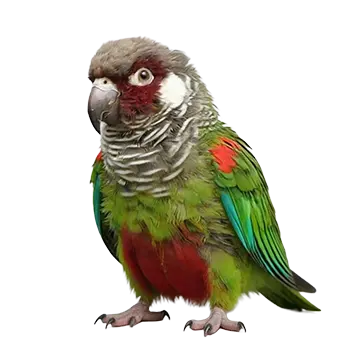
The Scaly Breasted Parakeet presents both opportunities and challenges for wildlife photographers. Its predominantly green plumage provides excellent camouflage among foliage, making the species more difficult to isolate visually than brightly colored parrots. However, when photographed in good light, the intricate yellow-edged breast feathers that give the species its name produce a striking scalloped pattern that is highly photogenic at close range. Photographers who specialize in Australian birdlife often seek opportunities to capture this detail, particularly when the birds are feeding at blossoms or preening on exposed perches.

Bird photography competitions and exhibitions in Australia regularly feature images of the Scaly Breasted Parakeet, though it competes for attention with the continent's more dramatically plumaged species. Images that capture the bird in dynamic poses, such as hanging upside down from a cluster of banksia flowers or squabbling with Rainbow Lorikeets at a feeding station, tend to be the most celebrated, as they convey the energy and personality that characterize the species in life. The annual Australian Geographic Nature Photographer of the Year competition and similar events have included notable entries featuring the species.

In the visual arts more broadly, the Scaly Breasted Parakeet has been depicted by wildlife illustrators and painters working in the tradition of Australian natural history art. The species appears in the work of artists who have followed in the footsteps of John Gould's collaborators, producing detailed plates and paintings of Australian parrots for reference works, limited-edition prints, and gallery exhibitions. Contemporary artists working in both traditional and digital media have also depicted the species, often as part of compositions featuring the diversity of Australian lorikeets.

The rise of digital photography and photo-sharing platforms has significantly increased the volume of Scaly Breasted Parakeet imagery available to the public. Websites such as Flickr, iNaturalist, and eBird host thousands of user-contributed photographs of the species from across its range, creating a visual archive that documents variation in plumage, behavior, and habitat use. This crowd-sourced photographic record serves both aesthetic and scientific purposes, providing researchers and enthusiasts with a wealth of observational data that would be difficult to assemble through professional fieldwork alone.

Social Media & Online Communities

The Scaly Breasted Parakeet has found a natural home in the social media ecosystems that have transformed how people engage with wildlife and pet keeping. On platforms such as Instagram, Facebook, and Reddit, dedicated accounts and community groups share photographs, videos, and observations of the species in both wild and captive settings. Australian birdwatching groups on Facebook, some with memberships numbering in the tens of thousands, regularly feature posts asking for help identifying Scaly Breasted Parakeets, reflecting both the species' prevalence in suburban areas and the identification challenges it presents to beginning birders.

Aviculture-focused online communities have been particularly important in sustaining interest in the Scaly Breasted Parakeet among keepers outside Australia. Forums and social media groups dedicated to lorikeet care provide platforms for breeders and pet owners to share husbandry advice, discuss dietary formulations, and showcase their birds. These communities have helped disseminate practical knowledge about the species' specific needs, including its liquid diet requirements, sensitivity to iron storage disease, and behavioral characteristics in captive settings, reaching audiences that might otherwise have difficulty accessing specialist information.

Citizen science platforms represent another dimension of the Scaly Breasted Parakeet's online presence. eBird, the global bird observation database managed by the Cornell Lab of Ornithology, contains hundreds of thousands of records of the species submitted by birdwatchers across eastern Australia. These data contribute to distribution mapping, population trend analysis, and phenological studies that track the timing of the species' movements in relation to flowering patterns. The iNaturalist platform similarly hosts a growing collection of photographic observations that are used to verify species identification and document range boundaries.

The species has also benefited from the broader trend toward wildlife-themed content on video platforms. Short-form video posts showing Scaly Breasted Parakeets feeding from hand-held nectar cups, bathing in garden sprinklers, or engaging in the boisterous social interactions typical of lorikeets have attracted substantial viewership. This content, while informal, has introduced the species to audiences far beyond the traditional birdwatching community, contributing to a gradual increase in its public profile and cultural visibility.

Educational Media & Outreach

The Scaly Breasted Parakeet plays a role in educational programming and outreach efforts focused on Australian wildlife and ecology. Wildlife parks and sanctuaries across eastern Australia, including well-known facilities such as Currumbin Wildlife Sanctuary on the Gold Coast and Taronga Zoo in Sydney, feature lorikeet feeding experiences that regularly include the Scaly Breasted Parakeet alongside Rainbow Lorikeets and other species. These interactive encounters allow visitors to observe the species at close range, providing educational context about lorikeet biology, diet, and ecological roles that reaches millions of domestic and international tourists annually.

School-based environmental education programs in Queensland and New South Wales frequently use lorikeets, including the Scaly Breasted Parakeet, as case studies for teaching concepts such as pollination, habitat adaptation, and species identification. The species' presence in schoolyards and suburban gardens across its range makes it an accessible and relatable subject for young learners, and its nectarivorous diet provides a concrete example of plant-animal mutualism that is readily understood by students at various educational levels.

Museum collections and natural history exhibitions also contribute to the species' educational profile. The Australian Museum in Sydney, the Queensland Museum in Brisbane, and regional natural history museums across eastern Australia hold specimen collections and interpretive displays that include the Scaly Breasted Parakeet. These institutional resources support formal education programs, public lectures, and temporary exhibitions that explore the diversity and ecology of Australian birdlife, providing contexts in which the species can be presented alongside its relatives and within the broader framework of Australian natural history.

Online educational resources have expanded the reach of Scaly Breasted Parakeet content beyond physical institutions. Websites maintained by organizations such as BirdLife Australia, the Australian Museum, and various state wildlife agencies provide species profiles, distribution maps, and conservation status information that are widely used by students, educators, and the general public. Podcast series and YouTube channels focused on Australian natural history have also covered the species, typically in episodes exploring lorikeet diversity or the ecology of eastern Australian woodlands, extending educational content about the bird to global audiences.

Presence in Australian Popular Culture

The Scaly Breasted Parakeet occupies a modest but genuine place in Australian popular culture, shaped primarily by its visibility as an everyday urban and suburban bird rather than by appearances in mainstream entertainment. For residents of coastal Queensland and New South Wales, the sight and sound of lorikeet flocks that include Scaly Breasted Parakeets is a familiar part of daily life, and the species contributes to the broader cultural identity of Australian suburbs as places where native wildlife remains conspicuously present. This quotidian familiarity, while it does not generate the same cultural cachet as encounters with koalas or kangaroos, represents a meaningful form of cultural significance rooted in lived experience rather than symbolic representation.

The species has appeared on Australian postage stamps and in philatelic collections celebrating the country's native birds, contributing to a tradition of using wildlife imagery in national iconography. While it has not been featured as prominently as the Kookaburra, the Galah, or the Rainbow Lorikeet in this context, its inclusion in stamp series and similar collectibles reflects official recognition of the species as a noteworthy component of Australia's avian heritage. Regional tourism materials and visitor guides for areas within the species' range also occasionally feature the Scaly Breasted Parakeet, typically as part of broader promotions of local wildlife experiences.

In the world of aviculture, the Scaly Breasted Parakeet holds a specific cultural niche as a species appreciated by knowledgeable keepers and breeders. Bird shows and aviculture exhibitions in Australia regularly include classes for lorikeets, and well-presented Scaly Breasted Parakeets compete for awards alongside other species. The development of color mutations such as lutino and cinnamon has added an element of collector interest that sustains the species' profile within the avicultural community, generating discussion in specialist magazines, newsletters, and online forums.

Looking forward, the Scaly Breasted Parakeet's cultural presence is likely to grow as public interest in urban ecology and native birdlife continues to increase across Australia. The species' adaptability to human-modified environments positions it as a living symbol of the possibility of coexistence between urban development and native wildlife, a theme that resonates increasingly in Australian public discourse about sustainability, biodiversity, and the character of the landscapes people call home. As more Australians engage with birdwatching, citizen science, and nature photography, the Scaly Breasted Parakeet stands to gain greater recognition as a species that has been quietly enriching the cultural and ecological fabric of eastern Australia for far longer than most people realize.

Always consult a qualified professional before making any health-related decisions. This content is provided for informational reference only and should not replace professional guidance specific to your animal.