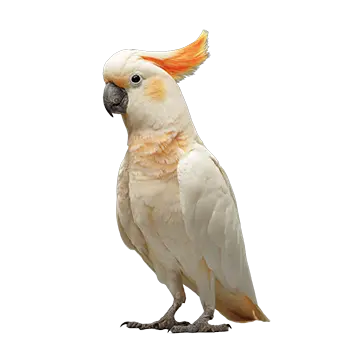

The Citron-Crested Cockatoo (Cacatua sulphurea citrinocristata) is endemic to the island of Sumba in the Lesser Sunda Islands of Indonesia. Unlike its more widespread relatives in the sulphur-crested cockatoo complex, the citron-crested subspecies evolved in relative isolation on this single landmass, developing the distinctive deep orange crest that sets it apart from the yellow-crested forms found on neighboring islands. Sumba's mix of tropical monsoon forest, open woodland, and cultivated margins provided the ecological framework within which this bird carved out its niche.
Sumba itself is a geologically ancient island situated south of the main volcanic arc that defines much of the Indonesian archipelago. Its relative geological stability and partial isolation from the larger Sunda Shelf allowed pockets of endemic flora and fauna to develop over millennia. The Citron-Crested Cockatoo is one of several bird species found only on Sumba, though it is arguably the most internationally recognized. In its native habitat, the species favors forest edges, partially cleared agricultural land, and remnant stands of tall trees near rivers and seasonal waterways, where it feeds on seeds, nuts, fruits, berries, and the occasional insect larva.
The bird's social behavior in the wild mirrors that of other cockatoo species. Small flocks of ten to fifty individuals gather to forage during the day, moving between forest patches and cropland in search of food. At dusk, these flocks converge on communal roosting sites in large trees, where the birds engage in raucous vocal exchanges before settling for the night. This gregarious lifestyle is supported by a vocal repertoire of screams, whistles, and softer contact calls that maintain group cohesion across the broken terrain of Sumba's interior.
Habitat loss has been the defining ecological pressure on the species. Decades of logging, conversion of forest to grassland for livestock grazing, and expansion of rice paddies and cash-crop plantations have reduced the available forest cover on Sumba dramatically. Combined with trapping for the pet trade, these pressures have driven the wild population of the Citron-Crested Cockatoo to critically low numbers, making its ecological origins inseparable from its conservation story.