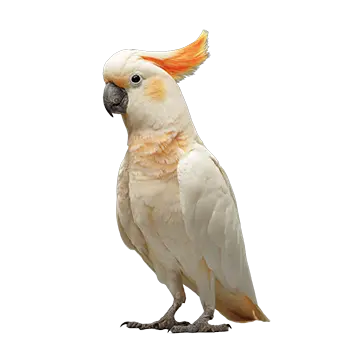

Cockatoos as a family have enjoyed a long and colorful presence in film and television, though the specific species featured is often difficult for general audiences to identify. The visual drama of a cockatoo raising its crest, spreading its wings, or perching on a character's shoulder has made these birds a go-to choice for directors seeking an exotic, eye-catching animal presence. While the larger Sulphur-Crested Cockatoo and the Umbrella Cockatoo have been the most frequently cast members of the family, the Citron-Crested Cockatoo's distinctive orange crest has occasionally placed it in front of cameras as well, particularly when a production requires a cockatoo with a slightly different visual profile.
The challenge of identifying specific cockatoo subspecies on screen means that the Citron-Crested Cockatoo's film and television appearances are not always documented with precision. Animal wranglers and trainers who supply birds for productions often work with whichever well-socialized individuals are available, and a citron-crested bird may appear in a scene credited generically as a cockatoo. This ambiguity extends to advertising and commercial photography, where the bird's warm-toned crest photographs beautifully but its specific identity may go unrecognized by the creative team or the audience.
Documentary filmmaking has offered the species a more clearly identified platform. Nature documentaries focused on Indonesian wildlife, endangered parrots, or the illegal bird trade have featured footage of Citron-Crested Cockatoos in both wild and captive settings. These programs have introduced the subspecies to audiences who might otherwise never encounter it, framing the bird within narratives of ecological fragility and conservation urgency that give its screen time a weight beyond simple visual appeal.
The broader trend of cockatoos appearing in media has had mixed consequences for the species. Screen appearances can spark public interest and drive demand for cockatoo ownership, sometimes among people poorly prepared for the realities of living with these demanding birds. Conservation organizations have noted that media portrayals of cockatoos as amusing, tractable companions can create unrealistic expectations that ultimately contribute to the cycle of impulse acquisition and eventual surrender that burdens avian rescue networks.