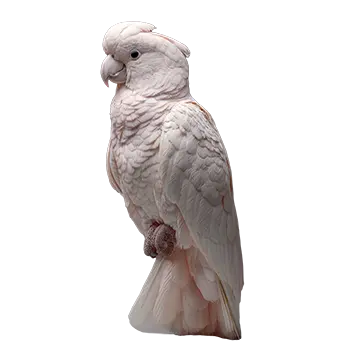
Providing appropriate housing for a Goffin's Cockatoo requires careful consideration of their active, energetic, destructive, intelligent nature and need for substantial space despite their small size. While among the smallest cockatoo species, these birds are remarkably athletic and require more space than their compact dimensions might initially suggest. The absolute minimum cage size for a single Goffin's Cockatoo is 24 inches wide by 24 inches deep by 30 inches tall, though this represents a bare minimum that should only be considered if the bird receives many hours of daily supervised out-of-cage time for exercise, flight, and enrichment. Cages measuring 30-36 inches in width or more are strongly preferred and significantly improve the bird's quality of life by allowing better exercise, wing spreading, flight opportunities within the cage, and multiple distinct activity zones.
For these powerful, intelligent, destructive birds, invest in high-quality powder-coated wrought iron or stainless steel cages designed specifically for small to medium cockatoos or conures with strong, destructive beaks. Goffin's Cockatoos possess surprisingly powerful beaks for their size, capable of bending thin bars, destroying welds on inferior cages, and systematically dismantling poorly constructed cage components. Avoid galvanized cages or cages containing zinc hardware, as these metals are toxic to parrots and can cause fatal heavy metal poisoning that cockatoos are particularly prone to given their destructive, exploratory chewing behaviors. The cage should feature predominantly horizontal bars rather than vertical ones, as horizontal orientation facilitates natural climbing behaviors characteristic of cockatoos and allows the parrot to utilize vertical cage space more effectively.
Bar spacing is a critical safety consideration for Goffin's Cockatoos. The bars should be spaced 1/2 to 5/8 inches apart, providing adequate spacing for these small birds while preventing head entrapment, injury from getting stuck, or escape through gaps. Ensure all cage doors have extremely secure, cockatoo-proof locks, as Goffin's Cockatoos are notorious escape artists with remarkable intelligence and problem-solving abilities. They frequently learn to manipulate simple latches, slide bolts, spring-loaded mechanisms, and even some padlocks through persistent experimentation. Many experienced owners use commercial padlocks, combination locks, or multiple redundant security mechanisms on every cage opening including food doors. The cage should include large enough access doors for easy bird removal, cage cleaning, and installation of toys and perches.
Cage location significantly impacts the bird's comfort, sense of security, and behavioral health. Position the cage in a room where family members spend considerable time throughout the day, as Goffin's Cockatoos are profoundly social and desperately need to observe and participate in household activities to maintain psychological wellbeing. However, avoid extremely high-traffic areas or narrow hallways where constant movement might create stress. The cage should be positioned against a solid wall rather than in the center of a room, providing a protected back that increases the bird's sense of security while still allowing good visibility of surrounding activities and family members. Ensure the cage location offers protection from direct, intense sunlight during the hottest parts of the day while still providing access to natural light throughout the day.
Never place cages in kitchens or areas where cooking occurs, as fumes from heated cooking oils, non-stick cookware containing PTFE/Teflon, self-cleaning ovens, and other household products can be instantly fatal to birds even at concentrations imperceptible to humans. Keep the cage away from drafty locations near windows, exterior doors, air conditioning vents, or heating sources that create temperature fluctuations. Maintain consistent ambient temperatures between 65-80°F, avoiding extreme heat, cold, or rapid temperature changes that stress birds and compromise immune function. The cage should be positioned so the highest perches are at or slightly below human eye level when standing, avoiding both too-high placement that may contribute to dominance behaviors and too-low placement that may make the bird feel vulnerable and insecure.
Perch variety and strategic placement are essential for foot health, exercise opportunities, and mental stimulation. Provide at least three to four perches of varying diameters ranging from 1/2 inch to 1 inch thick, ensuring the bird's feet exercise different gripping positions and pressures that promote circulation and prevent arthritis, pressure sores, or bumblefoot. Natural wood branches from bird-safe tree species like apple, willow, manzanita, or java wood make excellent perches, offering naturally varied diameters, interesting textures, and chewing opportunities that help keep nails naturally trimmed while providing mental stimulation. Avoid uniform-diameter dowels or sandpaper-covered perches, as these contribute to foot problems including pressure sores and inflammation.
Position perches at different heights throughout the cage creating distinct activity zones for different purposes. Place one sturdy perch near the cage top for sleeping, as parrots naturally prefer elevated positions where they feel secure from ground predators. Arrange additional perches to encourage climbing, hopping between levels, and movement throughout the cage rather than simply flying horizontally across open space. Avoid placing perches directly over food or water dishes to prevent fecal contamination. Include rope perches made from natural cotton or sisal, which many Goffin's enjoy, though monitor carefully for fraying and replace before they become hazardous, as some birds chew rope excessively creating ingestion risks.
Toy requirements for Goffin's Cockatoos are extensive and represent an ongoing investment, as these intelligent, active, destructive birds need constant mental stimulation to prevent boredom and associated behavioral problems. Provide a diverse selection including wooden toys designed for small to medium parrots that satisfy their powerful chewing drives and destructive urges, rope toys for climbing and manipulation, puzzle toys and foraging toys that challenge their exceptional problem-solving abilities and keep them engaged for extended periods, acrylic or hard plastic toys providing different textures and challenges, swings and ladders for physical activity and exercise, shreddable items like paper, cardboard, palm leaves, or phone books that satisfy destructive urges safely, and bells, rattles, or noise-making toys. Rotate toys every week or two to maintain novelty and sustained interest, as Goffin's Cockatoos quickly become bored with unchanged environments and may develop behavioral problems from insufficient stimulation.
Goffin's Cockatoos are remarkably powerful chewers and intelligent manipulators despite their small size, capable of destroying toys relatively quickly and figuring out puzzle toys that stump many larger, less intelligent parrots. Budget for regular toy replacement as a normal, ongoing expense of ownership. These birds need toys they can actually destroy and manipulate rather than indestructible items that provide no satisfaction for their natural urges and cognitive abilities. Providing appropriate outlets for their tremendous destructive energy and brilliant minds protects furniture, woodwork, and household items from becoming targets during out-of-cage time.
Out-of-cage time is absolutely non-negotiable for Goffin's Cockatoos, with a minimum of 4-5 hours daily required for birds kept in cages, though many avian behaviorists recommend these highly active, social birds spend most of their waking hours outside cages in supervised areas where they can interact with their human family. During out-of-cage periods, birds need access to thoroughly bird-proofed rooms or areas where they can fly substantial distances, climb extensively, explore safely, play with varied toys, and interact closely with family members. Set up dedicated play stands, T-stands, or tabletop gyms equipped with perches at various heights, toys, foraging opportunities, and food and water bowls to create enriching out-of-cage environments that keep these active birds productively occupied.
Safety hazards requiring attention when bird-proofing areas include all toxic plants, ceiling fans, open windows or doors, other household pets, hot cooking surfaces, standing water, electrical cords, small ingestible objects, toxic metals, household chemicals, and reflective surfaces. Goffin's Cockatoos are remarkably curious and intelligent, investigating everything with their beaks and potentially getting into dangerous situations. Their problem-solving abilities mean they can figure out how to access areas or objects owners might assume are secure. Constant supervision during out-of-cage time is essential.
Enrichment strategies should extensively engage their exceptional intelligence and natural behaviors through complex foraging opportunities, fresh branches for destruction, regularly rotated puzzle toys, training sessions teaching new tricks, interactive games with owners, and varied activities preventing monotony. Many Goffin's Cockatoos enjoy bathing and may shower with their owners or play in shallow dishes. Temperature should be maintained at 65-80°F with 40-60% humidity. Lighting requirements include 10-12 hours of light daily with full-spectrum UVB bulbs supporting vitamin D synthesis, followed by 12-14 hours of complete darkness for proper sleep.
Cockatoo dust management requires HEPA air filtration systems, frequent vacuuming with HEPA filters, and adequate ventilation. Regular bathing or misting helps control dust production. Some owners develop allergies to cockatoo dust requiring rehoming. Given their intelligence, escape artist abilities, destructive power, extreme neediness, and susceptibility to behavioral problems, Goffin's Cockatoo housing represents significant challenges suitable only for experienced owners with appropriate facilities, substantial financial resources, and genuine long-term commitment to providing near-constant attention, extensive mental stimulation, and decades of devoted care.