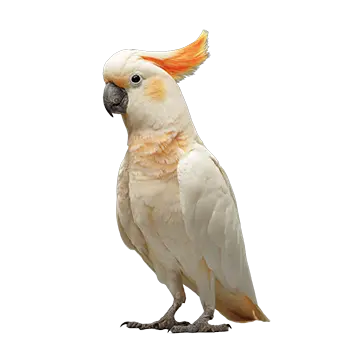

The Citron-Crested Cockatoo is subject to some of the most stringent international wildlife trade regulations in existence. As a subspecies of Cacatua sulphurea, it is listed on Appendix I of the Convention on International Trade in Endangered Species of Wild Fauna and Flora (CITES), the highest level of protection the treaty affords. Appendix I listing means that commercial international trade in wild-caught specimens is effectively prohibited, and any cross-border movement of captive-bred birds requires export permits from the country of origin and import permits from the receiving country, both issued only when authorities are satisfied that the transaction will not be detrimental to the survival of the species.
CITES operates through a system of national management and scientific authorities in each of its 184 member states. For the Citron-Crested Cockatoo, this means that the specific documentation and procedural requirements for legal acquisition and transfer vary depending on the countries involved. A breeder in the European Union exporting a captive-bred citron-crested bird to a buyer in the United States, for example, must navigate both the EU Wildlife Trade Regulations (which implement CITES within the EU) and the requirements of the U.S. Fish and Wildlife Service, which administers CITES compliance domestically.
The practical effect of Appendix I listing is that legitimate ownership of a Citron-Crested Cockatoo in most countries requires a documented chain of custody tracing the bird's origins to a legal captive breeding operation. Birds without proper documentation exist in a legal gray area that can expose their owners to seizure of the animal and criminal penalties. The burden of proof in many jurisdictions falls on the owner to demonstrate that the bird was legally acquired, making thorough record-keeping an essential aspect of responsible ownership.
Enforcement of CITES protections remains uneven across signatory nations. While countries with well-resourced wildlife agencies, such as the United States, Australia, and many EU member states, maintain relatively robust enforcement regimes, others lack the institutional capacity to monitor compliance effectively. This enforcement gap has allowed illegal trade to persist, particularly in Southeast Asia, where demand for cockatoos as status symbols and the proximity to wild source populations create ongoing incentives for smuggling.