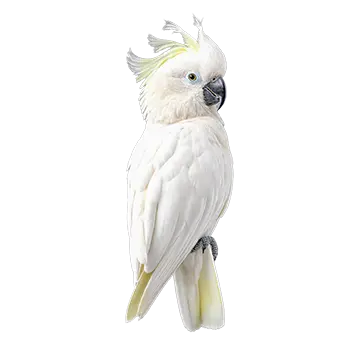

Umbrella Cockatoo Species Guide - Furry Critter Network

Umbrella Cockatoo

Quick Facts

🔬 Scientific Name
Cacatua alba
📊 Care Level
Expert
😊 Temperament
Affectionate, Needy, Sensitive
📏 Adult Size
18-24 inches
⏱️ Lifespan
40-60+ years
🔊 Noise Level
Very Loud
🗣️ Talking Ability
Limited
🍽️ Diet Type
Pellet-based
🌍 Origin
Maluku Islands, Indonesia
🏠 Min Cage Size
36x24x48 inches absolute minimum
📐 Size
Large

Umbrella Cockatoo - Names & Recognition

The Umbrella Cockatoo is scientifically classified as Cacatua alba, with the species name 'alba' derived from Latin meaning 'white,' directly referencing the bird's stunning, pristine all-white plumage that makes them instantly recognizable and extraordinarily beautiful. The genus Cacatua encompasses numerous cockatoo species distributed across Australia, Indonesia, and the Philippines, with Cacatua alba being one of the larger, more spectacular members endemic to a relatively limited geographic range in eastern Indonesia. This species represents one of the white cockatoo species, a group characterized by predominantly white plumage with subtle color accents and spectacular crests.

The common name Umbrella Cockatoo refers to the bird's most distinctive and spectacular feature—the enormous, broad crest that, when fully raised in excitement or display, spreads into a magnificent semicircular fan resembling an open umbrella. This dramatic crest is one of the largest and most impressive of any cockatoo species, capable of extending far beyond the bird's head and creating a stunning visual display that has made these birds iconic symbols of the cockatoo family. The crest feathers are pure white with the ability to flare dramatically, creating an unforgettable spectacle when the bird is excited, alarmed, displaying, or simply showing off.

The species is also commonly known as the White Cockatoo, a straightforward name referencing their all-white plumage, though this name can potentially cause confusion as it might apply to several predominantly white cockatoo species. Some literature uses the term Great White Cockatoo, emphasizing their substantial size among white cockatoo species. In Indonesia, where these birds are endemic, they may be known by various local names in regional languages of the Maluku Islands, though documentation of traditional indigenous names is limited in ornithological literature.

In the Maluku Islands of their native range, local communities have traditional names for these spectacular birds, though decades of habitat loss, hunting, and pet trade removal have diminished traditional ecological knowledge and cultural connections in some areas. The species has been known to Western science since the early descriptions by European naturalists exploring the Indonesian archipelago, with various historical names used in older literature that have since been standardized to current nomenclature.

There are no recognized subspecies of Cacatua alba, as the species' relatively restricted natural range in the northern Maluku Islands has not resulted in sufficient geographic variation to warrant subspecies designation. The entire wild population occupies a limited area with relatively uniform environmental conditions, and genetic analysis has not revealed distinct population structures requiring subspecies recognition. Individual variation exists in size, with some birds noticeably larger than others, and subtle differences in the extent and shape of the crest, but these represent normal variation within a single population rather than geographically distinct subspecies.

In aviculture, Umbrella Cockatoos have been bred in captivity for many decades, with multiple generations of captive-bred birds now available. The species was extremely popular in the pet trade during the 1970s and 1980s when thousands of wild-caught birds were exported from Indonesia, contributing to severe population declines in the wild. International trade restrictions implemented in the 1990s under CITES (Convention on International Trade in Endangered Species) and successful captive breeding programs have made captive-bred birds the primary source for the pet market, though the species' extreme care requirements and high rate of behavioral problems have somewhat reduced their popularity among knowledgeable bird enthusiasts who understand the challenges involved. Color mutations have not been established in Umbrella Cockatoos, with all birds displaying the natural pristine white plumage characteristic of wild individuals. The species' spectacular appearance, combined with their intensely affectionate (though extremely demanding) nature, has made them iconic in popular culture, though this visibility has unfortunately contributed to many unprepared people acquiring birds they cannot properly care for, resulting in tragically high rates of behavioral problems, abuse through neglect, and repeated rehoming that traumatizes these sensitive, deeply bonding birds.

Umbrella Cockatoo Physical Description

The Umbrella Cockatoo is a large, impressive parrot measuring approximately 18 to 24 inches (46-61 centimeters) in length from head to tail tip, making them one of the larger cockatoo species and a substantial bird requiring spacious accommodations and strong perches. Their wingspan extends approximately 22-26 inches, and adult birds typically weigh between 500 and 700 grams (1.1-1.5 pounds), making them solid, heavy birds with considerable presence and strength. They possess a robust, powerful build characteristic of large cockatoos, with a broad chest, strong neck, relatively short tail compared to body length, and muscular frame that conveys both power and elegance.

The plumage of the Umbrella Cockatoo is absolutely stunning—pure, pristine white covering the entire body, wings, tail, and the spectacular crest without any contrasting colors, spots, or patterns. The feathers have the characteristically soft, almost silky texture of cockatoos, with the fine powder down that gives all cockatoos their distinctive dusty quality. Healthy birds display immaculate, smooth plumage that appears almost luminescent in bright light, with individual feathers lying sleek against the body when relaxed or fluffing dramatically when excited, displaying, or regulating body temperature. Unlike many cockatoo species that show yellow, salmon, or other color suffusions on certain feathers, Umbrella Cockatoos maintain uniform brilliant white coloration across their entire bodies, creating a striking, pure appearance.

The most spectacular and defining feature is the enormous crest, which represents one of the largest and most dramatic crests of any cockatoo species. When relaxed, the crest lies relatively flat against the head and neck, creating a smooth, rounded silhouette. When raised in excitement, alarm, curiosity, display, or any heightened emotional state, the crest erects into a magnificent, broad semicircular fan extending far beyond the head in all directions, truly resembling an open umbrella and creating one of the most spectacular displays in the parrot world. The crest feathers are pure white, broad, and capable of spreading dramatically, with the bird able to control individual feather positions to create varying effects from fully spread umbrella displays to partially raised expressions of mild interest. This magnificent crest serves multiple functions including communication of emotional state, courtship displays, threat displays to establish dominance or warn off threats, and temperature regulation.

The beak is large, powerful, dark grey to black, and capable of delivering tremendously strong, painful bites that can easily break skin, crush fingers, cause severe lacerations requiring medical attention, and potentially cause permanent disfigurement. The upper mandible curves downward in the characteristic cockatoo hook, substantially overlapping the lower mandible and providing enormous crushing force for cracking hard nuts and seeds. This powerful beak represents a serious safety consideration, as even gentle, well-socialized Umbrella Cockatoos can inflict devastating injuries during hormonal periods, when startled, or if improperly handled. The eyes are dark brown to black in adults, appearing very dark against the white plumage and creating an alert, intelligent, emotionally expressive appearance. Umbrella Cockatoos have remarkably expressive eyes that reflect their complex emotional states, with experienced owners learning to read subtle changes in eye appearance, pupil dilation, and eye positioning that indicate the bird's mood.

Sexual dimorphism is minimal to nonexistent in Umbrella Cockatoos, making visual sexing virtually impossible even for experienced breeders and aviculturists. Males and females are essentially identical in plumage coloration, crest size and shape, body size, and physical characteristics. Some sources suggest males may have slightly larger heads, broader beaks, darker eye color, or more robust builds, but these differences are so subtle, variable, and unreliable that they cannot be used for confident sex determination. Behavioral differences during breeding season may provide some clues, as males typically become more vocal, display more frequently, and show more aggressive territorial behaviors, but even these behavioral differences are not definitive. DNA testing through blood or feather samples or surgical sexing through endoscopy remain the only accurate, reliable methods for determining sex in this species.

Juvenile Umbrella Cockatoos closely resemble adults in overall plumage coloration, being pure white from a very young age, making age determination challenging without close observation or handling. Young birds can be identified by subtle characteristics including slightly duller, less pristine white plumage lacking the brilliant luminescence of adults, lighter grey iris color that gradually darkens to the near-black color of adults over the first year or two, slightly paler, less robust beaks that develop full size and darker coloration with maturity, somewhat smaller, less developed crest that grows fuller and more dramatic with age, and softer, less defined feather edges and barbs that become crisper and more structured as adult plumage develops. Full adult plumage, size, and appearance are typically achieved by two to three years of age, though subtle maturation may continue slightly longer.

The bare skin around the eyes (periorbital ring) is pale blue-grey to white, creating subtle contrast against the white facial feathers. Some individuals show very subtle pale yellow or cream tinting on the undersides of wing and tail feathers, though this is minimal and not immediately apparent. The legs and feet are grey to dark grey with the characteristic zygodactyl toe arrangement (two toes facing forward, two facing backward) equipped with strong, curved dark grey to black claws. These powerful feet provide excellent gripping strength for climbing, hanging, manipulating objects, and performing the acrobatic behaviors cockatoos love. Despite their substantial size and weight, Umbrella Cockatoos are remarkably athletic and agile, frequently hanging upside-down, climbing with impressive dexterity, and performing aerial displays and acrobatics.

The overall appearance of the Umbrella Cockatoo is one of spectacular beauty, elegant power, and dramatic presence. Their pristine white plumage creates an almost ethereal, angelic appearance, while their enormous size, powerful build, and massive crest convey strength and majesty. When excited, displaying, or interacting, these birds raise their spectacular crests creating breathtaking visual displays, fluff their body feathers dramatically increasing their apparent size, spread their wings revealing their impressive wingspan, and perform animated behaviors that showcase their engaging, expressive personalities. Their combination of stunning beauty, substantial size, and intensely affectionate (though extremely demanding) nature has made them one of the most recognizable and sought-after (though often tragically misunderstood) cockatoo species, with their appearance in films, television, and advertising contributing to both their popularity and the serious welfare problems resulting from unprepared owners acquiring birds they cannot properly care for throughout their 40-60+ year lifespans.

Affection Level
Umbrella Cockatoos are extraordinarily affectionate birds that crave constant physical contact and form intensely obsessive bonds with their owners. They demand to be cuddled, held, and touching their favorite people every moment. Their need for affection is extreme and overwhelming, often becoming pathological if owners cannot provide near-constant physical contact and attention throughout every day.
Sociability
These profoundly social parrots cannot tolerate being excluded from any aspect of their owner's life and require constant inclusion in all activities. They are desperately needy, becoming severely distressed within minutes of being alone. Umbrella Cockatoos have perhaps the highest social needs of any companion bird, requiring owners who can provide literally constant companionship throughout waking hours.
Vocalization
Umbrella Cockatoos are among the loudest parrot species with ear-splitting, deafening screams that exceed 120 decibels. Their vocalizations are genuinely painful, can cause hearing damage, and carry for miles. They scream persistently at dawn and dusk, and many individuals scream constantly when seeking attention. They are completely unsuitable for any situation except rural properties with no nearby neighbors.
Intelligence
These parrots are highly intelligent with excellent problem-solving abilities, impressive learning capacity, and complex emotional awareness. They quickly learn tricks and routines, understand cause and effect, and can be manipulative in getting attention. Their intelligence combined with extreme neediness requires constant mental challenges and enrichment to prevent severe behavioral problems.
Exercise Needs
Umbrella Cockatoos are active birds requiring extensive daily exercise including flight time and physical play. They need minimum 4-5 hours of supervised out-of-cage time for flying, climbing, and playing. Without adequate physical activity combined with constant attention, they develop catastrophic behavioral problems including aggression, screaming, and severe self-mutilation.
Maintenance Level
These cockatoos are extremely high-maintenance in every conceivable aspect. They require intensive daily care, constant supervision, extensive cleaning due to massive cockatoo dust production, and hours of daily attention. They are highly destructive and produce enormous messes. Their care represents a total lifestyle commitment that most people cannot sustain, contributing to tragically high rehoming rates.
Trainability
Umbrella Cockatoos are trainable and respond to positive reinforcement, learning tricks and commands when properly motivated. However, their extreme emotional sensitivity and neediness make training challenging. They become easily stressed, may refuse to cooperate when upset, and can develop learned helplessness. Consistent, patient training is essential but cannot prevent the behavioral problems common in this species.
Independence
These parrots have the lowest independence of virtually any companion animal. They require constant physical presence, interaction, and contact throughout every day. Umbrella Cockatoos become profoundly distressed within minutes of separation and commonly develop severe, permanent psychological problems including screaming and self-mutilation. They are suitable only for people who literally never leave home or can take the bird everywhere.

Natural Habitat & Range

The Umbrella Cockatoo has a relatively restricted natural range, being endemic exclusively to the northern Maluku Islands (also known as the Moluccas or Spice Islands) in eastern Indonesia. Their distribution includes the islands of Halmahera, Bacan, Ternate, Tidore, Kasiruta, and Mandiole, covering a total area that, while spanning multiple islands, represents a relatively limited geographic range compared to more widespread parrot species. This restricted distribution makes the species particularly vulnerable to habitat loss, natural disasters, overexploitation, and other threats that could affect the entire population, creating significant conservation concerns that have materialized as the species has declined dramatically in the wild over recent decades.

The Maluku Islands lie in the Indonesian archipelago between Sulawesi and New Guinea, historically famous as the original "Spice Islands" that were the only source of cloves, nutmeg, and mace, driving European colonial expansion into Southeast Asia. The islands' isolation and unique geology have resulted in high levels of endemism, with numerous plant and animal species found nowhere else on Earth, including the Umbrella Cockatoo which evolved in this distinctive island environment separate from other cockatoo populations.

In their native habitats, Umbrella Cockatoos occupy primary lowland tropical rainforests, forest edges and clearings that provide feeding opportunities, secondary growth forests regenerating after disturbance, mangrove forests along coastal areas, and occasionally agricultural areas with remaining large trees. They show strong preference for intact primary forests with large mature trees providing nesting cavities and abundant food resources, though they demonstrate some adaptability to modified habitats provided sufficient forest remains. These cockatoos are primarily lowland birds occurring from sea level to approximately 900 meters elevation, with most populations found below 600 meters in coastal and near-coastal forested areas.

The climate in the northern Maluku Islands is tropical, characterized by consistently high temperatures, substantial humidity throughout the year, and significant rainfall with monsoonal influences. Temperatures typically range from 75 to 95°F (24-35°C) with relatively little seasonal variation, though slight temperature drops occur during wetter periods. The islands experience a wetter northwest monsoon season from November to March and a somewhat drier southeast monsoon season from May to September, though rainfall occurs year-round and total annual precipitation is substantial. Umbrella Cockatoos have adapted to these consistently warm, humid tropical conditions, and their breeding cycles correspond somewhat with seasonal patterns in rainfall and food availability.

In the wild, Umbrella Cockatoos are social birds that form flocks ranging from small family groups to aggregations of 50 or more individuals at abundant food sources or traditional roosting sites, though flock sizes are generally smaller than some other cockatoo species. These social groups serve essential functions including predator detection and avoidance, information sharing about food locations, social bonding, and collective defense. Pairs form strong monogamous bonds and remain together year-round, maintaining their connections through mutual preening, synchronized activities, and constant vocal communication even within the larger flock context. Their flight is strong and direct with relatively slow, deep wingbeats characteristic of large cockatoos, and their large white bodies make them conspicuous even at considerable distances. Flocks are noisy and easily detected by their loud vocalizations during flight and while feeding.

The wild diet of Umbrella Cockatoos consists of diverse plant materials including seeds from various tropical trees including figs and other forest trees, fruits with particular preference for figs and various tropical fruits abundant in their range, nuts and hard-shelled seeds which they crack with their powerful beaks, flowers and nectar from multiple plant species, buds and young shoots, and palm nuts and palm fruits. They feed primarily in the forest canopy, moving through vegetation with remarkable agility despite their large size as they search for ripe fruits and seeds. These parrots play important ecological roles as seed dispersers, helping regenerate forests by transporting seeds away from parent trees through their feeding and digestive processes, contributing to forest diversity and regeneration.

Social structure in wild populations involves formation of monogamous pair bonds that persist across multiple breeding seasons and likely for life given their strong bonding tendencies. Pairs nest in large natural tree cavities in mature forest trees, competing for limited suitable sites with other cavity-nesting species. Both parents participate actively in chick-rearing, with females handling incubation of the typically 2-3 eggs while males provision food for the incubating female and later for the growing chicks. The nesting season in the northern Maluku Islands typically occurs during drier periods when food availability is more predictable and weather conditions more favorable for raising young, though precise timing varies by location and year based on rainfall patterns and food availability.

The conservation status of the Umbrella Cockatoo is classified as Endangered by the International Union for Conservation of Nature, reflecting severe population declines resulting from habitat loss and particularly from massive overexploitation for the international pet trade. Wild population estimates suggest the species has declined by 50-80% over the past three generations, with current populations representing a fraction of historical numbers. Some estimates suggest fewer than 50,000 individuals remain in the wild, with populations continuing to decline in many areas. The primary threats include massive habitat loss from logging, agricultural conversion, and development that removes critical nesting trees and forest habitat, historical overexploitation for the pet trade with tens of thousands of birds exported from Indonesia during the 1970s-1990s before trade restrictions were implemented, continued illegal capture for domestic Indonesian pet trade despite legal protections, nest poaching where chicks are stolen from wild nests for sale, and hunting for feathers used in traditional ceremonies in some areas.

Conservation efforts include legal protection under Indonesian law and international trade restrictions under CITES Appendix II, which regulates and monitors international commercial trade. However, enforcement in remote island locations is extremely challenging, and illegal trade continues. Habitat protection efforts within the limited range include establishment of protected areas and reserves, though coverage is inadequate and enforcement problematic. Successful captive breeding programs have produced multiple generations of captive-bred birds, theoretically reducing demand for wild-caught individuals in international markets, though the domestic Indonesian pet trade continues to drive illegal capture. Community engagement and education initiatives aim to build local support for conservation, while research into population dynamics, ecology, and breeding biology informs conservation strategies. Despite these efforts, the Umbrella Cockatoo faces an uncertain future in the wild, with continued habitat loss and illegal trapping threatening remaining populations. The species' popularity in aviculture creates a bittersweet situation—while captive breeding ensures the species won't become extinct, it also reflects the severe threats that have made wild populations endangered and emphasizes the tragedy of these spectacular birds being far more common in cages than in their native forests.

Temperament

The Umbrella Cockatoo possesses one of the most intense, demanding, emotionally complex temperaments of any companion parrot species, combining extraordinary affection with overwhelming neediness that creates profound challenges for even the most experienced, dedicated bird owners. These magnificent birds are capable of forming bonds of breathtaking depth and devotion with their chosen people, but this intense bonding comes with extreme emotional dependency, catastrophic behavioral problems when needs aren't met, and care requirements so demanding that the vast majority of people cannot provide appropriate lifelong care. Prospective owners must understand with brutal honesty that Umbrella Cockatoos are suitable for perhaps 1-2% of people considering parrot ownership, and acquiring one without fully comprehending and preparing for the extreme challenges inevitably leads to tragic outcomes for both bird and owner.

When properly socialized, hand-raised, and bonded, Umbrella Cockatoos can be extraordinarily, almost unbelievably affectionate companions that form profoundly obsessive attachments to their favorite people. They don't just seek affection—they desperately crave and demand constant physical contact, cuddling, holding, and touching throughout every waking moment. Many individuals become essentially addicted to physical contact, unable to function or regulate their emotions without continuous touching and attention from their bonded person. They want to be held like babies, cuddled against owners' bodies, tucked inside clothing, carried everywhere, and included in absolutely every activity from showering to sleeping. They respond to affection with soft, contented vocalizations, relaxed body language, rapid eye pinning indicating intense pleasure, and characteristic beak grinding signaling contentment, but they also become distressed within minutes when the physical contact ends, leading to persistent demanding behaviors.

However, the bonding and affection characteristics of Umbrella Cockatoos create some of the most severe, challenging problems in all of companion animal ownership. These birds almost universally develop extreme, pathological one-person bonds, showing obsessive, possessive devotion to a single individual while being indifferent, fearful, or violently aggressive toward everyone else including spouses, children, and other family members. This one-person bonding destroys household harmony, creates serious safety risks, and often leads to relationship problems, divorce, or forced rehoming of the bird. Jealousy is intense and dangerous, with bonded Umbrella Cockatoos commonly attacking anyone who approaches their chosen person, sometimes causing serious injuries requiring medical attention. Managing these possessive, obsessive, pathological behaviors is extraordinarily difficult even with extensive professional help, early socialization, and perfect care.

Social needs for Umbrella Cockatoos are the highest of virtually any companion animal, exceeding even other cockatoo species in their desperate neediness. These birds require constant—and we mean literally constant—physical presence, interaction, attention, and contact throughout every waking moment of every single day without exception or breaks. They cannot tolerate being alone even briefly, becoming severely distressed within minutes of separation and quickly escalating to persistent, deafening screaming and self-destructive behaviors. They follow their owners from room to room, scream hysterically if doors close between them, and cannot function independently even for brief periods. This extreme neediness means Umbrella Cockatoos are suitable only for people who literally never leave home, work from home with the bird constantly present, or can take the bird everywhere they go—a virtually impossible standard that explains why behavioral problems are nearly universal in this species.

Common and often catastrophic problems in Umbrella Cockatoos include persistent, deafening, genuinely unbearable screaming that can last for hours and becomes the defining feature of life with these birds, severe feather plucking and self-mutilation that can become life-threatening with birds mutilating themselves to the point of serious wounds, infections, and permanent disfigurement, extreme aggression toward everyone except the bonded person creating dangerous situations and making the bird unmanageable, profound depression with associated health decline when needs aren't met, and extraordinarily destructive behaviors. Studies and rescue organizations report that 70-80% or more of Umbrella Cockatoos develop serious behavioral problems, and many are rehomed multiple times throughout their lives, creating profound psychological trauma that makes problems progressively worse.

Interaction style with humans is intensely physical, demanding, emotionally overwhelming, and completely consuming. Umbrella Cockatoos don't simply want attention—they demand and require it constantly, becoming agitated, distressed, and ultimately aggressive or self-destructive when ignored even briefly. They are not birds that can entertain themselves, tolerate independence, or accept boundaries. They manipulate through screaming, self-harm, aggression, and learned helplessness to ensure constant attention. Training sessions can be productive when the bird is calm and focused, but emotional volatility, extreme sensitivity, and neediness make consistent training extraordinarily challenging.

Noise levels in Umbrella Cockatoos are absolutely extreme and among the loudest, most unbearable of any parrot species. These birds naturally vocalize at dawn and dusk with ear-splitting, deafening screams that easily exceed 120 decibels—louder than rock concerts, jet engines, or chainsaws at close range. Their vocalizations are genuinely, physically painful to nearby human ears, can cause permanent hearing damage with repeated exposure, and carry literally for miles. This dawn and dusk calling is deeply instinctive and absolutely cannot be eliminated, lasting 30-60 minutes or more twice daily. Many Umbrella Cockatoos also scream persistently throughout the day when seeking attention, when their owners are out of sight, when they want something, or seemingly without reason, with some individuals screaming essentially constantly for hours creating utterly unbearable living conditions.

Their screaming is not normal bird noise—it is genuinely one of the loudest sounds produced by any animal, traumatizing to experience, and completely inappropriate for any living situation except extremely rural properties with no neighbors for at least a mile in all directions. Even then, the screaming is so intense and persistent that it severely impacts quality of life for everyone in the household. Prospective owners who think they can tolerate the noise are virtually always proven wrong within weeks or months of bringing the bird home.

Mood indicators in Umbrella Cockatoos are pronounced and range from contented to violently aggressive within seconds. A relaxed bird displays sleek feathers, slow breathing, soft vocalizations, and confident behavior. When seeking affection, they lower heads, fluff slightly, approach with soft chirps, and may gently nibble. Eye pinning indicates excitement or heightened emotion. Signs of stress or aggression include fully raised crest, body feathers standing up creating a dramatically larger appearance, wings held away from body, lunging, hissing, and rapid eye pinning. During hormonal periods, mood swings become more extreme and unpredictable.

Common behavioral quirks include morning routines involving enthusiastic displays and vocalizations, following owners obsessively from room to room, screaming when doors close between them and their person, demanding constant physical contact, throwing tantrums when denied attention, hanging upside-down, dancing, and performing to get attention, and becoming destructive when bored or ignored. Hormonal periods, particularly during spring breeding season, cause even greater instability, aggression, and unpredictability.

Talking ability in Umbrella Cockatoos is limited, with most learning 10-30 words and simple phrases. Voice quality is loud but not particularly clear. They excel more at mimicking environmental sounds and whistles than extensive speech. What they lack in talking they more than compensate for with their screaming capabilities.

Activity patterns follow diurnal cycles with explosive activity and vocalization at dawn and dusk. Maintaining 10-12 hours of darkness is essential but cannot prevent the behavioral problems inherent to this species. The reality is that Umbrella Cockatoos are magnificent, spectacular birds that are fundamentally incompatible with captivity and human lifestyles, explaining their tragically high rates of behavioral problems, abuse, neglect, and repeated rehoming that creates cascading trauma and suffering throughout their 40-60+ year lives.

Care Requirements

Providing appropriate housing for an Umbrella Cockatoo represents one of the most significant challenges and expenses of ownership, as these enormous, powerful, destructive birds require massive cages, extensive space, and specialized accommodations. The absolute minimum cage size for a single Umbrella Cockatoo is 36 inches wide by 24 inches deep by 48 inches tall, though this represents a bare minimum that should only be considered if the bird receives many hours of daily out-of-cage time. Cages measuring 48 inches or more in width are strongly preferred, with many experienced owners recommending dedicating entire rooms as indoor aviaries providing substantially more space.

For these enormously powerful, destructive birds, only the highest quality stainless steel cages are appropriate. Umbrella Cockatoos can bend, break, or destroy powder-coated wrought iron cages, and their tremendous bite force can compromise welds, break bars, and systematically dismantle inferior construction. Stainless steel cages, while extremely expensive (often $2,000-$5,000+), are the only truly appropriate option providing necessary strength, durability, and safety. The cage must feature bars thick enough to withstand their tremendous beak strength, typically 4-6 gauge stainless steel wire. Never use galvanized cages or zinc hardware, as cockatoos commonly develop fatal heavy metal poisoning from chewing toxic materials.

Bar spacing should be 3/4 to 1 inch apart. All cage doors must feature extremely secure locks, as Umbrella Cockatoos are intelligent, persistent escape artists. Many owners use commercial padlocks, combination locks, or multiple redundant security systems on every opening. The cage should include large access doors for bird removal and cleaning.

Cage location must balance the bird's desperate need for constant inclusion in family activities with consideration of their extreme noise levels. Never place cages in kitchens due to toxic fumes. Position against a wall providing security while allowing visibility. Ensure protection from sunlight and drafts. Maintain temperatures at 65-80°F. The cage should be positioned at appropriate height avoiding too-high placement contributing to dominance behaviors.

Perch variety is essential, requiring 4-6 extremely sturdy perches of varying diameters (3/4 to 1.5 inches). Natural branches from bird-safe trees are ideal but must be extraordinarily sturdy. Position at different heights creating activity zones. Include rope perches if the bird doesn't excessively chew them.

Toy requirements are extensive and expensive. Provide only the most heavy-duty toys designed for large cockatoos including massive hardwood blocks, extra-large rope toys, enormous puzzle feeders, acrylic toys, heavy-duty swings, and large shreddable items. Budget for extensive ongoing expenses, as Umbrella Cockatoos destroy even heavy-duty toys rapidly. They need destructible items to satisfy natural urges.

Out-of-cage time is absolutely essential with minimum 4-5 hours daily, though their extreme neediness means they often demand and require essentially constant out-of-cage presence with their owners. During out-of-cage time, they need large bird-proofed spaces for flying, climbing, and interaction. Many owners dedicate entire rooms or provide access to multiple rooms. Set up multiple play stands and activity areas.

Safety hazards include all standard concerns plus recognition that Umbrella Cockatoos can cause thousands of dollars in damage to furniture, walls, and household items during unsupervised time. Their destructive power is extraordinary and constant supervision is absolutely essential.

Enrichment strategies should provide extensive foraging opportunities, fresh branches, complex puzzles, and varied activities, though even perfect enrichment often cannot prevent behavioral problems. Temperature should be 65-80°F with 40-60% humidity. Provide bathing through misting or showers. Lighting requires 10-12 hours of light with full-spectrum UVB bulbs followed by 12-14 hours of darkness.

Cockatoo dust management requires industrial-grade HEPA filtration, frequent vacuuming, and extensive ventilation. Umbrella Cockatoos produce massive amounts of dust that permeates homes, coats all surfaces, and can trigger severe allergies. Some owners develop such severe reactions that rehoming becomes medically necessary.

The reality is that even perfect housing and care often cannot prevent the behavioral problems endemic to this species, as their needs fundamentally exceed what captive environments can provide. Housing represents substantial financial investment ($5,000-$10,000+ just for appropriate cages and initial setup), ongoing expenses ($2,000-$5,000+ annually), and lifestyle sacrifices that most people cannot sustain for 40-60+ years, explaining tragically high rehoming rates and welfare problems.

Feeding & Nutrition

Proper nutrition for Umbrella Cockatoos is fundamental to physical health, though even perfect diet cannot prevent the psychological and behavioral problems that plague this species in captivity. In their native Maluku Islands habitats, Umbrella Cockatoos consume diverse plant materials including seeds from tropical trees, fruits particularly figs and other tropical fruits, nuts and hard-shelled seeds, flowers and nectar, buds and shoots, and palm products. Their natural diet is varied, requires extensive foraging effort burning calories while providing mental stimulation.

The foundation of captive diet should consist of high-quality pellets formulated for large cockatoos, comprising 60-70% of daily intake. Choose premium brands like Harrison's, Roudybush, or TOP's without artificial additives. Seeds should comprise no more than 10-15% of diet, serving as treats or foraging enrichment rather than staples. All-seed diets cause serious nutritional deficiencies, obesity, and fatty liver disease.

Fresh vegetables should comprise 20-25% of daily diet, offered every day. Excellent choices include dark leafy greens providing calcium and vitamin A, orange and red vegetables rich in beta-carotene, cruciferous vegetables, bell peppers, green beans, and limited corn. Fruits can be offered several times weekly but limited to 5-10% due to sugar content. Appropriate fruits include apples without seeds, berries, pomegranate, grapes, melons, papaya, and mango.

Nuts can be offered as occasional treats but strictly limited due to high fat. Use small pieces as training rewards. Foods to avoid are critical: never feed avocado (highly toxic), chocolate, caffeine, alcohol, onions/garlic, high-salt/sugar/fat foods, raw beans, or fruit pits containing cyanide.

Most Umbrella Cockatoos on balanced pellet-based diets don't require supplementation. Over-supplementation can be harmful. Provide cuttlebone or mineral blocks for calcium. Ensure proper vitamin D through full-spectrum UVB lighting essential for calcium absorption.

Provide fresh water daily in sturdy bowls, changing at least once daily. Clean bowls thoroughly daily to prevent contamination.

Foraging opportunities should be extensively incorporated, providing mental stimulation that may help (though often doesn't prevent) behavioral problems. Hide food in puzzle feeders, wrap treats in paper, scatter food for ground foraging, stuff treats into destructible materials, use foraging wheels, and create complex challenges. These activities are essential but insufficient to meet their psychological needs.

Weight monitoring is important. Weigh weekly on accurate scales. Healthy adults typically weigh 500-700 grams. Work with avian veterinarians to establish ideal ranges and adjust diet/exercise accordingly. Maintaining appropriate weight is critical for longevity.

The reality is that even perfect nutrition cannot address the fundamental problem: Umbrella Cockatoos' psychological needs exceed what captive environments can provide, explaining why behavioral problems remain endemic despite owners' best efforts including optimal diets.

Umbrella Cockatoo Health & Lifespan

Umbrella Cockatoos are generally physically hardy birds capable of living 40 to 60+ years or more in captivity, with some individuals documented living into their 70s with exceptional care and favorable genetics. However, their psychological fragility and extreme susceptibility to behavioral problems mean that very few Umbrella Cockatoos actually enjoy healthy, long lives, with most experiencing chronic stress, behavioral disorders, and associated health consequences from inadequate care environments. Like all cockatoo species, they are susceptible to various physical health conditions, but the overwhelming health concern for this species involves psychological and behavioral problems that manifest as serious, often permanent health issues. Respiratory infections can affect Umbrella Cockatoos, particularly those housed in environments with inadequate ventilation, exposure to drafts, temperature extremes, or airborne irritants including tobacco smoke, aerosol products, scented candles, air fresheners, or cooking fumes from non-stick cookware containing PTFE/Teflon which causes instant fatal toxicity. Clinical signs include nasal discharge, sneezing, labored breathing, tail bobbing, voice changes, lethargy, and anorexia. Psittacosis, caused by Chlamydia psittaci, is a serious zoonotic infection requiring immediate treatment. Aspergillosis, a fungal infection, can become life-threatening and requires aggressive antifungal therapy.

Regular veterinary checkups with avian veterinarians experienced with cockatoos and their behavioral problems are absolutely essential, with annual wellness exams for healthy adults and more frequent visits for birds with behavioral or health issues. These should include physical assessment, weight monitoring, behavioral evaluation, and potentially blood work and diagnostics. Proper diet, environmental enrichment, UV lighting, cage cleanliness, and extensive daily attention are necessary but often insufficient to prevent the behavioral and health problems endemic to this species. The harsh reality is that even perfect care often cannot prevent the psychological disorders these birds develop in captivity, reflecting fundamental incompatibility between the species' needs and captive environments. With decades-long commitment, substantial financial resources, lifestyle sacrifices most people cannot sustain, and recognition that behavioral problems are likely despite best efforts, some Umbrella Cockatoos can enjoy relatively healthy lives, though this represents a small minority of the captive population.

Common Health Issues

  • Like all cockatoo species - They are susceptible to various physical health conditions, but the overwhelming health concern for this species involves psychological and behavioral problems that manifest as serious, often permanent health issues.\n\nRespiratory infections can affect Umbrella Cockatoos, particularly those housed in environments with inadequate ventilation, exposure to drafts, temperature extremes, or airborne irritants including tobacco smoke, aerosol products, scented candles, air fresheners, or cooking fumes from non-stick cookware containing PTFE/Teflon which causes instant fatal toxicity.
  • Psittacosis, caused by Chlamydia psittaci - Is a serious zoonotic infection requiring immediate treatment.
  • Aspergillosis, a fungal infection - Can become life-threatening and requires aggressive antifungal therapy.\n\nFeather plucking and self-mutilation represent the most devastating, heartbreaking, and tragically common health crisis for Umbrella Cockatoos.
  • Feather plucking typically begins with subtle over-preening - Progresses to pulling out feathers, and can escalate to severe self-mutilation where birds inflict deep wounds on their bodies, particularly on the chest, legs, and wing areas.
  • Many plucked Umbrella Cockatoos remain featherless for the rest of their lives despite every intervention, creating both health risks from temperature regulation problems and infection, and profound welfare concerns about the bird's psychological suffering.\n\nPsittacine Beak and Feather Disease - PBFD, , caused by circovirus, attacks the immune system and causes progressive feather abnormalities, beak deformities, and fatal immune suppression.
  • Cockatoos are highly susceptible to PBFD - Which spreads through feather dust and close contact.
  • Affected birds show abnormal feather development - Loss of powder down, beak problems, and increased infection susceptibility.\n\nFatty liver disease can develop in Umbrella Cockatoos fed inappropriate diets or lacking exercise.
  • Vitamin D deficiency and calcium metabolism disorders occur in birds lacking UV exposure - Causing metabolic bone disease, seizures, and egg binding in females.\n\nBeak and nail overgrowth develops in birds lacking appropriate wear surfaces or experiencing liver disease.

Preventive Care & Health Monitoring

  • Contributing factors include chronic severe loneliness and inadequate social interaction despite owners' best efforts - Profound boredom from insufficient mental stimulation in captive environments lacking the complexity of wild forest ecosystems, chronic stress from separation anxiety and inability to be with their bonded person constantly, frustration from sexual/hormonal drives with no appropriate outlets in captivity, learned, compulsive, self-reinforcing behaviors that become addictive, underlying medical conditions causing discomfort, nutritional deficiencies, and genetic predisposition to anxiety disorders.
  • Once established - Feather plucking is notoriously difficult to treat even with intensive veterinary care, behavioral modification, environmental enrichment, medication, and owner dedication.
  • Vitamin D deficiency and calcium metabolism disorders occur in birds lacking UV exposure - Causing metabolic bone disease, seizures, and egg binding in females.\n\nBeak and nail overgrowth develops in birds lacking appropriate wear surfaces or experiencing liver disease.
  • Contributing factors include calcium deficiency, obesity, stress, and chronic egg-laying.\n\nCockatoo feather dust production in Umbrella Cockatoos is massive and creates both health problems for birds - When dust accumulates in respiratory systems, and their owners.
  • The reality is that most captive Umbrella Cockatoos live in states of chronic stress that severely impact their physical and psychological health regardless of owner dedication.\n\nRegular veterinary checkups with avian veterinarians experienced with cockatoos and their behavioral problems are absolutely essential - With annual wellness exams for healthy adults and more frequent visits for birds with behavioral or health issues.
  • These should include physical assessment - Weight monitoring, behavioral evaluation, and potentially blood work and diagnostics.\n\nProper diet, environmental enrichment, UV lighting, cage cleanliness, and extensive daily attention are necessary but often insufficient to prevent the behavioral and health problems endemic to this species.

Training & Vocalization

Training an Umbrella Cockatoo is both essential for basic management and extraordinarily challenging due to their extreme emotional sensitivity, neediness, and volatility. These intelligent birds are capable of learning tricks, commands, and words through positive reinforcement, but their overwhelming neediness, tendency to manipulate through self-harm and screaming, and extreme reactions to frustration make consistent training extraordinarily difficult. Success requires unwavering consistency, infinite patience, professional expertise, and recognition that even perfect training cannot prevent the behavioral problems nearly universal in this species.

The foundation must be exclusively positive reinforcement, never punishment. Umbrella Cockatoos respond to food rewards, praise, and physical affection, but become traumatized, fearful, or develop worse problems when punished. Never use aversive methods. Reward desired behaviors immediately with high-value treats. Timing is critical—rewards must occur within seconds.

Basic training begins with step-up command, though even this fundamental skill can be challenging with their mood swings and neediness. Practice multiple times daily in brief sessions. Establishing reliable step-up provides foundation for safe handling.

Trick training possibilities exist, as they can learn waving, turning, retrieving, and various behaviors. However, their emotional volatility and neediness make sustained training extremely challenging. Keep sessions brief (10-15 minutes) and end positively.

Umbrella Cockatoos can be extremely stubborn or become too distressed to cooperate. Understanding their emotional fragility helps maintain realistic expectations.

Talking ability is limited, with most learning 10-30 words and simple phrases. Voice quality is loud but not clear. They excel more at environmental sounds than extensive speech. What they lack in talking they exponentially compensate for with their deafening screaming capabilities.

Noise levels are absolutely extreme and represent perhaps the single most significant challenge. These birds produce ear-splitting, deafening screams exceeding 120 decibels at dawn and dusk, lasting 30-60+ minutes. Many individuals scream persistently throughout the day, with some screaming essentially constantly for hours. Their screaming is genuinely one of the loudest sounds in nature, physically painful, potentially causing permanent hearing damage, traumatizing to experience, and completely unbearable.

Training can sometimes reduce excessive attention-seeking screaming through ignoring screaming while rewarding quiet behavior, but this requires extreme, perfect consistency that most owners cannot maintain, and even perfect execution often fails because the screaming is partly instinctive rather than purely attention-seeking. The reality is that most owners eventually respond to the screaming because it's so unbearable, inadvertently reinforcing the behavior and creating vicious cycles.

Socialization is essential but often insufficient to prevent one-person bonding. Extensive exposure to multiple people, having different people provide care and interaction, and maintaining consistency throughout the bird's life may help slightly but rarely prevents the extreme favoritism and aggression toward non-favored people.

Bonding techniques should provide the physical affection they crave while attempting (usually unsuccessfully) to establish some boundaries. These birds bond through constant physical contact and inclusion in all activities.

Behavioral challenges are severe and nearly universal. Persistent deafening screaming, severe feather plucking and self-mutilation, extreme aggression toward non-favored people, pathological neediness making normal life impossible, and manipulation through self-harm characterize this species. Even perfect positive reinforcement training, professional behavioral help, medication, and owner dedication often cannot prevent or resolve these problems because they stem from fundamental incompatibility between the species' needs and captive environments.

The harsh reality is that Umbrella Cockatoos are magnificent birds that are fundamentally unsuitable as companion animals for the vast majority of people, explaining their tragically high rates of behavioral problems, repeated rehoming, neglect, and abuse throughout their decades-long lives.

Children & Other Pets

Umbrella Cockatoos are absolutely, emphatically not recommended for households with children of any age due to their powerful beaks capable of causing severe, disfiguring injuries, extreme unpredictability and mood swings, pathological jealousy that commonly manifests as violent aggression toward children, deafening noise levels traumatizing for children, and overwhelming care demands that make them fundamentally unsuitable for family environments. These large parrots possess tremendously powerful beaks that can easily cause deep lacerations requiring surgical repair, crush bones, cause permanent scarring or disfigurement, and potentially cause life-threatening injuries to children's faces, hands, or other vulnerable areas. Even normally affectionate Umbrella Cockatoos commonly become violently aggressive toward children, whom they perceive as competition for their bonded person's attention, resulting in unprovoked attacks that can cause serious harm.

The extreme noise levels—ear-splitting screams exceeding 120 decibels that can permanently damage hearing—are genuinely traumatizing for children, creating frightening, stressful home environments. The birds' persistent, deafening screaming that can last for hours daily is psychologically damaging for children who must live with constant loud noise. Additionally, witnessing the bird's likely behavioral problems including feather plucking and self-mutilation can be emotionally traumatic for children who become attached to the suffering bird.

Age recommendations: Children of any age should not live in households with Umbrella Cockatoos. These birds are fundamentally incompatible with family life and pose serious dangers to children. Adults must recognize that Umbrella Cockatoos typically live 40-60+ years, requiring sole adult responsibility throughout the bird's entire lifetime.

Supervision requirements are irrelevant because children and Umbrella Cockatoos should not interact under any circumstances. The risks are simply too severe.

Interactions with other household pets are inadvisable. Umbrella Cockatoos are aggressive toward other pets, particularly during hormonal periods, and their powerful beaks can kill cats or small dogs. Conversely, cats and dogs pose lethal threats to birds. Never allow these birds in rooms with other pets.

Interactions with other bird species are generally unsuccessful. Umbrella Cockatoos' extreme neediness, jealousy, and aggression make them poor candidates for multi-bird households. They should be kept as only birds.

Prospective owners must honestly evaluate whether Umbrella Cockatoos are appropriate. The answer for families with children, other pets, or anyone seeking a manageable companion animal is an unequivocal no. These birds are suitable only for the tiny minority of people who: work from home or are retired with the bird constantly present, live alone or with partners who fully understand and accept the challenges, have substantial experience with demanding parrots, possess significant financial resources for decades of care, live in extremely rural areas with no nearby neighbors, have no children and do not plan to have children, can tolerate and legally maintain extremely loud noise daily, can provide literally constant attention and companionship, understand and accept that severe behavioral problems are highly likely despite perfect care, and are prepared for 40-60+ years of intensive, all-consuming commitment.

The tragic reality is that most people acquiring Umbrella Cockatoos cannot provide appropriate lifelong care, resulting in epidemic levels of behavioral problems, abuse through neglect, and repeated rehoming that traumatizes these sensitive, deeply bonding birds throughout their decades-long lives. If you have any doubts whatsoever, any other responsibilities including children, or cannot provide literally constant companionship, Umbrella Cockatoos are absolutely not appropriate, and acquiring one virtually guarantees tragic outcomes for both bird and owner.