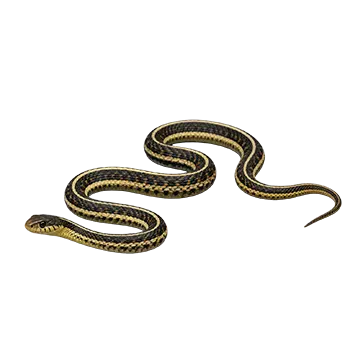

A thermostat is not an optional accessory for any heated reptile enclosure — it is a mandatory safety device that prevents heating equipment from exceeding safe temperature limits and causing thermal burns or fatal overheating. Every heating element in an Eastern Garter Snake enclosure, whether it is an under-tank heating pad, a ceramic heat emitter, a radiant heat panel, or a heat lamp controlled by a dimmer, must be connected to a thermostat. Operating any resistive heating element without thermostatic control is the single most common cause of preventable reptile deaths in captivity, and it is an entirely avoidable risk given the range of affordable, reliable thermostats available to hobbyists.
On-off thermostats, sometimes called non-proportional or bang-bang controllers, are the simplest and most affordable option. They function by switching the heating element fully on when the probe temperature drops below the set point and fully off when it exceeds the set point. This cycling produces minor temperature oscillations around the target value — typically two to four degrees — which are perfectly acceptable for the Eastern Garter Snake's thermoregulatory needs. On-off thermostats are well suited to under-tank heating pads and ceramic heat emitters, where the slight pulsing of heat output is not perceptible to the keeper or the animal. They are less appropriate for incandescent basking lamps, where the on-off cycling produces visible flickering that can be distracting.
Proportional thermostats, also called dimming or pulse-proportional controllers, modulate power delivery to the heating element rather than simply switching it on and off. As the temperature approaches the set point, the thermostat reduces power incrementally, maintaining a nearly constant temperature with minimal oscillation. Proportional thermostats are ideal for incandescent and halogen basking lamps because they eliminate the visible flickering associated with on-off controllers, and they extend the bulb's operational life by avoiding the repeated thermal shock of full-power cycling. They are more expensive than on-off units, but the improved temperature stability and equipment longevity justify the investment for keepers seeking precise environmental control.
Probe placement determines the accuracy and reliability of any thermostat, regardless of its sophistication. The temperature probe should be positioned at the surface where the snake makes contact with the heat source — directly on the substrate above an under-tank heater, or on the basking surface beneath an overhead heat source. A probe suspended in mid-air or mounted on the enclosure wall measures ambient air temperature, which can differ from surface temperature by ten degrees or more and provides no protection against localized surface overheating. The probe should be secured with a small piece of heat-resistant tape or a probe suction cup to prevent the snake from displacing it. A displaced probe that falls into a cool area of the enclosure causes the thermostat to deliver maximum power to the heater in an attempt to reach the set point, creating a dangerously hot surface at the actual heating site.