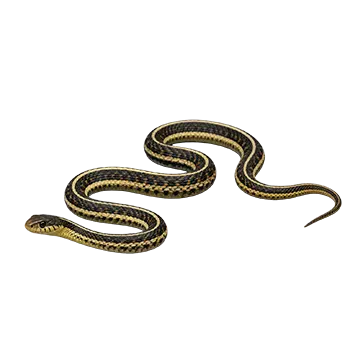

Selecting the correct enclosure for an Eastern Garter Snake requires balancing the species' need for horizontal floor space with its surprising inclination to climb when given the opportunity. Thamnophis sirtalis sirtalis is not classified as an arboreal species, but wild individuals regularly ascend low shrubs, rock piles, and fallen logs during foraging and basking activities. An enclosure that provides both adequate ground area and modest vertical space accommodates the full range of natural behaviors this active species displays throughout the day.
The minimum enclosure footprint for a single adult Eastern Garter Snake is a thirty-gallon terrarium or its dimensional equivalent, roughly thirty-six inches long by eighteen inches deep by eighteen inches tall. This sizing provides sufficient room for a proper thermal gradient, a water feature, multiple hides, and climbing structures without crowding the animal. Larger enclosures are always preferable when space permits — a forty-gallon breeder tank or a four-foot-long PVC enclosure gives the snake noticeably more room to thermoregulate and explore, and keepers who provide larger habitats consistently report more natural, active behavior from their animals. Neonates and small juveniles can be started in ten-to-twenty-gallon enclosures to prevent the feeding difficulties that sometimes arise when a very small snake is placed in a very large space.
Glass aquariums with screen lids are the most widely available and affordable housing option for Eastern Garter Snakes. They offer excellent visibility and are compatible with a wide range of heating and lighting products. However, glass enclosures present two challenges for garter snake keepers specifically. First, the screen top allows significant moisture and heat escape, complicating efforts to maintain the moderate humidity levels this species requires. Second, Eastern Garter Snakes are remarkably adept escape artists — any gap larger than the diameter of the snake's head is a potential exit point, and screen lids with poorly fitted hinges or feed doors are common escape routes. Securing the lid with screen clips rated for reptile enclosures is essential, and many keepers add additional clips beyond the manufacturer's minimum recommendation.
PVC and molded plastic enclosures have become increasingly popular for garter snake housing because they retain heat and humidity far more effectively than glass, they are lighter and easier to clean, and they typically feature front-opening doors that reduce the overhead approach that can startle a defensive snake. These enclosures are manufactured by several reptile specialty companies in sizes well suited to garter snakes and offer integrated features such as cord ports for heating equipment, ventilation panels with adjustable airflow, and stackable designs for keepers maintaining multiple animals. The initial cost is higher than a glass aquarium, but the improved environmental control often reduces long-term expenses by lowering heating costs and decreasing the frequency of humidity-related health issues.