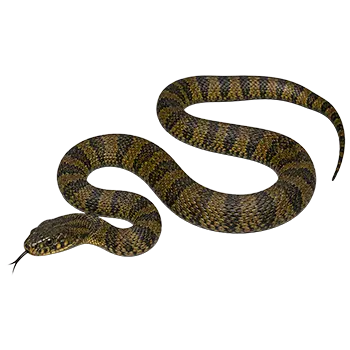

The water container is the accessory a Diamond-Backed Water Snake keeper will handle more than any other, and the commercial reptile market largely does not serve this species well. Purpose-made reptile water bowls are designed for animals that drink and occasionally soak, not for a semi-aquatic natricine that wants to submerge fully. Most keepers of Nerodia rhombifer end up sourcing from outside the reptile aisle entirely, using shallow storage totes, cement mixing trays, high-sided cat litter pans, or heavy-duty plant saucers, all of which offer far more usable surface area per dollar.
Material and finish determine how long a basin lasts and how easily it stays clean. Food-grade polypropylene and polyethylene containers resist staining, tolerate hot water and disinfectant, and are cheap enough to replace on a schedule. Ceramic and heavy stoneware are attractive and extremely stable, and glazed surfaces sanitize beautifully, but the weight becomes a genuine nuisance when the container has to be emptied and scrubbed several times a week. Unglazed terracotta should be avoided because its porosity makes true sanitation impossible in a container that routinely holds waste.
Stability and access are safety features rather than preferences. A lightweight basin will be flipped by an adult snake entering it, flooding the substrate and creating a scale rot problem within days, so containers should be weighted, recessed into the bedding, or chosen with a wide low profile that resists tipping. Smooth interior walls demand a built-in exit: a stack of flat river stone, a submerged cork slab, a plastic ramp, or a section of egg-crate at more than one point along the perimeter. Any snake that can enter the water should be able to leave it from wherever it happens to be.
The most useful purchasing decision is to buy the same basin twice. Having a second identical container means a fouled basin can be swapped for a clean one in seconds and scrubbed at the keeper convenience rather than while a wet, irritated snake waits. A third smaller shallow dish is worth keeping for neonates and for the days following a large meal, when some keepers prefer to reduce water depth. Sizing guidance is straightforward: the basin longest dimension should approach one third to one half the length of the snake, which for a forty-inch adult means something in the range of fifteen to twenty inches.