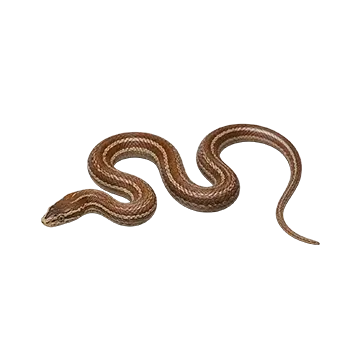

Understanding Enrichment for Snakes

Enrichment for captive snakes has historically been an afterthought in reptile husbandry, a field that focused almost exclusively on temperature, humidity, and food for decades before acknowledging that behavioral welfare matters as much as physical health. The Cape House Snake, like all snakes, is a cognitively active animal that processes environmental information continuously — detecting chemical gradients with its tongue, sensing vibrations through its jaw, responding to thermal cues, and navigating complex physical landscapes by memory and spatial awareness. Providing a barren enclosure with a hide and a water bowl meets survival needs but does nothing to engage the behavioral repertoire that Boaedon capensis expresses in the wild.

The concept of enrichment for snakes does not mirror what works for mammals or birds. Snakes do not play with objects in the way a dog chases a ball or a parrot manipulates a puzzle toy. Enrichment for a Cape House Snake means creating conditions that stimulate natural behaviors: exploring novel terrain, investigating new scents, navigating physical obstacles, burrowing through substrate, and hunting for food in ways that require effort and engagement. The goal is to give the snake choices and challenges that it can interact with on its own terms, at its own pace, during its active nocturnal hours.

The evidence supporting enrichment for captive snakes has grown substantially in recent years. Studies on both colubrid and python species have demonstrated that snakes housed in enriched environments show increased exploratory behavior, reduced stereotypic behaviors such as persistent glass-surfing, improved feeding responses, and measurably lower stress-hormone levels compared to snakes in minimalist setups. While the Cape House Snake's docile temperament can mask environmental dissatisfaction — it rarely displays the agitated pacing of a stressed ball python, for example — the absence of visible distress is not the same as the presence of wellbeing.

Implementing enrichment does not require expensive equipment or elaborate enclosure redesigns. Many of the most effective enrichment strategies for Cape House Snakes involve simple, inexpensive modifications to the existing habitat — rearranging decor, introducing novel textures, varying feeding presentation, or rotating items in and out of the enclosure on a schedule. The investment is primarily one of thought and consistency rather than money.

Climbing and Exploration Structures

Although the Cape House Snake is classified as terrestrial, it is a more capable and willing climber than its ground-dwelling reputation suggests. In the wild, Boaedon capensis regularly ascends low vegetation, rock faces, and the walls of human structures in pursuit of prey and shelter. Providing climbing opportunities in captivity encourages this natural behavior and dramatically increases the usable space within the enclosure by adding a vertical dimension to what would otherwise be a flat, two-dimensional habitat.

Driftwood branches are among the most versatile climbing structures for Cape House Snakes. A single well-placed branch that spans the length of the enclosure at a low to moderate angle gives the snake a route from ground level to a higher vantage point. The irregular surface of natural driftwood provides grip and textural variety that smooth-surfaced artificial branches cannot replicate. Branches should be securely anchored — wedged between the enclosure walls, resting on a stable base, or fixed with aquarium-safe silicone — so they do not shift or collapse when the snake applies its weight. An unstable structure that falls while the snake is climbing can cause injury and will deter future use.

Cork bark tubes and rounds offer climbing and hiding in a single item. A vertically oriented cork tube leaned against the enclosure wall creates a climbing challenge that ends in a secure, enclosed resting spot. Horizontally placed cork rounds at various heights throughout the enclosure create an obstacle course that the snake navigates during its nightly explorations. The natural texture and scent of cork bark make it an enriching material on multiple sensory levels, and its lightweight construction means it poses minimal risk even if dislodged.

Artificial vine and ledge systems designed for reptile terrariums provide additional climbing routes without the weight and bulk of natural wood. Suction-cup-mounted ledges, bendable vine structures, and modular climbing walls allow keepers to create customized climbing networks that can be reconfigured easily. These products are particularly useful in glass terrariums where natural branches may be difficult to secure. The key consideration with any climbing structure is ensuring that the snake cannot wedge itself between the structure and the enclosure wall or lid, which can result in injury or escape. A finger's-width gap between any structure and the enclosure boundary is the minimum safe clearance.

Naturalistic Decor and Habitat Features

Naturalistic decor transforms a functional enclosure into an environment that engages the Cape House Snake's senses and encourages the full range of its behavioral repertoire. Beyond the essential hides and water bowl, adding elements that replicate the texture, complexity, and visual character of Boaedon capensis habitat in southern Africa turns the enclosure from a holding pen into a living space. The snake does not appreciate aesthetics in the human sense, but it absolutely responds to physical complexity, surface variety, and the availability of multiple microhabitats within its territory.

Rock formations and slate pieces create ground-level complexity that Cape House Snakes interact with extensively. Flat stones stacked to create narrow crevices replicate the rocky outcrops and stone walls where wild Cape House Snakes shelter during the day. The thermal mass of stone also creates subtle temperature microclimates — a stone positioned on the warm side absorbs and radiates heat slowly, creating a warm resting surface that the snake may prefer over bare substrate. Stones should be arranged so that they cannot topple or shift, as even a small stone falling on a snake of this size can cause serious injury. Securing stacked stones with aquarium-safe silicone is a prudent precaution.

Artificial plants add visual density and physical obstacles without the maintenance demands of live vegetation. High-quality plastic or silk plants positioned throughout the enclosure create a sense of cover that reduces the snake's perceived exposure and encourages it to move through the open areas of the enclosure rather than retreating permanently to its hides. Trailing or hanging plants positioned above ground level simulate the low vegetation canopy that Boaedon capensis encounters in coastal scrub and garden habitats. The plants should be free of sharp edges, small detachable parts, or wire stems that could lacerate the snake during movement.

Live plants are an option for keepers willing to invest in bioactive or semi-bioactive enclosure design. Hardy, non-toxic species such as pothos, snake plants, and bromeliads tolerate the temperature and humidity range of a Cape House Snake enclosure and contribute to air quality, humidity regulation, and visual enrichment. Live plants require their own lighting, watering, and substrate considerations, and the enclosure essentially becomes two husbandry projects in one. For keepers drawn to naturalistic setups, the effort is rewarded with an enclosure that functions as a self-sustaining micro-ecosystem and provides enrichment passively, without ongoing intervention.

Leaf litter is an often-overlooked enrichment element that is extraordinarily effective for semi-fossorial species like the Cape House Snake. A layer of dried, pesticide-free oak, magnolia, or almond leaves scattered over the substrate creates a rustling, textured surface that the snake pushes through during its nightly explorations. Leaf litter provides cover, creates hiding opportunities independent of fixed hides, and introduces natural scent compounds that stimulate the snake's chemosensory systems. As the leaves break down over time, they contribute to the substrate's organic content and should be replaced periodically to maintain coverage and hygiene.

Tactile and Sensory Enrichment

Snakes experience their world through a sensory system that is fundamentally different from the mammalian model, and effective enrichment for a Cape House Snake must engage the senses that matter most to the animal. Chemoreception — the detection of chemical signals through tongue-flicking and the vomeronasal organ — is the Cape House Snake's primary mode of environmental assessment. Thermal detection, vibration sensitivity through the substrate, and tactile feedback from surfaces the snake contacts along its body length are equally important channels through which Boaedon capensis builds its understanding of its surroundings.

Scent-based enrichment is one of the most accessible and impactful strategies available to Cape House Snake keepers. Introducing novel, safe scent sources into the enclosure stimulates intense investigative behavior — prolonged tongue-flicking, active exploration, and route-tracing behavior that can occupy the snake for extended periods. Scent sources can include a shed skin from another snake of a different species, a clean cloth rubbed on a non-toxic, non-predatory animal, a small amount of a novel but safe substrate material, or even a freshly collected leaf or twig from an outdoor environment free of pesticides and herbicides. The novelty of the scent is the driver; familiar scents elicit little response, so rotating scent items regularly maintains the enrichment value.

Textural variety across the enclosure floor engages the snake's extensive network of tactile receptors. A Cape House Snake moving from smooth slate to rough cork bark to loose aspen to compressed leaf litter receives a continuous stream of tactile information that its nervous system processes actively. This variation replicates the ground-surface diversity the snake would encounter in the wild as it crosses packed earth, loose soil, rock, vegetation, and man-made surfaces during a single night's foraging. Creating zones of different substrate texture within the enclosure — a slate tile area, a deep-substrate burrowing zone, a leaf-litter section — is a simple and cost-effective way to multiply the sensory richness of the habitat.

Controlled handling sessions serve as a form of tactile and environmental enrichment when conducted appropriately. A calm Cape House Snake exploring the surfaces of its keeper's hands, arms, and clothing encounters a completely different set of textures, temperatures, and scents than anything available inside its enclosure. Handling sessions of ten to fifteen minutes, conducted no more than a few times per week and never within forty-eight hours of feeding, provide the snake with a manageable dose of novel sensory input. The key is reading the snake's body language: a relaxed, tongue-flicking snake that moves smoothly through the hands is engaged and benefiting from the experience, while a tense, coiled, or rapidly retreating snake is stressed and should be returned to its enclosure promptly.

Foraging and Feeding Enrichment

Transforming feeding time from a predictable tong-to-mouth exchange into a multi-step process that engages the Cape House Snake's predatory instincts is one of the highest-impact enrichment strategies available. In the wild, Boaedon capensis invests considerable time and energy in locating prey — tracking scent trails, investigating burrow entrances, and ambushing prey in confined spaces. Captive snakes that receive their food directly from tongs miss this entire behavioral sequence, which constitutes a significant portion of their natural activity budget.

Scent-trail feeding replicates the tracking phase of natural predation. The keeper drags a thawed prey item along a path through the enclosure — across substrate, over branches, around hides, and under cover — leaving a chemical trail that the snake follows when it becomes active. The prey item is left at the end of the trail, tucked partially under a hide or behind a piece of decor so that the snake must locate it. This technique transforms a passive feeding event into an active hunt that can occupy the snake for twenty minutes or more, compared to the few seconds required for a direct tong presentation.

Hide-based feeding places the prey item inside one of the enclosure's hides, requiring the snake to enter the hide and discover the food in a context that mimics finding a rodent in its burrow. Alternating which hide contains the food from one feeding to the next prevents the snake from developing a fixed expectation and encourages it to investigate multiple locations during each feeding event. Some keepers construct dedicated foraging hides with multiple entrance tunnels and internal chambers that increase the complexity of the discovery process.

Variation in presentation keeps the feeding response sharp and prevents the habituation that can develop when every meal is delivered identically. Offering food from tongs on some occasions, placing it on the substrate on others, hiding it under leaf litter, or suspending it from a branch at different heights engages different components of the snake's predatory repertoire. The Cape House Snake's willingness to feed in virtually any context makes it an ideal candidate for this kind of variation — unlike more finicky species that may refuse food presented in an unfamiliar way, Boaedon capensis typically investigates and consumes prey regardless of how it is offered, making feeding enrichment a low-risk, high-reward strategy.

Timing variation adds another dimension to feeding enrichment. Rather than feeding on a rigid schedule at the same time every session, varying the time of evening that food is offered by an hour or two keeps the snake from falling into a predictable anticipatory routine. The goal is not to create food insecurity but to ensure that the snake remains responsive and engaged with its environment throughout its active period rather than simply waiting for the expected feeding window and then retreating to a hide for the rest of the night.

Rotating Enrichment and Seasonal Variation

The effectiveness of any enrichment item diminishes with familiarity. A novel branch placed in the enclosure generates intense exploratory interest on the first night, moderate interest on the second, and increasingly little engagement thereafter as the snake incorporates the item into its mental map of the territory. This habituation effect is natural and expected — it reflects the snake's cognitive processing of its environment — and the antidote is rotation. Maintaining a small library of enrichment items and cycling them in and out of the enclosure on a two-to-four-week schedule ensures that the snake regularly encounters novel stimuli without requiring a constant investment in new materials.

A practical rotation system involves three to four sets of decor and climbing structures that are swapped in groups. Set A occupies the enclosure for two to three weeks, then is replaced entirely by Set B while Set A is cleaned, disinfected, and stored. When Set B has run its course, Set C takes over, and so on. By the time Set A returns, enough time has passed that the snake responds to it with renewed interest. This approach is especially effective when each set creates a meaningfully different physical layout — different hide placements, climbing routes, and ground-level complexity — so that the snake's spatial environment changes with each rotation.

Seasonal enrichment variation aligns with the natural behavioral rhythms that many Cape House Snakes retain even in captivity. During warmer months when the snake is most active and feeding aggressively, enrichment can be more elaborate: additional climbing structures, more complex foraging setups, and more frequent scent introductions capitalize on the animal's heightened engagement. During cooler months, when many Cape House Snakes reduce their activity and feeding voluntarily, simplifying the enclosure and reducing stimulation respects the animal's natural inclination toward quiescence. This seasonal modulation is not about withdrawing enrichment but about matching its intensity to the snake's behavioral state.

Documenting enrichment activities and the snake's responses helps keepers refine their approach over time. Noting which items generate the most exploration, which scent sources provoke the longest investigation, and which feeding presentations result in the quickest and most enthusiastic strikes builds a behavioral profile that is unique to the individual animal. Some Cape House Snakes are avid climbers that respond most strongly to new vertical structures; others are committed burrowers that engage most deeply with substrate changes and ground-level complexity. Tailoring the enrichment program to the individual's preferences maximizes its impact and transforms routine husbandry into active, responsive animal care.

Always consult a qualified professional before making any health-related decisions. This content is provided for informational reference only and should not replace professional guidance specific to your animal.